
Selenium,
does it really help with Antioxidant and immune function?
research showsSelenium is an essential trace nutrient and a component of selenoproteins such as glutathione peroxidase, so it is needed for antioxidant defense and normal physiological function. However, evidence is inconsistent that taking supplements clinically strengthens immunity or reduces infections in general adults. For antioxidant effects, meta-analyses show improvement in oxidative-stress markers such as GPx, TAC, and MDA, but these are surrogate markers rather than clinical events.
ads claimIn the Korean market, repeated phrases include "removal of harmful oxygen," "removal of reactive oxygen species," "strong antioxidant," "immune function/immunity enhancement," "anti-aging," "cell protection," "zinc + selenium immune antioxidant," "selenium for cancer patients," and "adjunct to anticancer immunotherapy." Food Safety Korea functional wording for selenium is "needed to protect cells from harmful oxygen," while "needed for normal immune function" is often a zinc function in many products, not selenium. Informational articles and hospital/shopping-mall pages commonly expand antioxidant mechanisms to aging, immunity, and cancer prevention, but RCTs do not consistently support those expanded claims.
Useful facts when choosing a product
- Common Korean health-functional-food functionality: selenium is labeled as "needed to protect cells from harmful oxygen," and the Food Safety Korea table lists daily intake as 16.5-135 mcg.
- Korean products are often combined with zinc, vitamin C/E, multivitamins, lutein, coenzyme Q10, and other ingredients rather than selenium alone, so immune wording must be separated as to whether it comes from zinc functionality or selenium evidence.
- Common supplement forms include selenomethionine, selenium-enriched yeast, sodium selenite, and sodium selenate; absorption is generally high, but biological effects vary by baseline selenium status and form.
- NIH ODS lists adult RDA as 55 mcg/day and adult UL as 400 mcg/day, while Brazil nuts average 544 mcg per ounce. EFSA proposed an adult upper limit of 255 mcg/day in 2023.
- Long-term excessive intake can lead to selenosis, with reported hair loss, brittle or lost nails, garlic odor, metallic taste, rash, gastrointestinal symptoms, fatigue, and neurological abnormalities.
What the research actually shows
Human RCTs of selenium alone mainly assessed surrogate markers such as blood selenium, GPx, vaccine response, lymphocytes, NK cells, and cytokines. A small 2004 double-blind RCT in low-selenium UK adults improved T-cell response, IFN-gamma, and viral shedding after polio vaccination, but n=66 with final analysis about n≈20/group and it was not a clinical infection-prevention trial. A 2017 RCT in low-selenium adults aged 50-64 years showed some improvements in cellular immune markers after influenza vaccination, but some markers worsened and mucosal antibody response did not change. A 2023 AJCN systematic review/meta-analysis of 9 trials and 370 healthy participants found little real effect on most immunoglobulins, leukocytes, and cytokines, and concluded that IgA or T cells do not increase further when plasma selenium exceeds about 100 mcg/L. An antioxidant meta-analysis reported increased GPx and TAC and decreased MDA across 13 clinical trials, but all were oxidative-stress surrogate markers. For clinical claims easily expanded in advertising, such as cancer or cardiovascular prevention, SELECT and Cochrane reviews did not support benefit.
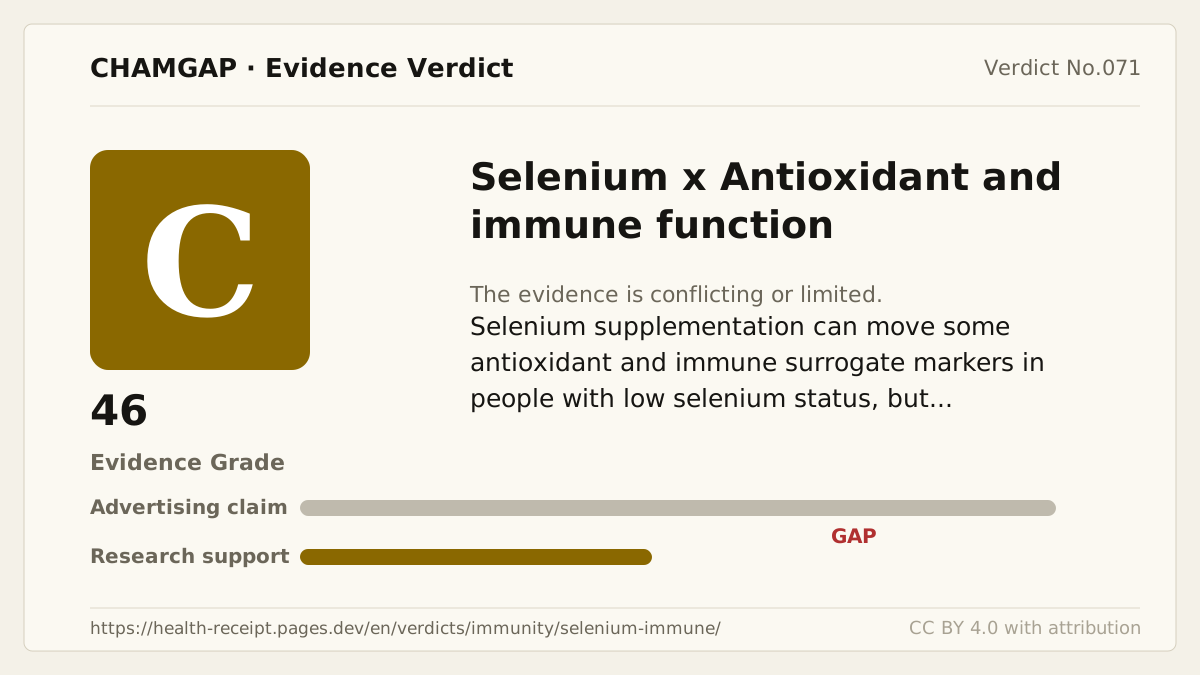
Why this is classified as C (46)
Grade C. Antioxidant studies show GPx/TAC/MDA improvements in RCT meta-analyses, but all are surrogate markers, so the maximum is C under boundary rule 1. For immunity, independent RCTs and meta-analyses exist, but samples are small, outcomes are mainly vaccine responses and cellular markers, and the overall conclusion of the 2023 meta-analysis does not support supplementation above recommended intakes. Because positive results are not all manufacturer-funded, this is not D; and because repeated no-effect findings are not the only evidence, it is not F.
Counterpoint. In selenium deficiency or low selenium status, supplementation can improve blood selenium and some selenoenzyme or immune markers. Therefore, "a necessary nutrient" must be separated from "additional supplementation strengthens immunity in people who already have enough." Extending deficiency-correction evidence to high-dose supplementation, infection prevention, anticancer effects, or cardiovascular prevention in the general population exceeds the current strength of evidence.
Rejudgment record. Convergent — Draft = blinded C. Some surrogate markers improve in low selenium status, but clinical effects of general supplementation are uncertain.
Cross-check — Codex and Claude
Evidence Table
| Study | Design | Sample | Funding | Endpoint | Result | Weight |
|---|---|---|---|---|---|---|
| Study 1 | Regulatory labeling | Domestic functional wording is confirmed as "needed to protect cells from harmful oxygen," with daily intake 16.5-135 mcg. | Supporting | |||
| NIH Office of Dietary Supplements | Selenium is a component of 25 selenoproteins and is involved in defense against oxidative damage and infection, but adult UL is 400 mcg/day and excess intake is toxic. | Core | ||||
| Filippini T, Fairweather-Tait S, Vinceti M 2023 | Meta-analysis | 370 | Mixed/partly industry related | Immune | In a meta-analysis of 9 trials and 370 healthy people, most immunoglobulins, leukocytes, and cytokines were not significant, and the need for supplementation above recommended intakes was not supported. | Core |
| Broome CS, McArdle F, Kyle JAM et al. 2004 | Double-blind RCT | 66 | Possibly manufacturer/industry related | Immune | In adults with low selenium status in the UK, 50/100 mcg/day sodium selenite for 15 weeks improved cellular immunity and viral-shedding markers after polio vaccination. | Supporting |
| Ivory K, Prieto E, Spinks CA et al. 2017 | Double-blind RCT | 117 | Possibly manufacturer/industry related | Immune | In 117 low-selenium adults aged 50-64 years, a 12-week double-blind RCT found mixed improvements/worsening in cellular immunity after influenza vaccine depending on form and dose, with no change in mucosal influenza-specific antibodies. | Supporting |
| Girodon F, Galan P, Monget AL et al. 1999 | RCT | 725 | immune/infection | In a long-term RCT in institutionalized older adults, zinc+selenium trace elements related to some vaccine antibody responses/infection outcomes, but it was a combination product and cannot be attributed to selenium alone. | Supporting | |
| Hasani M, Djalalinia S, Khazdooz M et al. 2019 | Meta-analysis/RCT | Possibly manufacturer/industry related | Stress | A meta-analysis of 13 clinical trials found increased GPx (SMD 0.54) and TAC (SMD 0.39) and decreased MDA (SMD -0.54), but these were oxidative-stress markers rather than clinical events. | Supporting | |
| Vinceti M, Filippini T, Del Giovane C et al. 2018 | RCT | 27,232 | cancer incidence | A Cochrane review of 10 RCTs and 27,232 participants concluded that high-quality RCTs did not show cancer-incidence reduction and reported some harm signals. | Supporting | |
| National Cancer Institute | RCT | 35,000 | Immune/prostate | NCI-led SELECT reported that selenium 200 mcg/day and vitamin E did not prevent prostate cancer, other cancers, or cardiovascular events in more than 35,000 men. | Supporting |
Receipt — 9 References
All 9 cited sources were verified for existence at the original page (as of 2026-07-07).
Reviewed and approved: Chamgap Editorial Team · Approval date: 2026-07-07 · Corrections: none
Cite this verdict
[Chamgap] Selenium × antioxidant and immune function — Evidence Grade C·46. 9 cited sources checked. Source: https://chamgap.com/en/verdicts/immunity/selenium-immune/ · CC BY 4.0CC BY 4.0 — free to use with attribution; do not distort grades, numbers, or verdict meaning.
What this document does and does not do
Chamgap is an information source. It reports what research has and has not confirmed; it does not tell readers what to take or buy. That decision belongs to readers and, when needed, medical or legal professionals. This verdict reflects literature available up to the search date and may change as new research appears. Nothing here is medical advice.