
Vitamin E,
does it really help with Antioxidant and cardiovascular health/cardiovascular disease prevention?
research showsVitamin E is an essential nutrient and the antioxidant mechanism is biologically plausible, but the claim that high-dose alpha-tocopherol supplements reduce clinical events such as myocardial infarction, stroke, or cardiovascular death has repeatedly not been confirmed in large RCTs and meta-analyses. Some studies also reported signals for hemorrhagic stroke or heart failure.
ads claimKorean advertisements and informational materials often present "strong antioxidant," "anti-aging," "vascular health," "helps blood circulation," "LDL oxidation inhibition," "heart health," and "cardiovascular disease prevention" together. Ople.com health information used phrases about vascular protection, blood circulation, cardiovascular disease prevention, and blood pressure/LDL/HDL improvement. Health Chosun informational content combined the MFDS functional wording "needed to protect cells from harmful oxygen" with LDL-oxidation and peripheral-circulation explanations. Coupang, iHerb, and Pillize search results exposed 400 IU and 1000 IU products under categories/product names such as "aging & antioxidant," "antioxidant health," and "heart, eye, skin, and immune health." Ingredient-supplier materials such as DSM-firmenich connect alpha-tocopherol supplementation with cardiovascular risk factors and heart-health support.
Useful facts when choosing a product
- Korean-available products commonly include single vitamin E 400 IU softgels, 1000 IU (about 450 mg) softgels, and vitamin E + selenium combinations.
- Label claims of "natural" d-alpha-tocopherol and "synthetic" dl-alpha-tocopherol differ in bioactivity conversion, but the core conclusion of large clinical trials is that cardiovascular event reduction was not reproduced for either natural or synthetic forms.
- Antioxidant functional wording for foods/health functional foods is regulatory wording about nutrient necessity/cellular protection and was considered separately from the clinical evidence grade for high-dose supplements preventing cardiovascular disease.
- High doses of 400 IU or more have been associated in some RCTs and meta-analyses with possible increases in hemorrhagic stroke, heart failure, and mortality, so caution is needed with anticoagulants/antiplatelets, bleeding risk, perioperative periods, and histories of cardiovascular disease or diabetes.
What the research actually shows
By effect, antioxidant evidence is centered on surrogate markers and mechanisms such as increased blood alpha-tocopherol and inhibition of LDL oxidation, so as clinical efficacy it is at most C. For cardiovascular prevention, CHAOS had an early positive signal, but later large randomized trials such as HOPE/HOPE-TOO, HPS, WHS, PHS II, and PPP, plus a meta-analysis of 7 large trials, did not consistently reproduce reductions in major cardiovascular events, myocardial infarction, stroke, or cardiovascular death. Combination-product trials such as HPS (vitamin E + C + beta-carotene) are hard to separate for single-ingredient effect, but primary clinical endpoints were null even in single high-dose trials. Cochrane mortality reviews of antioxidant supplements also do not support general use.
Why this is classified as F (10)
Under boundary rule 1, antioxidant surrogate markers alone can reach at most C. However, the core consumer claim is a clinical claim that antioxidant supplementation improves vascular/heart health or prevents cardiovascular disease. For this component, many independent large RCTs and meta-analyses repeatedly showed no benefit on primary clinical endpoints, so the rating is F. The early positive CHAOS result was driven mainly by reduction in nonfatal MI, did not reduce cardiovascular death, and was not reproduced in larger independent trials.
Counterpoint. Vitamin E is necessary for preventing deficiency and maintaining normal physiological function. WHS also had a secondary result of reduced cardiovascular death and a signal in women aged 65 years or older, and CHAOS reported reduced nonfatal MI. However, these signals were not consistently confirmed in overall primary endpoints or larger subsequent RCTs and meta-analyses, making it difficult to raise the grade.
Rejudgment record. Convergent — Draft = blinded F. High-dose alpha-tocopherol is negative on primary cardiovascular clinical endpoints, with some risk signals (bleeding/overall mortality).
Sub-claim grades by effect
This ingredient is marketed for several effects. A single overall grade blends strong and weak claims together, so each effect is graded separately here. The overall grade reflects the strongest disconfirming or core claim.
| Effect (sub-claim) | Grade | Basis |
|---|---|---|
| Antioxidant (surrogate) | C | Surrogate/mechanistic evidence (serum tocopherol, LDL oxidation) |
| Cardiovascular prevention | F | Primary clinical endpoints null across large independent RCTs (HOPE, HPS, WHS, PHS II) |
Cross-check — Codex and Claude
Evidence Table
| Study | Design | Sample | Funding | Endpoint | Result | Weight |
|---|---|---|---|---|---|---|
| Stephens NG et al. 1996 | RCT | 2002 | Possibly manufacturer/industry related | In 2002 coronary-disease patients, alpha-tocopherol 400/800 IU reduced the primary composite endpoint, but the effect was driven by nonfatal MI and cardiovascular death was not reduced. | Core | |
| Lonn E et al. 2005 | RCT | Possibly manufacturer/industry related | HOPE/HOPE-TOO: in high-risk patients with vascular disease or diabetes, natural vitamin E 400 IU/day was null for major cardiovascular events (RR 1.04) and increased heart-failure risk. | Core | ||
| Lee IM et al. 2005 | 39,876 | In 39,876 healthy women taking natural alpha-tocopherol 600 IU every other day, the primary endpoint of major cardiovascular events was null (RR 0.93, P=.26). | Core | |||
| Sesso HD et al. 2008 | RCT | 14,641 | In 14,641 male physicians taking synthetic alpha-tocopherol 400 IU every other day, major cardiovascular events HR was 1.01 and hemorrhagic stroke HR was 1.74. | Core | ||
| Heart Protection Study Collaborative Group 2002 | 20,536 | In 20,536 high-risk participants, the combination of vitamin E 600 mg + C + beta-carotene had a major vascular event rate ratio of 1.00. | Supporting | |||
| Collaborative Group of the Primary Prevention Project 2001 | RCT | 4495 | In 4,495 people with cardiovascular risk factors, vitamin E 300 mg/day had no effect on any prespecified cardiovascular endpoint. | Supporting | ||
| Eidelman RS et al. 2004 | RCT | 106,625 | Overview of 7 large RCTs and 106,625 participants found no clinically meaningful effect: major cardiovascular events OR 0.98 and cardiovascular death OR 1.00. | Supporting | ||
| Shekelle PG et al. 2004 | Systematic review | A systematic review concluded that there was no evidence that vitamin E supplementation had beneficial or harmful effects on cardiovascular outcomes. | Supporting | |||
| Jenkins DJA et al. 2013 | Meta-analysis/RCT | Antioxidant | A meta-analysis of vitamin/antioxidant supplement RCTs concluded that evidence does not support use for cardiovascular disease prevention. | Supporting | ||
| Bjelakovic G et al. 2012 | RCT | 296,707 | Antioxidant | Across 78 RCTs and 296,707 participants, antioxidant supplement use was not supported, and vitamin E may increase mortality. | Supporting | |
| Miller ER et al. 2005 | Meta-analysis/RCT | 10,000 | Across 19 RCTs and 135,967 participants, high-dose trials of 400 IU/day or more reported total-mortality risk difference +39/10,000 people. | Supporting | ||
| Schurks M et al. 2010 | Meta-analysis/RCT | A meta-analysis of randomized trials found no overall stroke benefit and reported a pattern of 22% increased hemorrhagic stroke and 10% reduced ischemic stroke. | Supporting |
Receipt — 12 References
Of 12 cited sources, 3 had limited original-page access (blocked or summary-only) and were verified via index/summary, marked partial; the rest were verified at the original page. As of 2026-07-07.
Reviewed and approved: Chamgap Editorial Team · Approval date: 2026-07-07 · Corrections: none
Cite this verdict
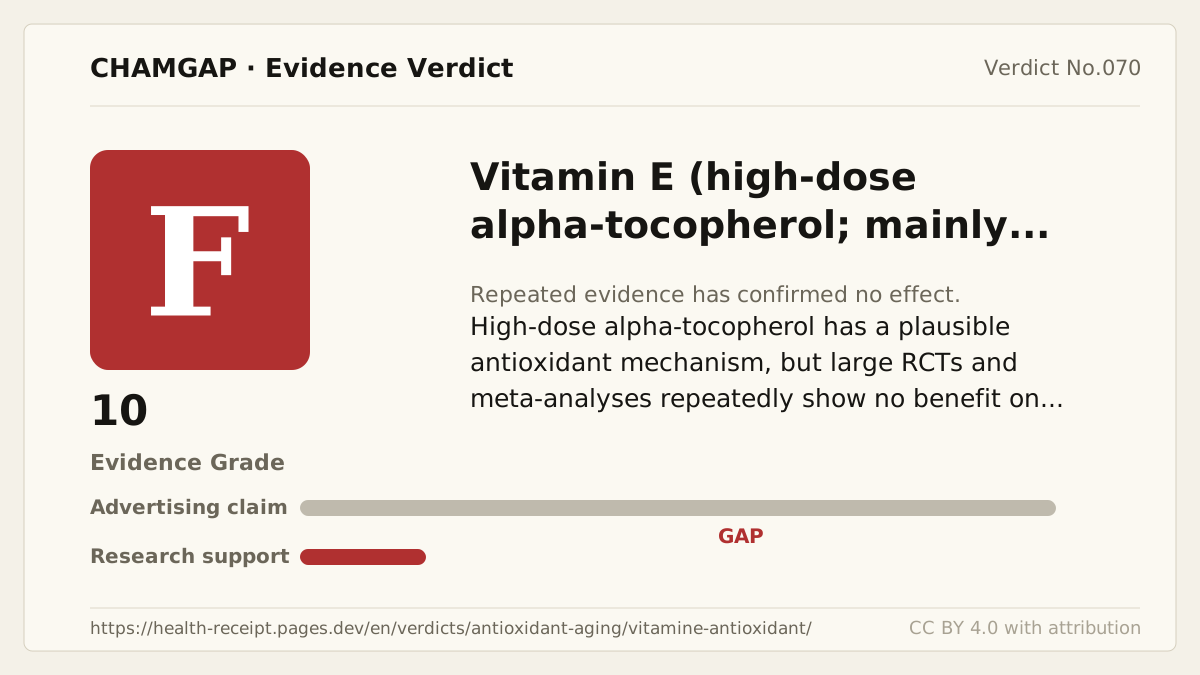
[Chamgap] Vitamin E (high-dose alpha-tocopherol; mainly d-alpha or dl-alpha-tocopherol/acetate, including products of 400 IU or higher) × antioxidant and cardiovascular health/cardiovascular disease prevention — Evidence Grade F·10. 12 cited sources checked. Source: https://chamgap.com/en/verdicts/antioxidant-aging/vitamine-antioxidant/ · CC BY 4.0CC BY 4.0 — free to use with attribution; do not distort grades, numbers, or verdict meaning.
What this document does and does not do
Chamgap is an information source. It reports what research has and has not confirmed; it does not tell readers what to take or buy. That decision belongs to readers and, when needed, medical or legal professionals. This verdict reflects literature available up to the search date and may change as new research appears. Nothing here is medical advice.