
Green coffee,
does it really help with Weight loss and body weight/body fat reduction?
research showsHuman randomized trials and meta-analyses exist, but the weight effect is small and unstable. A meta-analysis of high-chlorogenic-acid green coffee extract around 500 mg/day found a short-term weight difference of about 1 kg, but a broader 2019 meta-analysis of RCTs found no significant overall effect on weight or waist circumference. The key trial behind repeated domestic and international claims of 7-8 kg loss without lifestyle change was retracted and is difficult to use as evidence.
ads claimIn the Korean market, phrases are seen such as the health functional food wording 'may help reduce body fat,' 'chlorogenic acid promotes body-fat breakdown,' 'helps metabolism,' 'body weight reduced by 4.97 kg, waist circumference reduced, no side effects,' 'Dr. Oz/U.S. clinical trial 7.7 kg loss,' and 'manage body fat while drinking it like coffee.' Current shopping-mall product names also foreground 'green coffee bean diet' and 'functional ingredient that helps reduce body fat.' Some informational articles include cautions that samples are small and the evidence is not definitive.
Useful facts when choosing a product
- Food Safety Korea ingredient information: green coffee bean ethanol extract, recognition number 2018-6 (2018.07.03), functional content 'may help reduce body fat,' daily intake 500 mg/day.
- Precautions for intake specify caution for infants, young children, children, pregnant women, and lactating women, and possible nervousness and insomnia due to caffeine.
- Product forms mix tablets, capsules, and powdered coffee-type products, and actual chlorogenic-acid content, caffeine content, and decaffeinated status may differ by product.
- Some large weight-loss figures cited in advertising are connected to the retracted Vinson 2012/GCA trial or early high-risk studies.
- Regulatory recognition is a fact about possible functional labeling; this evidence grade was judged separately based on the consistency and independence of RCTs and meta-analyses.
What the research actually shows
The evidence for standalone green coffee/chlorogenic acid centers on small, short-term RCTs. Onakpoya 2011 reported body weight -2.47 kg (95% CI -4.23 to -0.72) across 3 RCTs, but all studies had high risk of bias and heterogeneity was very large (I2=97%). Gorji 2019 pooled 13 papers/16 RCTs and found a borderline BMI decrease, but body weight (WMD -0.585 kg, p=0.210) and waist circumference were not significant in the overall analysis. Kanchanasurakit 2023 selected only 3 RCTs meeting a CGA dose of at least 500 mg/day and reported body weight -1.30 kg, but the sample was 103 people, duration 1-8 weeks, and GRADE was low. Individual RCTs such as Roshan 2018, Haidari 2017, and Sudeep 2021 showed some improvements in weight, waist circumference, or body composition, but populations were narrow, such as metabolic syndrome, women with obesity, or healthy people with overweight, and the trials mixed diet restriction co-interventions or product-specific ingredients. No large independent RCT or dedicated Cochrane review was identified.
Why this is classified as C (48)
C. Human RCTs have assessed direct body-composition outcomes such as weight, BMI, waist circumference, and body fat, so the literature is not absent. However, effects generally remain short-term differences around 1-2 kg, and the broader 2019 meta-analysis found no significant overall weight effect. Positive RCTs are small, short (1-12 weeks), include diet restriction, use product-specific ingredients, may involve manufacturer links, or have early quality problems. The core GCA trial that drove large market weight-loss claims was also retracted and does not support strong diet claims.
Counterpoint. Recent selective meta-analyses using high chlorogenic-acid thresholds and some RCTs reported statistical improvements in weight, waist circumference, or body composition. It would be excessive to say there is no human evidence. What remains uncertain is whether the effect is reproduced in long-term weight management, applies to products broadly, or produces meaningful loss without lifestyle change.
Rejudgment record. Convergent — Green coffee chlorogenic-acid weight-loss signals are small, low-quality, industry-funded, and short-term
Cross-check — Codex and Claude
Evidence Table
| Study | Design | Sample | Funding | Endpoint | Result | Weight |
|---|---|---|---|---|---|---|
| Study 1 | body fat | As a domestic individually recognized ingredient, it is specified as 'may help reduce body fat,' 500 mg/day, with caffeine-related precautions. | Core | |||
| Study 2 | body fat/body weight/gut/gastrointestinal | A domestic advertising-style article claimed chlorogenic-acid body-fat breakdown, 4.97 kg body-weight reduction over 8 weeks, waist-circumference reduction, and similar effects. | Core | |||
| Study 3 | 16 | gut/gastrointestinal | A case in which Dr. Oz and a 16-person trial's claims of 7.7 kg weight loss and no lifestyle-pattern change were used in Korean promotional wording. | Core | ||
| Onakpoya I, Terry R, Ernst E 2011 | Meta-analysis of RCTs | body weight | A meta-analysis of 3 RCTs reported body weight -2.47 kg, but all studies had high risk of bias and heterogeneity was large. | Core | ||
| Gorji Z, Varkaneh HK, Talaei S et al. 2019 | Meta-analysis of RCTs | body weight | Across 13 papers/16 RCTs, BMI decreased slightly, but body weight and waist circumference were not significant in the overall analysis. | Supporting | ||
| Kanchanasurakit S, Saokaew S, Phisalprapa P, Duangjai A 2023 | Meta-analysis of RCTs | Possible manufacturer/industry involvement | body weight | In 3 RCTs meeting CGA at least 500 mg/day, body weight -1.30 kg was reported, but the sample was small and certainty was low. | Supporting | |
| Roshan H, Nikpayam O, Sedaghat M, Sohrab G 2018 | RCT | body weight | In patients with metabolic syndrome, GCE 800 mg/day for 8 weeks significantly reduced waist circumference, and the body-weight difference was borderline significant. | Supporting | ||
| Haidari F, Samadi M, Mohammadshahi M, Jalali MT, Ahmadi Engali K 2017 | 64 | body weight | In 64 women with obesity, combining an energy-restricted diet with GCBE 400 mg for 8 weeks produced greater reductions in body weight, BMI, and body composition than the control group. | Supporting | ||
| Sudeep HV, Shyam Prasad K 2021 | Double-blind RCT | 60 | body weight | 71 healthy people with overweight randomized/60 completed; CGA-7 500 mg/day for 12 weeks reported improvements in body weight, BMI, body composition, and tolerability. | Supporting | |
| Vinson JA, Burnham BR, Nagendran MV, Hill T 2014 | Double-blind RCT | 16 | The 2012 16-person GCA crossover trial was retracted because 'sponsors cannot assure validity of the data.' | Supporting | ||
| Federal Trade Commission 2014 | body weight/gut/gastrointestinal | The FTC explained that AFS's GCA study was so flawed that it could not support reliable conclusions, and that claims of 17.7 lb/10.5% weight loss were unsupported. | Supporting |
Receipt — 11 References
Of 11 cited sources, 1 had limited original-page access (blocked or summary-only) and were verified via index/summary, marked partial; the rest were verified at the original page. As of 2026-07-07.
Reviewed and approved: Chamgap Editorial Team · Approval date: 2026-07-07 · Corrections: none
Cite this verdict
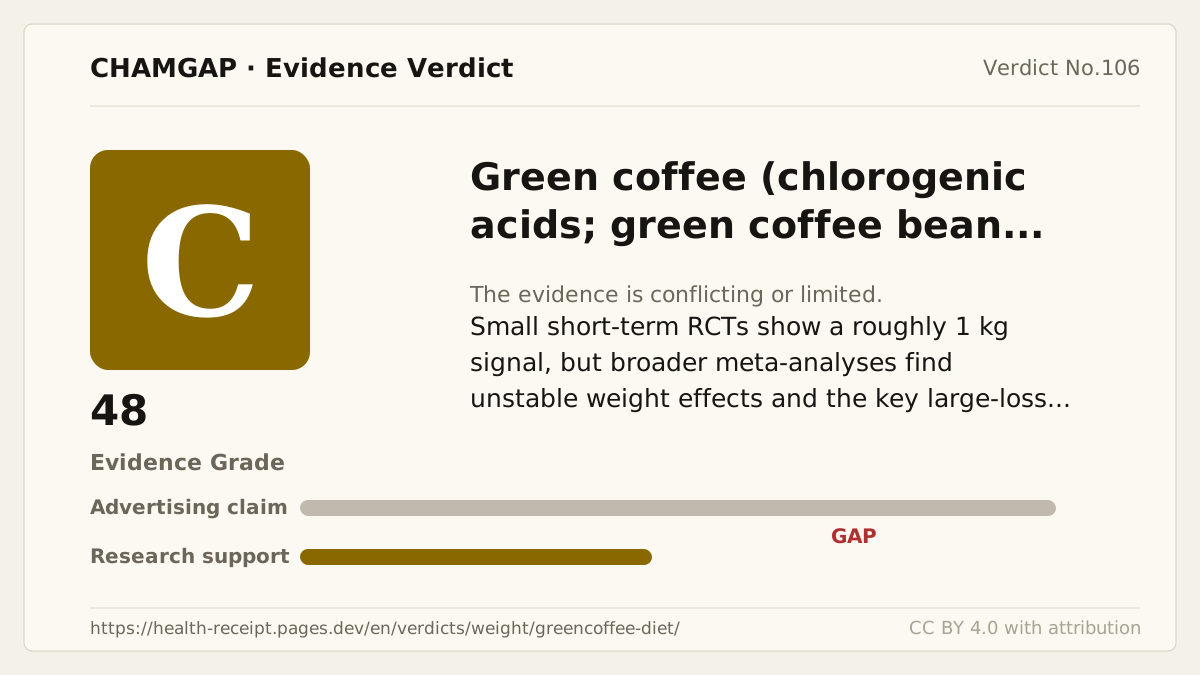
[Chamgap] Green coffee (chlorogenic acids; green coffee bean extract/chlorogenic acid) x weight loss and body weight/body fat reduction — Evidence Grade C·48. 11 cited sources checked. Source: https://chamgap.com/en/verdicts/weight/greencoffee-diet/ · CC BY 4.0CC BY 4.0 — free to use with attribution; do not distort grades, numbers, or verdict meaning.
What this document does and does not do
Chamgap is an information source. It reports what research has and has not confirmed; it does not tell readers what to take or buy. That decision belongs to readers and, when needed, medical or legal professionals. This verdict reflects literature available up to the search date and may change as new research appears. Nothing here is medical advice.