
Potassium,
does it really help with Blood pressure?
research showsRCT meta-analysis evidence repeatedly points toward increased potassium intake lowering blood pressure. Aburto 2013 summarized increased potassium intake and reduced blood pressure in adults, with a more pronounced effect in people with hypertension. SSaSS (Neal 2021) showed hard endpoints of reduced stroke, cardiovascular events, and death with low-sodium potassium salt substitution, but because the intervention simultaneously included sodium reduction, it cannot be interpreted directly as the effect of potassium supplements alone. In the context of kidney disease or use of certain cardiovascular drugs, hyperkalemia risk is a separate safety issue.
ads claimIn Korean-language advertising and health content, potassium is linked to 'sodium excretion,' 'swelling,' 'blood pressure management,' 'electrolyte balance,' and 'heart health.' Products are often included not as single-ingredient potassium supplements but in electrolyte powders, mineral complexes, low-sodium salt, and diet/swelling products.
Useful facts when choosing a product
- The potassium increase discussed in studies mixes diet, supplements, and low-sodium salt, and the strength of evidence differs by product form.
- The potassium content of general supplements may be lower than the intake increases that produced blood pressure changes in studies.
- Potassium-salt substitution studies involve sodium reduction and potassium increase at the same time, so they are distinct from the effect of potassium-only supplements.
- Reduced kidney function, heart failure, diabetic kidney disease, ACE inhibitors/ARBs, and spironolactone are risk conditions for hyperkalemia.
- MFDS-listed nutrient function claims are mainly statements about water and electrolyte balance in the body and are separate from clinical blood-pressure-lowering effects.
What the research actually shows
A 2013 BMJ systematic review summarized that increased potassium intake lowered blood pressure in adults and that the effect was larger in people with hypertension. A 2006 Cochrane review noted limitations because oral potassium supplement studies were small and heterogeneous. The 2021 Chinese SSaSS large cluster RCT reported that salt substitution with 25% KCl/75% NaCl reduced stroke, major cardiovascular events, and death, but people with severe kidney disease were excluded and sodium reduction occurred at the same time. A 2023 Chinese cluster RCT in elder-care facilities also found that low-sodium potassium salt lowered systolic blood pressure.
Why this is classified as B (74)
B. Blood pressure reduction is repeated in RCT meta-analyses such as Aburto 2013, and SSaSS adds reductions in hard clinical endpoints. However, SSaSS was a concurrent sodium-reduction intervention, and evidence for supplements alone, dosing, and safety constraints place the score at 74.
Counterpoint. For blood pressure reduction itself, the evidence could be close to the upper end of B. If narrowed to claims for potassium capsule-only products, the interpretation is more conservative than for diet and salt-substitution evidence.
Rejudgment record. Final reassessment — RCT meta-analyses of increased potassium intake repeatedly support blood pressure reduction. The hard-endpoint reduction in SSaSS was separated from the effect of potassium supplements alone because sodium reduction was a concurrent intervention.
Cross-check — Codex and Claude
Evidence Table
| Study | Design | Sample | Funding | Endpoint | Result | Weight |
|---|---|---|---|---|---|---|
| Aburto NJ et al. 2013 | Systematic review and meta-analysis | 1,600 | WHO-related/public | Blood pressure | Increased potassium intake lowered blood pressure in adults, and the effect was larger in people with hypertension. | Core |
| Dickinson HO et al. 2006 | Cochrane review | 5 | Independent/public | Blood pressure | It judged oral potassium supplement studies to be small and heterogeneous and limited for confirming effects in hypertension management. | Contrary |
| Neal B et al. 2021 | Large cluster-randomized RCT | 20,995 | Public/research foundation | Stroke, major cardiovascular events, and death | Salt substitution with 25% KCl reduced stroke, major cardiovascular events, and death. | Core |
| Yuan Y et al. 2023 | Cluster-randomized RCT | 1,612 | Public/research foundation | Systolic blood pressure | In elder-care facilities, potassium-containing low-sodium salt significantly lowered the primary endpoint, systolic blood pressure. | Supporting |
Receipt — 4 References
All 4 cited sources were verified for existence at the original page (as of 2026-07-09).
Reviewed and approved: Chamgap Editorial Team · Approval date: 2026-07-09 · Corrections: none
Cite this verdict
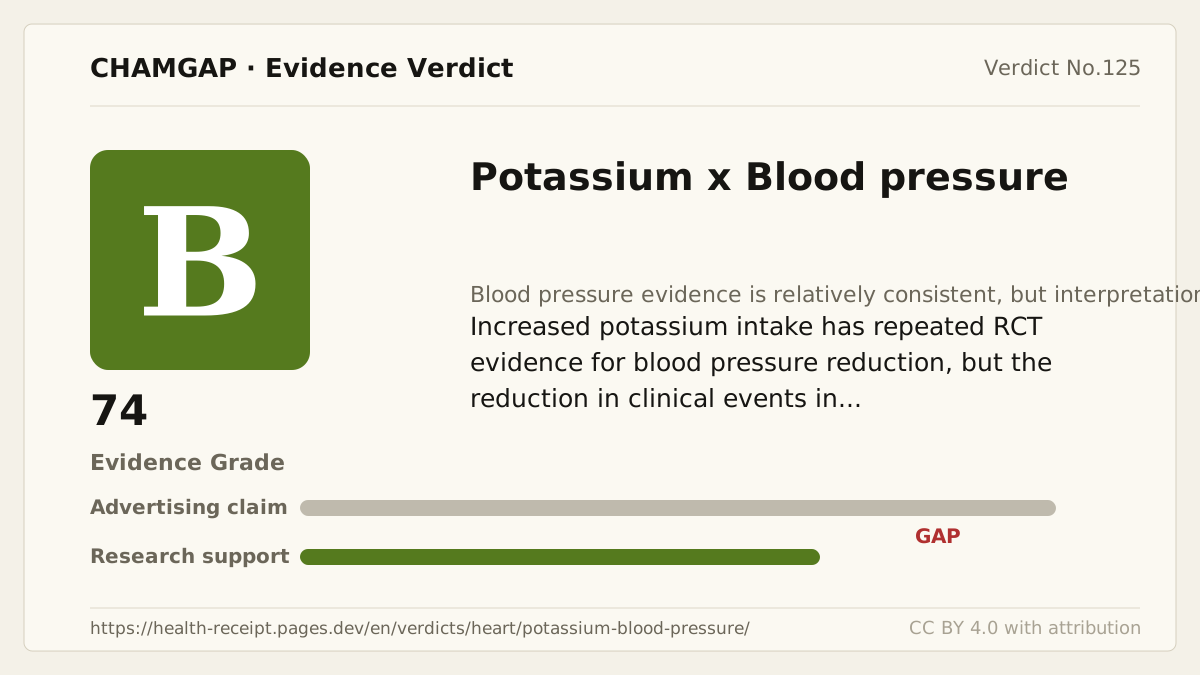
[Chamgap] Potassium × Blood pressure — Evidence Grade B·74. 4 cited sources checked. Source: https://chamgap.com/en/verdicts/heart/potassium-blood-pressure/ · CC BY 4.0CC BY 4.0 — free to use with attribution; do not distort grades, numbers, or verdict meaning.
What this document does and does not do
Chamgap is an information source. It reports what research has and has not confirmed; it does not tell readers what to take or buy. That decision belongs to readers and, when needed, medical or legal professionals. This verdict reflects literature available up to the search date and may change as new research appears. Nothing here is medical advice.