
Vitamin A,
does it really help with Eye health, night blindness, skin, and immunity?
research showsIn people with vitamin A deficiency or at risk of deficiency, the evidence for reducing ophthalmic symptoms such as night blindness and xerophthalmia, as well as child mortality, is clinically fairly robust. However, the claim that eye, skin, and immune function are additionally 'upgraded' in populations such as Korea, where vitamin A intake is generally adequate, is a separate issue. High-dose beta-carotene showed signals of increased lung cancer and mortality among smokers and people exposed to asbestos in ATBC and CARET, and excess retinol raises concerns about teratogenicity and hepatotoxicity.
ads claimKorean-language product copy often bundles 'visual adaptation in dark places,' 'eye health,' 'prevention of night blindness,' 'skin and mucous membrane health,' 'immune function,' and 'epithelial cell growth' together. Some products present beta-carotene as 'plant-based vitamin A' and combine it with lutein, zinc, omega-3, and vitamin D to claim eye, skin, and immune benefits at the same time.
Useful facts when choosing a product
- Preformed vitamin A, such as retinol/retinyl palmitate, has body storage and toxicity risks, so long-term high-dose intake must be distinguished from ordinary nutrient intake.
- Beta-carotene is provitamin A, but high-dose supplementation safety problems were confirmed in large RCTs among smokers and people exposed to asbestos.
- Evidence for deficiency correction fits deficiency or deficiency-risk groups best. It is separate from evidence for additional improvements in vision, skin, and immunity in adults with adequate intake.
- Domestic listed nutrient function claims are essential-nutrient function statements and are not clinical outcomes directly guaranteeing disease treatment, infection prevention, or skin-cosmetic improvement.
- High-dose retinol during pregnancy carries a separate safety context because of teratogenicity.
What the research actually shows
Vitamin A deficiency is a classic cause of night blindness and xerophthalmia. A Cochrane review of children aged 6 months to 5 years summarized that supplementation in areas at risk of deficiency reduced all-cause mortality, Bitot's spots, night blindness, and xerophthalmia. A review of supplementation during pregnancy found a signal for reduced maternal night blindness, but not all maternal and neonatal clinical outcomes improved consistently. In large RCTs such as ATBC and CARET, an increased risk of lung cancer or mortality was observed in high-dose beta-carotene/retinol supplementation groups among smokers or people exposed to asbestos. Skin and immune claims rely mainly on physiology showing that epithelial and mucosal integrity and susceptibility to infection worsen during deficiency, together with data from deficiency regions, while evidence for additional improvement in adults with adequate intake is limited.
Why this is classified as B (60)
B. In deficiency and deficiency-risk groups, there is clinical evidence related to night blindness, xerophthalmia, and child mortality. However, among the combined claims, skin and immune benefits and general eye-health improvement in people with adequate intake have limited direct clinical evidence, and high-dose beta-carotene and retinol safety concerns place the score at 60.
Counterpoint. If looking only at the public-health evidence from deficiency regions, the grade could be closer to a higher level. Conversely, if narrowed to claims of improved eye, skin, and immune function in general adults using Korean commercial combination products, it could be closer to C.
Rejudgment record. Final reassessment — Direct clinical evidence in deficiency/deficiency-risk groups is B, but claims that general eye, skin, and immune function are upgraded in people with adequate intake are limited. Safety signals from CARET/ATBC and excess retinol were reflected.
Cross-check — Codex and Claude
Evidence Table
| Study | Design | Sample | Funding | Endpoint | Result | Weight |
|---|---|---|---|---|---|---|
| Imdad A et al. 2022 | Cochrane systematic review and RCTs | 5 | Primarily public/nonprofit | Mortality, night blindness, and xerophthalmia | In children in areas at risk of deficiency, all-cause mortality, night blindness, Bitot's spots, and xerophthalmia decreased. | Core |
| McCauley ME et al. 2015 | Cochrane systematic review and RCTs | Primarily public/nonprofit | Maternal night blindness and maternal/neonatal outcomes | There was a signal for reduced maternal night blindness, but improvements in major maternal and neonatal clinical outcomes were not consistent. | Supporting | |
| ATBC Cancer Prevention Study Group 1994 | Large RCT | 29,133 | Public research | Lung cancer incidence | In male smokers, beta-carotene 20 mg/day increased lung cancer incidence. | Safety |
| Omenn GS et al. 1996 | Large RCT | 18,314 | Public research | Lung cancer and cardiovascular death | The trial was stopped early because lung cancer and all-cause mortality risk increased in the beta-carotene plus retinol group among people exposed to asbestos/smokers. | Safety |
Receipt — 4 References
All 4 cited sources were verified for existence at the original page (as of 2026-07-09).
Reviewed and approved: Chamgap Editorial Team · Approval date: 2026-07-09 · Corrections: none
Cite this verdict
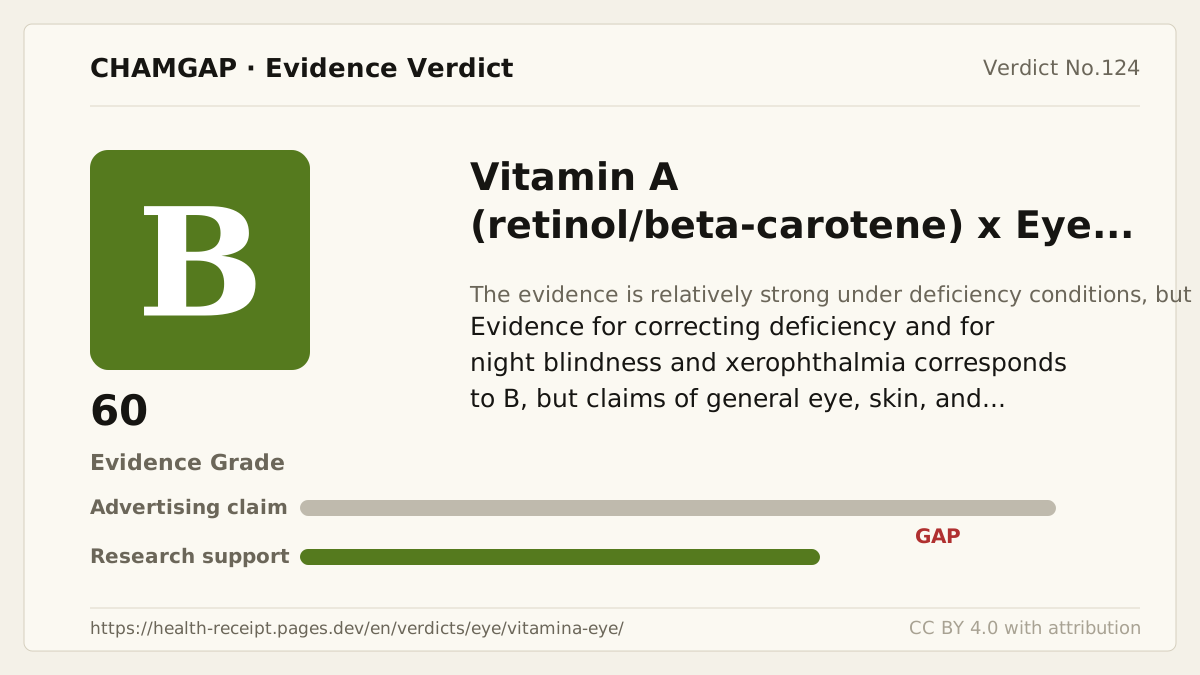
[Chamgap] Vitamin A (retinol/beta-carotene) × Eye health, night blindness, skin, and immunity — Evidence Grade B·60. 4 cited sources checked. Source: https://chamgap.com/en/verdicts/eye/vitamina-eye/ · CC BY 4.0CC BY 4.0 — free to use with attribution; do not distort grades, numbers, or verdict meaning.
What this document does and does not do
Chamgap is an information source. It reports what research has and has not confirmed; it does not tell readers what to take or buy. That decision belongs to readers and, when needed, medical or legal professionals. This verdict reflects literature available up to the search date and may change as new research appears. Nothing here is medical advice.