
Cocoa flavanols,
does it really help with Cognitive function and vascular/blood-flow health?
research showsCocoa flavanols show repeated small improvement signals for vascular endothelial function (FMD) and blood pressure in human RCTs and meta-analyses. However, cognitive improvement is mainly supported by small short-term studies and acute physiologic-response studies, while large long-term COSMOS cognitive studies did not confirm an overall cognitive effect. Flavanol content, sugars, fat, caffeine, and theobromine in commercial chocolate may differ from standardized research extracts.
ads claimIn the Korean market/articles, Lotte 'Dream Cacao Flavanol' was launched as a health functional food in 2015, and reports repeatedly mentioned 200.2 mg flavanols in 27 g/day, antioxidant and blood-circulation help, and EFSA recognition of improved blood flow. Some articles and informational content broadly connect cacao polyphenols to antioxidant effects, vascular health, blood pressure, prevention of atherosclerosis, improved cognitive ability, and dementia prevention. Recent informational articles also introduce a COSMOS subgroup analysis suggesting cocoa extract may help cognition in older adults with low diet quality, while also mentioning that the overall effect was absent and that chocolate products differ in sugar/saturated fat and flavanol content.
Useful facts when choosing a product
- Lotte 'Dream Cacao Flavanol,' reported in 2015, was said to contain 200.2 mg flavanols in the recommended daily intake of 27 g.
- The product was reported as being sold in health functional food sections of department stores and discount stores and in pharmacies, with a recommended consumer price of 15,000 won.
- Domestic reports mixed expressions such as 'blood circulation,' 'improved blood flow,' 'antioxidant,' and 'known to be effective for dementia prevention.' Regulatory recognition was not used as a criterion to raise or lower this evidence grade.
- Cocoa extract/cocoa drinks used in trials are often research products standardized for flavanol/epicatechin content, making direct extrapolation to ordinary chocolate products difficult.
What the research actually shows
The vascular evidence is relatively consistent. A meta-analysis of 42 acute/short-term RCTs reported improved FMD (chronic +1.34%, acute +3.19%) and diastolic blood pressure by about -1.60 mmHg, and the Cochrane blood-pressure review also judged there was moderate evidence for a small blood-pressure reduction of about 2 mmHg, mainly in healthy adults. However, FMD is a surrogate marker, and the large COSMOS cardiovascular RCT (21,442 people, 500 mg/day cocoa flavanols) was not statistically significant for the primary composite cardiovascular event endpoint (HR 0.90, 95% CI 0.78-1.02; P=0.11). Cognitive evidence is weaker. Two CoCoA RCTs of 90 people and a 37-person dentate gyrus study were positive for TMT/VFT or specific memory tasks, but Mars funding/test-product supply was repeated, and primary/key results depended on multiple cognitive tests or neuroimaging surrogate markers. Conversely, COSMOS-Mind in 2,262 people for 3 years and COSMOS-Clinic in 573 people for 2 years found no significant benefit of cocoa extract 500 mg/day on overall global cognition.
Why this is classified as C (48)
Separated by outcome, vascular evidence includes many human RCTs and meta-analyses, but the main effects focus on surrogate markers such as FMD and small blood-pressure changes, so the boundary rule caps it at C. Cognitive evidence includes small positive RCTs but depends heavily on Mars funding/product supply, and large independent long-term COSMOS-Mind and COSMOS-Clinic studies found null overall global cognition effects. Therefore, the combined 'cognition and vascular' claim is C with a score of 48.
Counterpoint. It is difficult to say there is no effect at all. Standardized cocoa flavanols repeatedly show small improvements in endothelial-function and blood-pressure markers, and signals were reported in some cognitive subgroups with lower diet quality or lower flavanol exposure. But these signals have not been established as overall-population cognitive improvement or clinical cardiovascular event prevention.
Rejudgment record. Draft=blinded convergent — Vascular outcomes show modest consistent signals in surrogate markers such as FMD and blood pressure but miss the primary clinical CVD endpoint, and cognition lacks an overall effect in large COSMOS after small/Mars-positive studies, so the compound claim is C
Cross-check — Codex and Claude
Evidence Table
| Study | Design | Sample | Funding | Endpoint | Result | Weight |
|---|---|---|---|---|---|---|
| Study 1 | gut/gastrointestinal/antioxidant | Domestic product report: 27 g/day, flavanols 200.2 mg, blood-circulation and antioxidant claims. | Core | |||
| Study 2 | Domestic report used expressions for improved blood circulation and dementia prevention together. | Core | ||||
| Mastroiacovo et al. 2015 | RCT | 90 | Possible manufacturer/industry involvement | cognition | 90 cognitively normal older adults, 8 weeks, 993/520/48 mg flavanols; MMSE null, TMT/VFT positive; Mars support. | Core |
| Desideri et al. 2012 | RCT | 90 | Possible manufacturer/industry involvement | 90 older adults with MCI, 8 weeks, 990/520/45 mg; MMSE null, TMT/VFT and BP/insulin-resistance positive; Mars support. | Core | |
| Baker et al. 2022 | 2,262 | 2,262 people, 3 years, cocoa extract 500 mg flavanols/day; no effect on global cognition (z=0.03, P=0.28). | Supporting | |||
| Vyas et al. 2024 | Cohort study | 573 | 573-person COSMOS clinic subcohort, 2 years; primary global cognition null (MD -0.01 SU). | Supporting | ||
| Brickman et al. 2014 | RCT | 37 | Possible manufacturer/industry involvement | memory | 37 people aged 50-69, 3 months, 900 vs 10 mg flavanols; DG fMRI and a specific memory task positive; Mars product/support. | Supporting |
| Rendeiro et al. 2020 | 17 | Possible manufacturer/industry involvement | 17 healthy young men, acute crossover; positive for brain oxygenation response and high-difficulty Stroop, but centered on a small surrogate-marker study. | Supporting | ||
| Hooper et al. 2012 | Meta-analysis of RCTs | 1,297 | 42 acute/short-term RCTs, 1,297 people; improved FMD and DBP -1.60 mmHg, evidence low-moderate. | Supporting | ||
| Ried et al. 2017 | blood pressure | Moderate evidence that flavanol-rich chocolate/cocoa lowers short-term blood pressure by about 2 mmHg, with heterogeneity. | Supporting | |||
| Sesso et al. 2022 | 21,442 | Possible manufacturer/industry involvement | 21,442 people, 3.6 years; primary total CVD events HR 0.90 (P=0.11) null, secondary CVD death HR 0.73. | Supporting | ||
| Socci et al. 2017 | cognition | Review summarizing cognitive studies: acute/chronic RCTs are partly positive but few and heterogeneous. | Supporting |
Receipt — 12 References
Of 12 cited sources, 5 had limited original-page access (blocked or summary-only) and were verified via index/summary, marked partial; the rest were verified at the original page. As of 2026-07-07.
Reviewed and approved: Chamgap Editorial Team · Approval date: 2026-07-07 · Corrections: none
Cite this verdict
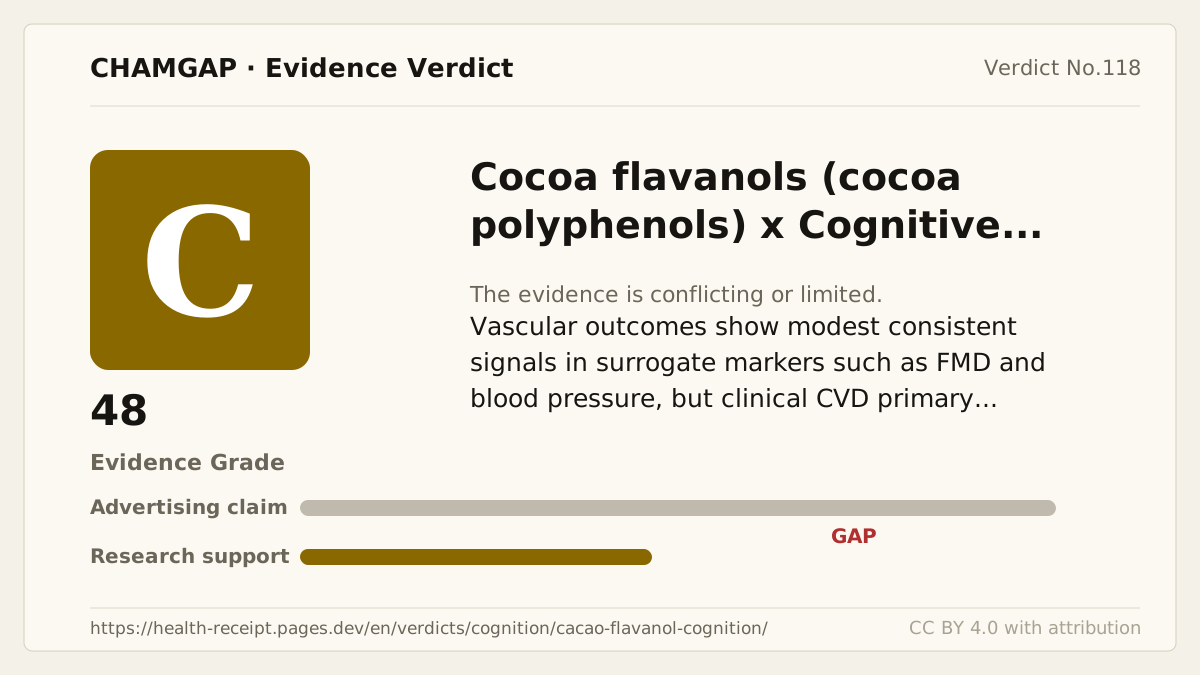
[Chamgap] Cocoa flavanols x cognitive function and vascular/blood-flow health — Evidence Grade C·48. 12 cited sources checked. Source: https://chamgap.com/en/verdicts/cognition/cacao-flavanol-cognition/ · CC BY 4.0CC BY 4.0 — free to use with attribution; do not distort grades, numbers, or verdict meaning.
What this document does and does not do
Chamgap is an information source. It reports what research has and has not confirmed; it does not tell readers what to take or buy. That decision belongs to readers and, when needed, medical or legal professionals. This verdict reflects literature available up to the search date and may change as new research appears. Nothing here is medical advice.