
Inositol,
does it really help with PCOS, mood, and blood glucose?
research showsInositol has a biological rationale in PCOS through insulin signaling, ovarian function, and androgen regulation, and there are several RCTs and meta-analyses. However, the latest evidence review for international guidelines concludes that evidence for clinical outcomes is limited and uncertain. Glycemia/insulin resistance shows some signals in metabolic markers such as HOMA-IR, fasting insulin, and AUC, but the findings are inconsistent. Mood evidence directly in PCOS is scarce, and general depression/anxiety studies are small and uncertain. Therefore, the consumer claim that PCOS, mood, and glucose are all reliably improved is graded C.
ads claimIn the Korean market, inositol is mainly linked to 'female hormone balance,' 'menstrual cycle,' 'ovulation,' 'polycystic ovary syndrome,' 'pregnancy preparation,' 'infertility,' 'acne,' 'blood-glucose regulation,' 'insulin resistance,' and 'mood, stress, sleep.' Many products emphasize a 40:1 ratio of myo-inositol to D-chiro-inositol, a 2-4 g/day dose, and combinations with folic acid, vitamin D, chromium, and magnesium. Korean iHerb articles introduce PCOS improvement, healthy glucose metabolism, metabolic function, weight management, and reproductive health together, while domestic pharmacy/health articles and hospital-type content describe increased insulin responsiveness, blood-glucose control, hormone balance, and improvement of menstrual irregularity/ovulation. Some content expands to mood improvement, energy, sleep, panic, obsessive-compulsive symptoms, and depression-related wording.
Useful facts when choosing a product
- Marketed products commonly contain myo-inositol alone as a 2 g sachet or a myo-inositol:D-chiro-inositol 40:1 combination.
- PCOS RCTs mix myo-inositol, D-chiro-inositol, folic-acid co-use, metformin co-use, and ovulation induction/IVF co-interventions, so standalone ingredient effects and combination effects must be distinguished.
- Glucose claims are mostly surrogate markers such as fasting insulin, HOMA-IR, and AUC glucose/insulin, and are not the same as long-term clinical outcomes such as reduced diabetes incidence or complications.
- Mood claims lack direct RCTs in PCOS, and general mental-health studies also center on small studies using high-dose inositol.
- Gastrointestinal discomfort, gas, diarrhea, and headache may generally be reported. Use during pregnancy preparation, infertility treatment, or pregnancy comes from different research contexts, and product quality and dose variation should also be considered.
What the research actually shows
The PCOS evidence differs by outcome. The 2024 JCEM systematic review for the 2023 international PCOS guideline included 30 RCTs and 2230 people, but many key outcomes had low or very low certainty. D-chiro-inositol improved ovulation rate, AUC glucose/insulin, and some free testosterone outcomes in a few RCTs, but samples were very small, around 64 people. Myo-inositol+folic acid showed signals for improved HOMA-IR and fasting insulin, but certainty was very low, and pregnancy, clinical pregnancy, and menstrual regularity were not clear. In comparisons of myo-inositol with metformin, fasting glucose, fasting insulin, HOMA-IR, regular menses, ovulation, and clinical pregnancy were generally not different, while metformin was better for hirsutism and central adiposity. The Cochrane review on infertile women with PCOS also could not confirm improvements in live birth or clinical pregnancy. For mood, the 2024 JCEM review had only one PCOS QoL/energy-fatigue study and found no difference. General depression/anxiety meta-analysis also had 7 depression RCTs and 4 anxiety RCTs, with small total samples and no significant main symptom-score effects. Glucose evidence is centered on PCOS surrogate markers, and gestational-diabetes-prevention meta-analysis is a separate high-risk pregnancy context that is difficult to merge directly into general PCOS supplement claims.
Why this is classified as C (56)
The compound-claim principle was applied. In PCOS, many human RCTs and meta-analyses exist, so the literature is not simply absent. However, the latest guideline review judged clinical efficacy evidence to be limited and uncertain after excluding trials with research-integrity concerns and applying GRADE. Positive signals are concentrated in surrogate markers or small-sample outcomes such as HOMA-IR, fasting insulin, AUC glucose/insulin, free testosterone, and ovulation, so the surrogate-marker boundary rule supports a maximum of C. Mood evidence directly in PCOS is minimal, and general mental-health meta-analyses did not repeatedly show significant main effects. Glucose evidence is mostly short-term markers in PCOS or gestational-diabetes contexts and is hard to broaden to general glucose-management claims.
Counterpoint. Early D-chiro-inositol RCTs and some myo-inositol plus folic-acid studies reported favorable results for ovulation, HOMA-IR, and fasting insulin. Some comparisons also reported fewer gastrointestinal adverse effects than metformin. However, these signals are not consistent or high-quality enough to establish overall clinical outcomes, and it is exaggerated to merge specific PCOS subgroups, infertility-treatment adjuncts, and gestational-diabetes prevention into general female hormone, mood, and glucose supplement claims.
Rejudgment record. Convergent — Inositol has PCOS ovulation and insulin surrogate-marker signals, but evidence for pregnancy/live-birth clinical endpoints and mood is limited
Cross-check — Codex and Claude
Evidence Table
| Study | Design | Sample | Funding | Endpoint | Result | Weight |
|---|---|---|---|---|---|---|
| Fitz V, Graca S, Mahalingaiah S et al. 2023 | Meta-analysis of RCTs | 2230 | Possible manufacturer/industry involvement | Review of 30 RCTs and 2230 people; concluded that although some metabolic-marker signals exist, evidence for efficacy on PCOS clinical outcomes is limited and uncertain. | Core | |
| Teede HJ, Tay CT, Laven JJE et al. 2023 | Summarized that inositol has limited harm and possible metabolic-marker improvement, but clinical effects such as ovulation, hirsutism, and weight are limited, and use in infertility treatment is experimental. | Core | ||||
| Showell MG, Mackenzie-Proctor R, Jordan V, Hodgson R, Farquhar C 2018 | RCT | 1472 | 13 RCTs, 1472 infertile women with PCOS; whether live birth and clinical pregnancy improve is uncertain based on low to very low certainty evidence. | Core | ||
| Nestler JE, Jakubowicz DJ, Reamer P, Gunn RD, Allan G 1999 | RCT | An early placebo-controlled RCT of D-chiro-inositol reported ovulation 86% vs 27% and improved metabolic markers. | Core | |||
| Iuorno MJ, Jakubowicz DJ, Baillargeon JP et al. 2002 | A D-chiro-inositol RCT in lean women with PCOS reported improvements in insulin, androgen, and some metabolic abnormalities. | Supporting | ||||
| Costantino D, Minozzi G, Minozzi E, Guaraldi C 2009 | Double-blind trial | 42 | Possible manufacturer/industry involvement | A double-blind trial in 42 women with PCOS reported improvements in circulating insulin, total testosterone, and metabolic/hormonal markers. | Supporting | |
| Kachhawa G, Senthil Kumar KV, Kulshrestha V et al. 2022 | RCT | An open-label RCT in young women with PCOS reported that the myo-inositol + D-chiro-inositol combination was effective for improving menstrual cycles and insulin resistance. | Supporting | |||
| Mukai T, Kishi T, Matsuda Y, Iwata N 2014 | Meta-analysis of RCTs | 70 | anxiety/depression | Meta-analysis of 7 depression RCTs (n=242) and 4 anxiety RCTs (n=70) found no statistically significant effect on depression, anxiety, or obsessive-compulsive symptoms. | Supporting | |
| Taylor MJ, Wilder H, Bhagwagar Z, Geddes J 2004 | gut/gastrointestinal/depression | Cochrane review concluding that the effect of inositol on depressive disorders is unclear. | Supporting | |||
| Crawford TJ, Crowther CA, Alsweiler J, Brown J 2015 | blood glucose/gut/gastrointestinal/pregnancy | Summarized that evidence for myo-inositol during pregnancy to prevent gestational diabetes is insufficient and larger RCTs are needed. | Supporting |
Receipt — 10 References
Of 10 cited sources, 4 had limited original-page access (blocked or summary-only) and were verified via index/summary, marked partial; the rest were verified at the original page. As of 2026-07-07.
Reviewed and approved: Chamgap Editorial Team · Approval date: 2026-07-07 · Corrections: none
Cite this verdict
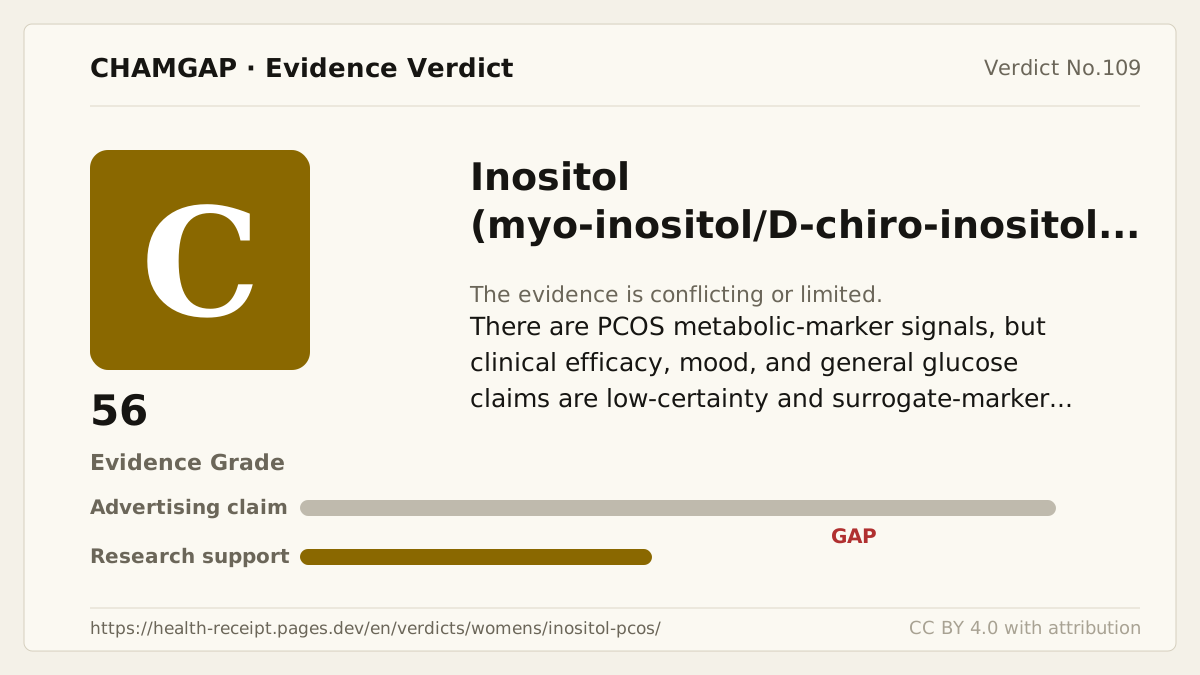
[Chamgap] Inositol (myo-inositol/D-chiro-inositol) x PCOS, mood, and blood glucose — Evidence Grade C·56. 10 cited sources checked. Source: https://chamgap.com/en/verdicts/womens/inositol-pcos/ · CC BY 4.0CC BY 4.0 — free to use with attribution; do not distort grades, numbers, or verdict meaning.
What this document does and does not do
Chamgap is an information source. It reports what research has and has not confirmed; it does not tell readers what to take or buy. That decision belongs to readers and, when needed, medical or legal professionals. This verdict reflects literature available up to the search date and may change as new research appears. Nothing here is medical advice.