
Picrorhiza kurroa extract,
does it really help with Improvement in liver function and liver enzymes?
research showsKutki root powder showed signals of faster bilirubin, SGOT, and SGPT recovery in an old double-blind placebo-controlled trial of 33 patients with acute viral hepatitis. The evidence is limited to one small two-week study, lacks independent replication with modern standardized extracts, and a confirmatory fatty-liver trial remains in progress, resulting in C with 41 points.
ads claimAdvertisements describe kutki as powerful liver protection, liver regeneration, and normalization of liver values. The core published human evidence is one 33-person root-powder trial in a specific acute-hepatitis population and does not represent ordinary supplements or all chronic liver diseases.
Useful facts when choosing a product
- The key trial used 375 mg of root powder three times daily, totaling 1,125 mg/day for two weeks.
- The trial capsules were analyzed for picrosides I and II, but standardization can differ in marketed extracts.
- An acute viral-hepatitis result is not the same as a result in fatty or chronic liver disease.
- A standardized Picroliv fraction and simple kutki root powder are different formulations.
What the research actually shows
The Vaidya 1996 study randomized HBsAg-negative patients with acute viral hepatitis to kutki root powder 375 mg three times daily for two weeks, with 15 receiving kutki and 18 placebo. Between-group differences in bilirubin, SGOT, and SGPT were significant, and the mean time for bilirubin to fall to 2.5 mg% was 27.44 versus 75.9 days. A 2022 translational review shows that later liver-related clinical data are concentrated in single-arm studies, combinations, or low-quality research. A 170-person phase III fatty-liver trial of standardized Picroliv had not reached completion by July 2026.
Why this is classified as C (41)
The positive biochemical signal from an ingredient-only placebo-controlled human trial places the evidence above ?. Its 33-person sample, two-week duration, age, disease and formulation extrapolation, and lack of independent replication limit it to the low end of C with 41 points.
Counterpoint. An early signal exists for recovery time and liver enzymes in acute viral hepatitis. This assessment does not assume that the signal has been replicated in modern standardized products or other liver diseases.
Rejudgment record. New assessment — Positive bilirubin and liver-enzyme signals in one 33-person, two-week placebo-controlled trial, but an old study with no independent replication and limited disease and formulation generalizability
Cross-check — Codex and Claude
Evidence Table
| Study | Design | Sample | Funding | Endpoint | Result | Weight |
|---|---|---|---|---|---|---|
| Vaidya AB et al. 1996 | Randomized double-blind placebo-controlled trial with preclinical studies | 33 | Affiliated with Ciba Research Centre | Bilirubin, SGOT, SGPT, and recovery time | Biochemical measures and time to bilirubin recovery improved with kutki versus placebo. | Key |
| Raut A et al. 2022 | Translational review of traditional, preclinical, and clinical evidence | Unknown | Translational potential in fatty liver and clinical-trial status | Clinical data were concentrated in a few single-arm or combination studies, supporting the need for confirmatory trials. | Supportive |
Receipt — 2 References
All 2 cited sources were verified for existence at the original page (as of 2026-07-11).
Reviewed and approved: Chamgap Editorial Team · Approval date: 2026-07-11 · Corrections: none
Cite this verdict
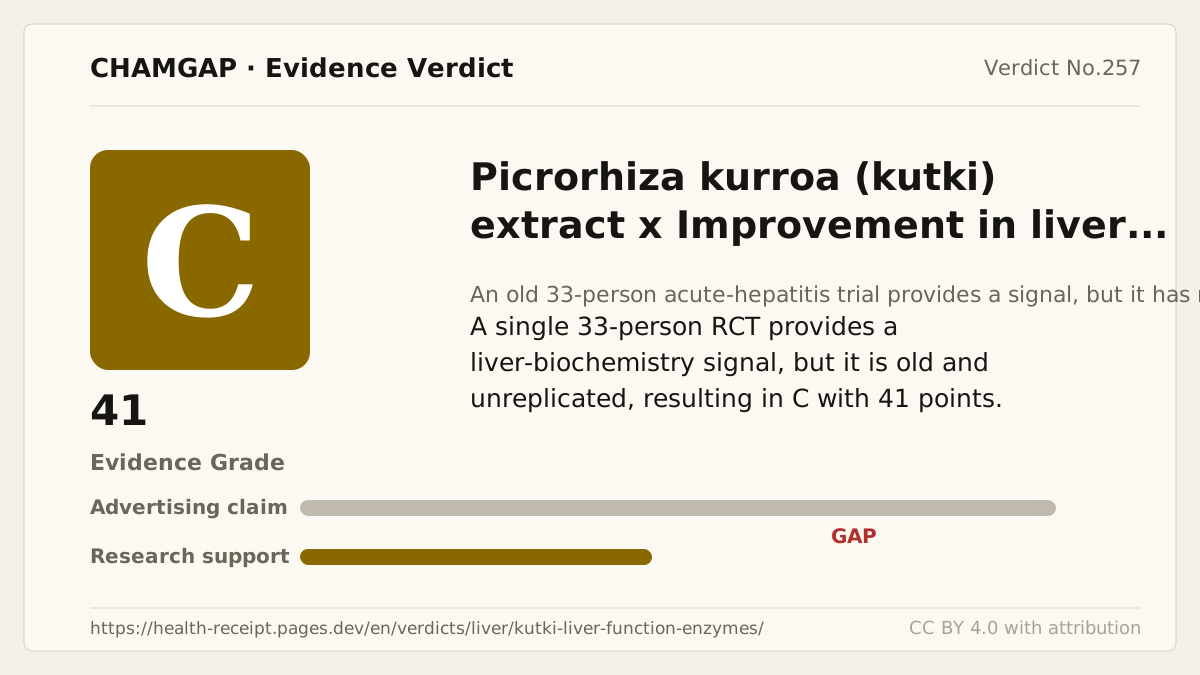
[Chamgap] Picrorhiza kurroa (kutki) extract x improvement in liver function and liver enzymes — Evidence Grade C·41. 2 cited sources checked. Source: https://chamgap.com/en/verdicts/liver/kutki-liver-function-enzymes/ · CC BY 4.0CC BY 4.0 — free to use with attribution; do not distort grades, numbers, or verdict meaning.
What this document does and does not do
Chamgap is an information source. It reports what research has and has not confirmed; it does not tell readers what to take or buy. That decision belongs to readers and, when needed, medical or legal professionals. This verdict reflects literature available up to the search date and may change as new research appears. Nothing here is medical advice.