
Korean black raspberry extract powder,
does it really help with Improvement of alcoholic liver-injury markers?
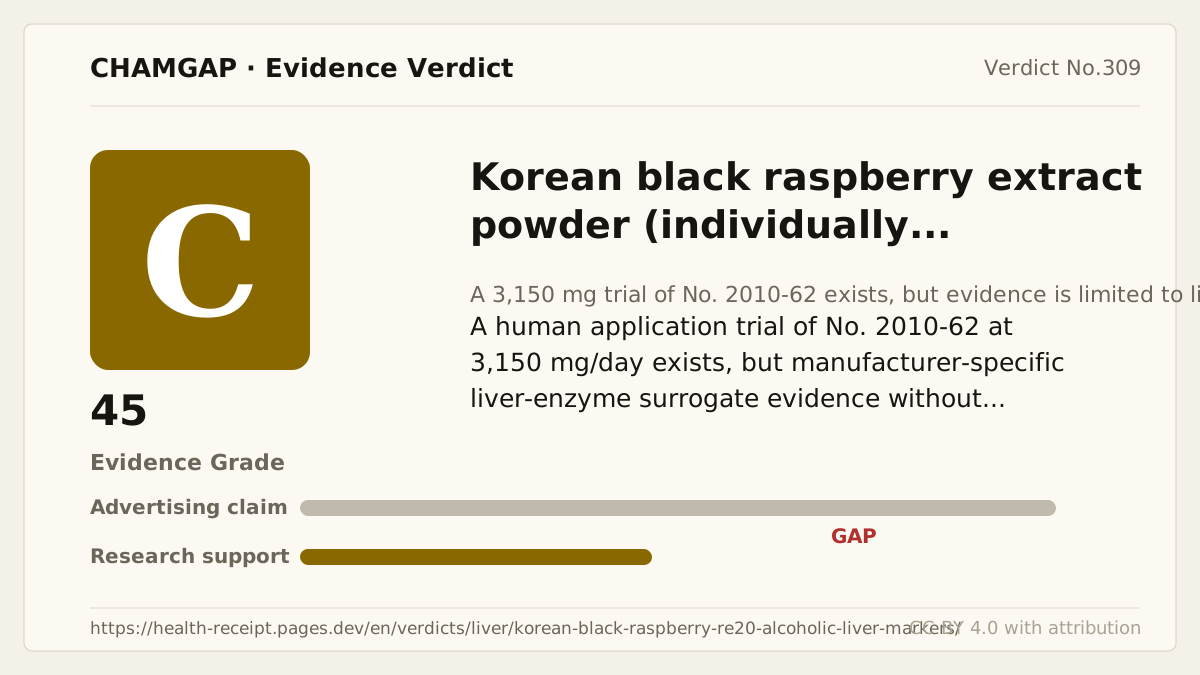
research showsThe correct ingredient for alcoholic liver-injury markers is not the RE-20 cholesterol ingredient at 600 mg/day, but Korean black raspberry extract powder No. 2010-62 at 3,150 mg/day. A human application trial of this ingredient exists, but it is manufacturer-specific evidence using liver-enzyme surrogates without independent replication, so the rating is C.
ads claimBecause both ingredients share a Korean black raspberry name, cholesterol evidence for RE-20 may be mixed with liver-marker evidence for No. 2010-62. The ingredient name, authorization number, and daily intake must match.
Useful facts when choosing a product
- The ingredient for alcoholic liver-injury markers is Korean black raspberry extract powder No. 2010-62 at 3,150 mg/day.
- RE-20 at 600 mg/day is a separate ingredient for blood cholesterol and is excluded from this assessment.
- The human application trial used liver-enzyme surrogates rather than clinical liver-disease outcomes.
- Regulatory recognition itself does not raise the evidence grade.
What the research actually shows
Korean black raspberry extract powder No. 2010-62 has a recognized daily intake of 3,150 mg/day, and its review dossier contains a human application trial evaluating alcoholic liver-injury markers. However, the public evidence is concentrated in one applicant-specific product and liver-enzyme surrogates, without independent verification of the sample and numerical results or replication by another group. The RE-20 trial at 600 mg/day used a separate cholesterol ingredient and is excluded.
Why this is classified as C (45)
A human application trial of Korean black raspberry extract powder No. 2010-62 at 3,150 mg/day exists, so the rating is not unknown. Regulatory recognition is not grading evidence, and positive evidence is concentrated in one manufacturer-specific product using liver-enzyme surrogates, without clinical liver-disease outcomes or independent replication. This supports C with 45 points.
Counterpoint. A human signal exists for the exact ingredient, but it must be interpreted within the liver-enzyme scope of No. 2010-62 without transferring RE-20 cholesterol evidence.
Rejudgment record. Reassessment (cross-check reflected) — The ingredient misattribution was corrected by excluding RE-20 at 600 mg/day and using the human application trial of Korean black raspberry extract powder No. 2010-62 at 3,150 mg/day; evidence remains manufacturer-specific, limited to liver-enzyme surrogates, and lacks independent replication, while regulatory recognition is not grading evidence
Cross-check — Codex and Claude
Evidence Table
| Study | Design | Sample | Funding | Endpoint | Result | Weight |
|---|---|---|---|---|---|---|
| Study 1 | Human application trial submitted for individual ingredient recognition; limited public detail | Applicant-specific ingredient evidence | Liver-enzyme markers related to alcoholic liver injury | The review dossier contains a human application trial of Korean black raspberry extract powder at 3,150 mg/day, but numerical results and independent replication are not public. | Key evidence, low C |
Receipt — 1 References
All 1 cited sources were verified for existence at the original page (as of 2026-07-11).
Reviewed and approved: Chamgap Editorial Team · Approval date: 2026-07-11 · Corrections: none
Cite this verdict
[Chamgap] Korean black raspberry extract powder No. 2010-62 × improvement of alcoholic liver-injury markers — Evidence Grade C·45. 1 cited sources checked. Source: https://chamgap.com/en/verdicts/liver/korean-black-raspberry-re20-alcoholic-liver-markers/ · CC BY 4.0CC BY 4.0 — free to use with attribution; do not distort grades, numbers, or verdict meaning.
What this document does and does not do
Chamgap is an information source. It reports what research has and has not confirmed; it does not tell readers what to take or buy. That decision belongs to readers and, when needed, medical or legal professionals. This verdict reflects literature available up to the search date and may change as new research appears. Nothing here is medical advice.