
Olive leaf extract,
does it really help with Improvement in blood pressure?
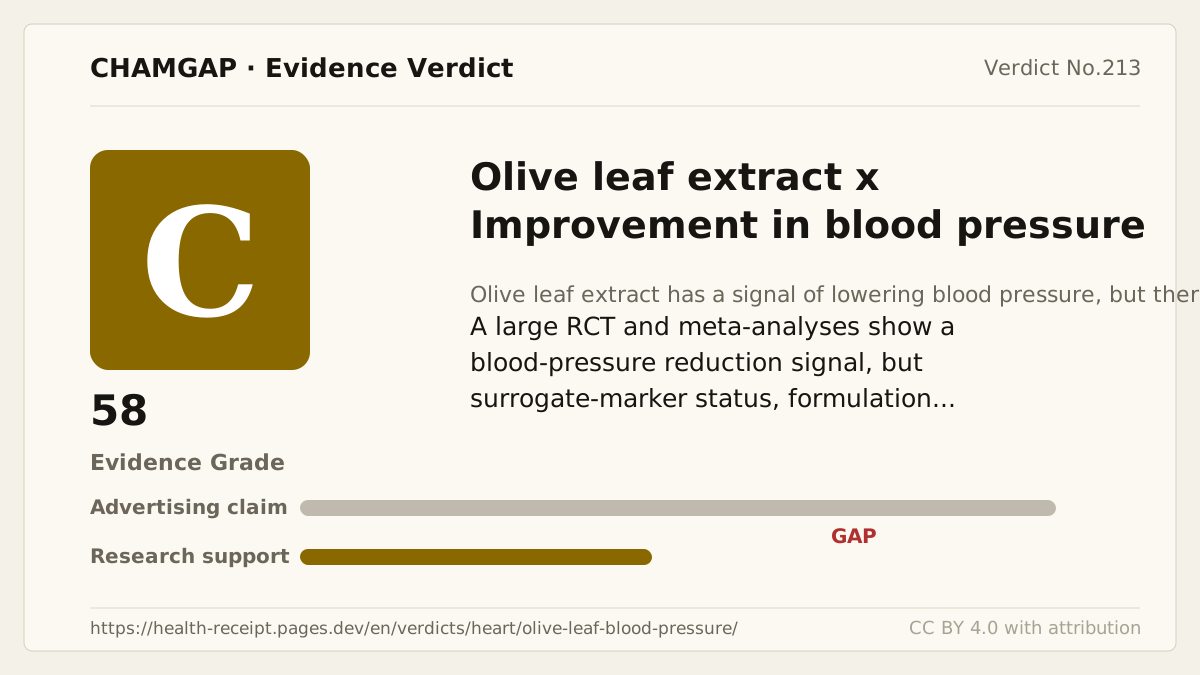
research showsA recent 621-participant multicenter RCT found that olive leaf extract lowered 24-hour systolic blood pressure versus placebo at 12 weeks, and earlier meta-analyses also reported systolic-pressure reduction signals of about 3.9-6.0 mmHg. However, dose, formulation, and results vary across trials, the endpoint is the surrogate marker blood pressure, and cardiovascular-event data are absent, so the rating is upper C.
ads claimAdvertising may present oleuropein content, normalization of blood pressure, vascular protection, and simultaneous cholesterol and glucose management together. Human evidence consists of short-term blood-pressure changes with different extracts and did not directly evaluate myocardial-infarction or stroke prevention or substitution for antihypertensive medication.
Useful facts when choosing a product
- Trial products are standardized extracts with different oleuropein and hydroxytyrosol contents and are not the same ingredient as plain olive oil.
- Research doses vary, including 500-1,000 mg/day extract or 136 mg/day oleuropein.
- The recent large trial tested 12-week addition in patients already receiving antihypertensive treatment.
- The possibility of additional hypotension with antihypertensive drugs and long-term interaction data remain separate questions.
What the research actually shows
The Lockyer 2017 crossover RCT reported 24-hour systolic pressure -3.33 mmHg and diastolic pressure -2.42 mmHg after six weeks in 60 men with prehypertension, with the ingredient manufacturer providing 50% of funding. The Ismail 2021 meta-analysis of five trials and 325 participants found results varying by comparison: 500 mg/day produced systolic -5.78 mmHg, while the 1,000 mg/day placebo comparison was not significant. The Razmpoosh 2022 meta-analysis of 12 studies and 819 participants calculated systolic -3.86 mmHg. The Lamti 2025 multicenter RCT found significantly lower 24-hour systolic pressure versus placebo after 12 weeks in 621 patients receiving treatment for hypertension and reported no significant adverse events. In contrast, the Stevens 2021 RCT found no blood-pressure difference after eight weeks in 77 adults with overweight and high cholesterol.
Why this is classified as C (58)
The multicenter 621-participant RCT and multiple meta-analyses raise the blood-pressure reduction signal to the upper end of C. However, blood pressure itself is a surrogate marker, no clinical-event RCT exists, and formulation and dose heterogeneity and negative trials remain, resulting in C with 58 points.
Counterpoint. The recent large RCT using 24-hour ambulatory pressure is more direct and precise than earlier small studies. This assessment recognizes that numerical effect while separating it from long-term cardiovascular prevention.
Rejudgment record. New assessment — A 621-participant multicenter RCT and meta-analyses show a blood-pressure reduction signal, but the endpoint is a surrogate marker, formulation, dose, and result heterogeneity and some negative trials remain, and cardiovascular-event data are absent
Cross-check — Codex and Claude
Evidence Table
| Study | Design | Sample | Funding | Endpoint | Result | Weight |
|---|---|---|---|---|---|---|
| Lockyer S et al. 2017 | Randomized double-blind controlled crossover trial | 60 | Comvita Limited provided 50% of funding | Twenty-four-hour and daytime systolic and diastolic blood pressure and lipids | After six weeks, 24-hour systolic pressure was 3.33 mmHg lower and diastolic pressure 2.42 mmHg lower than control. | Key |
| Ismail MA et al. 2021 | Systematic review and meta-analysis | 325 | Academic institutions | Systolic and diastolic blood pressure, lipids, and inflammatory markers | The 500 mg/day comparison showed systolic -5.78 mmHg, but another 1,000 mg/day placebo comparison was not significant, preventing a robust conclusion. | Key |
| Razmpoosh E et al. 2022 | Systematic review and meta-analysis of randomized controlled trials | 819 | Academic institutions | Blood pressure, lipids, glycemia, inflammation, and liver and kidney markers | Overall systolic pressure was 3.86 mmHg lower; in the hypertension subgroup, systolic was 4.81 and diastolic 2.45 mmHg lower. | Key |
| Lamti F et al. 2025 | Multicenter randomized double-blind placebo-controlled trial | 621 | A coauthor was affiliated with Belpharma Laboratories; detailed funding unknown | Twelve-week 24-hour systolic and diastolic pressure, blood-pressure load, and variability | Twenty-four-hour systolic pressure decreased 6.4 mmHg from baseline and significantly versus placebo; no significant adverse events were reported. | Key |
| Stevens Y et al. 2021 | Randomized double-blind placebo-controlled trial | 77 | Partly funded by BioActor BV; the first author was company-affiliated | Lipids, oxidized LDL, blood pressure, glucose, and insulin | After 500 mg/day for eight weeks, there was no significant difference from placebo in blood pressure or other major measures. | Supportive |
Receipt — 5 References
All 5 cited sources were verified for existence at the original page (as of 2026-07-11).
Reviewed and approved: Chamgap Editorial Team · Approval date: 2026-07-11 · Corrections: none
Cite this verdict
[Chamgap] Olive leaf extract x improvement in blood pressure — Evidence Grade C·58. 5 cited sources checked. Source: https://chamgap.com/en/verdicts/heart/olive-leaf-blood-pressure/ · CC BY 4.0CC BY 4.0 — free to use with attribution; do not distort grades, numbers, or verdict meaning.
What this document does and does not do
Chamgap is an information source. It reports what research has and has not confirmed; it does not tell readers what to take or buy. That decision belongs to readers and, when needed, medical or legal professionals. This verdict reflects literature available up to the search date and may change as new research appears. Nothing here is medical advice.