
Iodine,
does it really help with Thyroid function?
research showsIodine is a nutrient required for thyroid hormone synthesis, so in severe deficiency, goiter, hypothyroidism, and harm to fetal and infant neurodevelopment are established. However, the claim that supplements 'improve thyroid function' usually relies on surrogate markers such as urinary iodine, TSH, thyroglobulin, and thyroid size, as well as deficiency conditions. Korea tends to have abundant iodine intake through seaweed such as miyeok, gim, and kelp, so deficiency is uncommon, while excessive intake can cause hypothyroidism or hyperthyroidism; therefore the evidence for benefit from general supplementation is weak.
ads claimKorean-language products and content connect iodine with 'thyroid function,' 'metabolism,' 'energy,' 'body temperature,' 'maternal nutrition,' and 'seaweed minerals.' Some emphasize kelp, kelp-derived products, or seaweed powder as natural iodine, or bundle it with selenium, zinc, and vitamin D as thyroid complexes.
Useful facts when choosing a product
- Iodine is a nutrient for which both deficiency and excess are problems.
- Seaweed and kelp products can vary greatly in iodine content by product.
- In Korean diets, iodine intake is often already high through miyeok, gim, kelp, and similar foods.
- Thyroid disease, thyroid medications, amiodarone, and a history of radioactive iodine treatment can change the interpretation of excess and deficiency.
- MFDS-listed function claims are essential-nutrient statements of the type 'necessary for thyroid hormone synthesis,' not clinical-effect claims for improving thyroid function.
What the research actually shows
Iodine is an element that forms T4 and T3, and severe deficiency is linked to goiter, hypothyroidism, and harm to neurodevelopment during pregnancy and infancy. A Cochrane review of iodine supplementation before conception, during pregnancy, and postpartum assessed that the number and certainty of RCTs were limited and that it was difficult to establish improvement in major clinical outcomes. RCTs in mildly deficient pregnant women showed changes in urinary iodine or some thyroid markers, but long-term clinical outcomes such as child neurodevelopment were not consistent. In Korea, many people have high iodine intake through seaweed consumption, so excess exposure and the possibility of thyroid dysfunction are evaluated together rather than only deficiency correction.
Why this is classified as C (52)
C. The harms of severe deficiency and the need to correct deficiency are established, but general supplement claims of improved thyroid function rely on surrogate markers and deficiency conditions. The grade is lowered to C to reflect Korea's high iodine-intake environment and the possibility of thyroid dysfunction from excessive intake.
Counterpoint. In areas of clear severe deficiency or in deficient individuals, the strength of evidence reads higher. In iodine-sufficient regions, claims for general kelp or iodine supplementation may carry more interpretation around excess exposure than benefit.
Rejudgment record. Final reassessment — The harms of severe deficiency are established, but general supplementation claims of improved thyroid function depend heavily on surrogate markers and deficiency conditions. This was lowered to C to reflect Korea's abundant iodine intake and excess-risk context.
Cross-check — Codex and Claude
Evidence Table
| Study | Design | Sample | Funding | Endpoint | Result | Weight |
|---|---|---|---|---|---|---|
| Harding KB et al. 2017 | Cochrane systematic review and RCTs | Primarily public/nonprofit | Thyroid markers and maternal-child clinical outcomes | It assessed that the amount and certainty of evidence were limited and that improvement in major clinical outcomes was difficult to establish. | Core | |
| Gowachirapant S et al. 2017 | Randomized double-blind RCT | 832 | Public/academic | Child neurodevelopment | In supplementation of mildly deficient pregnant women, benefits for child neurodevelopment were not consistently confirmed. | Contrary |
| Lazarus JH et al. 2014/2015 | Randomized RCT | Public/academic | Maternal thyroid function and child cognition | Iodine supplementation in pregnant women changed some iodine-status markers, but improvement in child cognitive outcomes was uncertain. | Supporting | |
| Zimmermann MB et al. 2004/2006 | School-based supplementation study | Public/academic | Thyroid size, TSH, and thyroglobulin | In iodine-deficient children, indicators such as thyroid size and thyroglobulin improved. | Supporting |
Receipt — 4 References
All 4 cited sources were verified for existence at the original page (as of 2026-07-09).
Reviewed and approved: Chamgap Editorial Team · Approval date: 2026-07-09 · Corrections: none
Cite this verdict
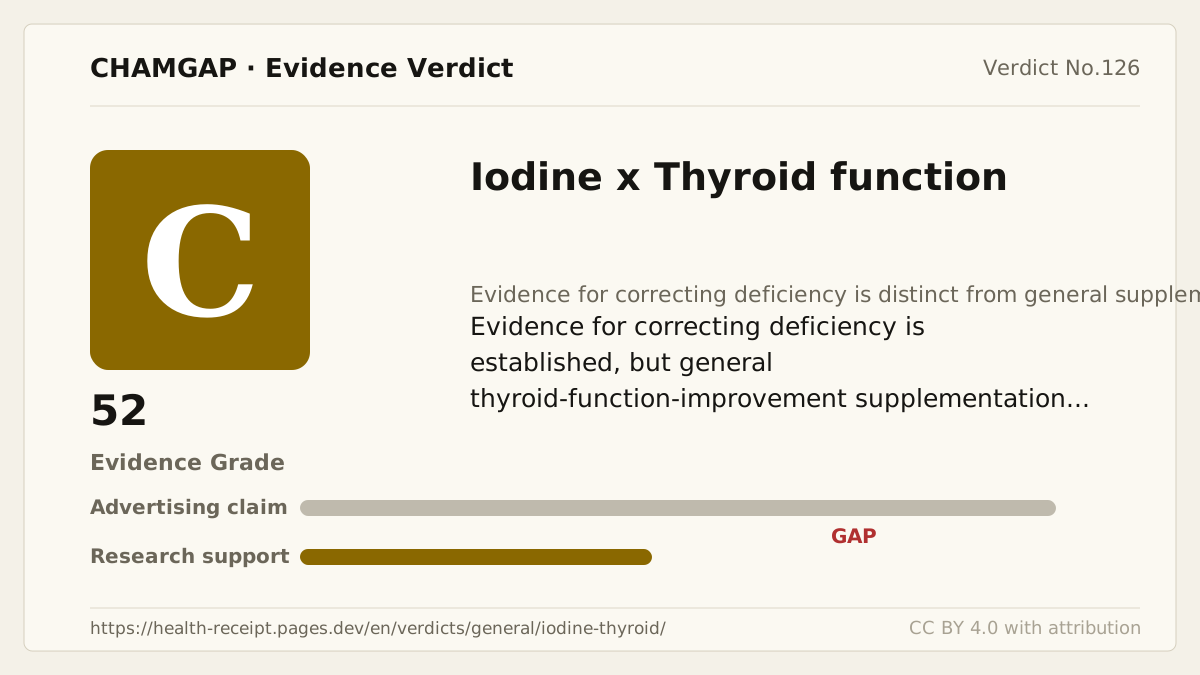
[Chamgap] Iodine × Thyroid function — Evidence Grade C·52. 4 cited sources checked. Source: https://chamgap.com/en/verdicts/general/iodine-thyroid/ · CC BY 4.0CC BY 4.0 — free to use with attribution; do not distort grades, numbers, or verdict meaning.
What this document does and does not do
Chamgap is an information source. It reports what research has and has not confirmed; it does not tell readers what to take or buy. That decision belongs to readers and, when needed, medical or legal professionals. This verdict reflects literature available up to the search date and may change as new research appears. Nothing here is medical advice.