
Para-aminobenzoic acid,
does it really help with Prevention of gray hair and restoration of hair color?
research showsEvidence for PABA is limited to uncontrolled, subjectively assessed, or combination-treatment observations from 1941 and 1943, plus incidental reports during 12 to 24 g/day high-dose treatment for other diseases. Temporary repigmentation during use was reported, but the evidence was uncontrolled and involved potentially toxic doses. High-quality human efficacy evidence for preventing gray hair or restoring color durably is absent, resulting in D.
ads claimAdvertisements use terms such as 'vitamin B10,' 'restores melanin,' and 'reverses gray hair.' Direct data come from old high-dose observations and combination-vitamin studies, not prevention trials at modern supplement doses.
Useful facts when choosing a product
- The 1943 combination study used 200 mg/day of PABA for eight months.
- Some patients in the 1950 report took very high doses of 12 to 24 g/day for other diseases.
- PABA is not recognized as an essential human vitamin.
- Long-term safety data for high-dose oral PABA are limited.
What the research actually shows
Sieve 1941 gave PABA 200 mg/day to 50 people with gray hair and reported subjective darkening without a control group. Brandaleone 1943 enrolled 21 people, with 19 completing eight months; it compared combinations of PABA 200 mg, calcium pantothenate 100 mg, and yeast without placebo or randomization, and the two definite changes occurred in the three-ingredient group. A systematic review also summarized temporary repigmentation in 20 patients taking 12 to 24 g/day PABA for other diseases, without controls, objective quantification, or modern replication.
Why this is classified as D (27)
The 1941 and 1943 evidence was uncontrolled, subjective, or based on combination treatment, while high-dose observations used 12 to 24 g/day for other diseases. Temporary repigmentation during exposure does not replace randomized evidence or modern replication. High-quality human efficacy evidence for prevention and durable restoration is absent, resulting in D with 27 points.
Counterpoint. Temporary darkening during use remains a reported phenomenon. Because it was uncontrolled and involved potentially toxic high doses, it does not raise the grade.
Rejudgment record. Reassessment (cross-check reflected) — Only uncontrolled, subjective, or combination-treatment observations from 1941 and 1943 plus 12 to 24 g/day high-dose cases; no high-quality evidence for prevention or durable repigmentation
Cross-check — Codex and Claude
Evidence Table
| Study | Design | Sample | Funding | Endpoint | Result | Weight |
|---|---|---|---|---|---|---|
| Sieve B 1941 | Uncontrolled subjectively assessed observation | 50 | Unknown | Subjective hair darkening | Reported darkening after PABA 200 mg/day, without controls, randomization, or objective quantification. | Historical, very limited |
| Brandaleone H et al. 1943 | Nonrandomized, nonplacebo observation of three combination regimens | 19 | Products supplied by Merck and Vitamin Food Co. | Photographs, hair samples, and observer-rated hair color | The two definite changes occurred with PABA plus pantothenate and yeast; changes linked to one component were questionable. | Key limitation |
| Zarafonetis CJD 1950 | Preliminary case series | 20 | Supported in part by a Horace H. Rackham School grant | Darkening of hair color | Darkening was described in five patients, without controls, randomization, or objective quantification; regaying after discontinuation occurred. | Case signal |
Receipt — 2 References
All 2 cited sources were verified for existence at the original page (as of 2026-07-11).
Reviewed and approved: Chamgap Editorial Team · Approval date: 2026-07-11 · Corrections: none
Cite this verdict
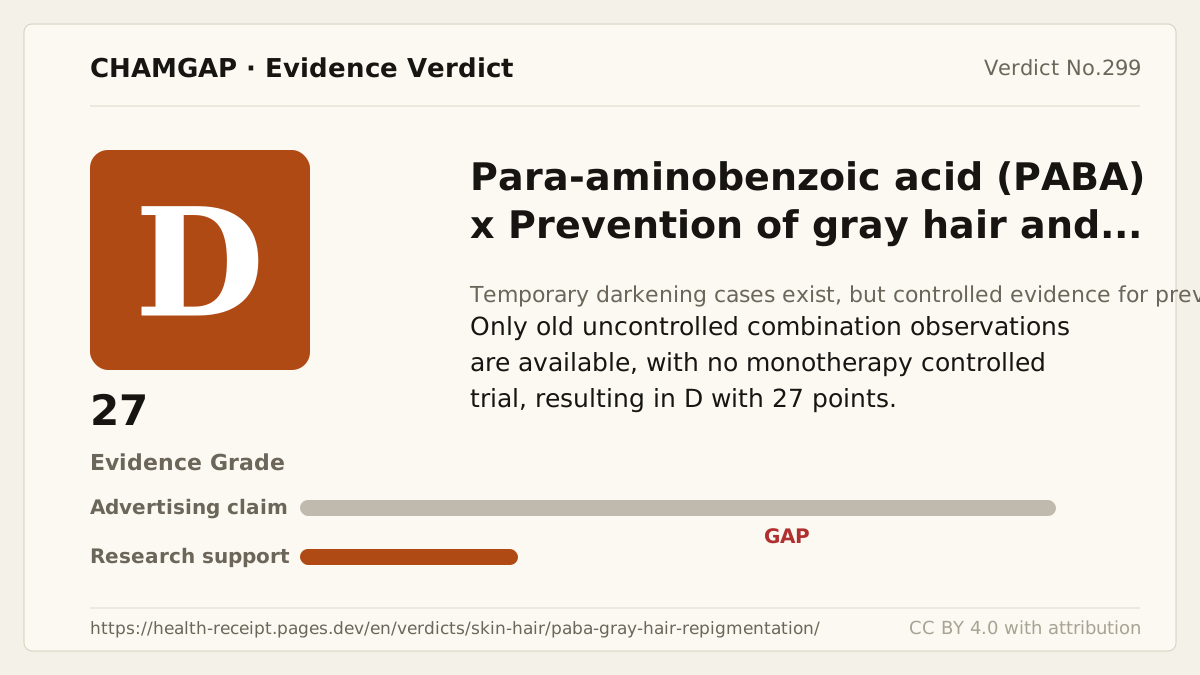
[Chamgap] Para-aminobenzoic acid (PABA) x prevention of gray hair and restoration of hair color — Evidence Grade D·27. 2 cited sources checked. Source: https://chamgap.com/en/verdicts/skin-hair/paba-gray-hair-repigmentation/ · CC BY 4.0CC BY 4.0 — free to use with attribution; do not distort grades, numbers, or verdict meaning.
What this document does and does not do
Chamgap is an information source. It reports what research has and has not confirmed; it does not tell readers what to take or buy. That decision belongs to readers and, when needed, medical or legal professionals. This verdict reflects literature available up to the search date and may change as new research appears. Nothing here is medical advice.