
Polypodium leucotomos extract,
does it really help with Oral ultraviolet protection and erythema reduction?
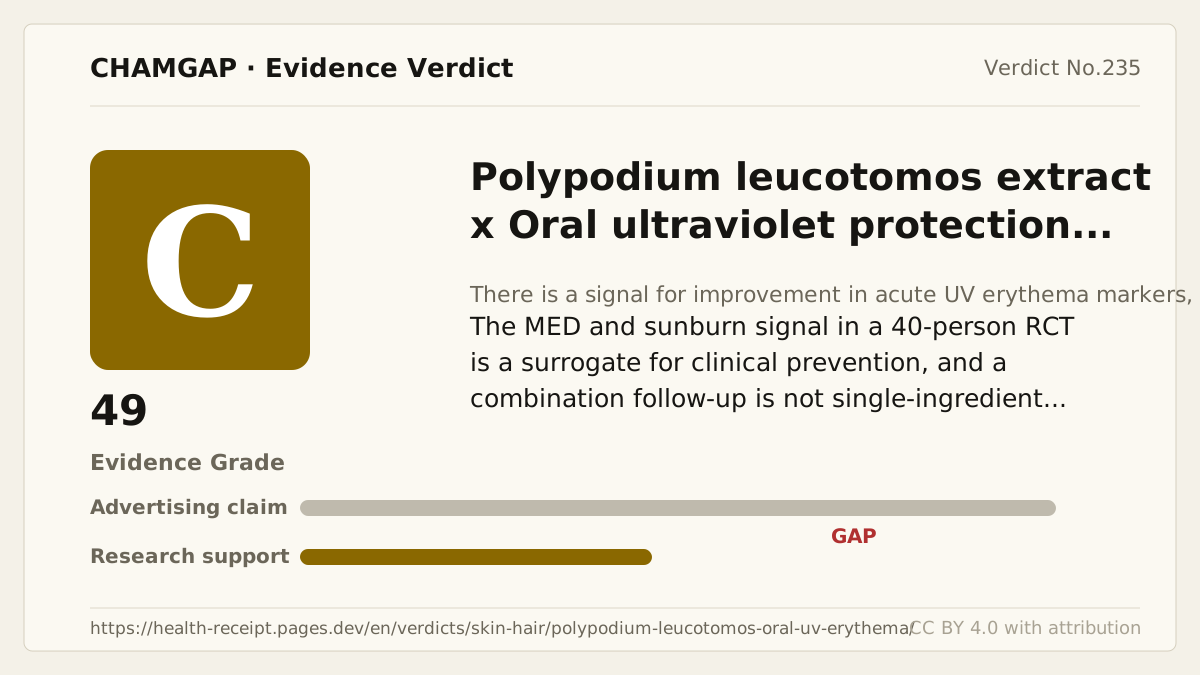
research showsA 40-person RCT of Polypodium leucotomos extract reported increased minimal erythema dose (MED) and reduced sunburn response. However, MED and UV erythema are surrogate endpoints for prevention of photoaging and skin cancer, so repeated positive findings are capped at C under boundary rule ①. The evidence does not support replacing sunscreen or preventing skin cancer, and a recent PLE-plus-red-orange-plus-vitamin combination RCT cannot count as replication of PLE alone.
ads claimAdvertisements use phrases such as “oral sun care,” “oral UV blocker,” and “DNA protection.” The actual human evidence centers on acute erythema and tissue markers and is not in the same category as clinical evidence for SPF-labeled topical sunscreens or exposure barriers such as clothing and shade.
Useful facts when choosing a product
- The main study formulations were specific PLE products in the Heliocare/Fernblock family, commonly at 240 mg twice daily.
- The main efficacy endpoints were minimal erythema dose (MED), erythema colorimetry, sunburn cells, and DNA-injury markers.
- No human trial with skin-cancer incidence or long-term photoaging prevention as its primary endpoint was identified.
- Adverse events in aggregated clinical literature were mainly mild gastrointestinal symptoms or pruritus.
What the research actually shows
The Nestor 2015 RCT gave 40 healthy adults 240 mg twice daily for 60 days and reported a possible increase in minimal erythema dose and reduction in UV-induced erythema intensity. The Kohli 2017 study gave 22 participants two doses of PLE and, in a before-after comparison, reported reduced clinical and colorimetric UVB changes in 17 participants and reduced histologic injury in all participants, but it had no placebo control and was sponsored by Ferndale Healthcare. The Bhatia 2015 review explicitly stated that no controlled human clinical-trial data showed prevention of carcinogenesis.
Why this is classified as C (49)
Positive MED and sunburn findings in a 40-person RCT are human signals, but they are surrogates for prevention of photoaging and skin cancer. Boundary rule ① caps surrogate-only evidence at C, and the recent PLE-plus-red-orange-plus-vitamin RCT is not single-ingredient replication, resulting in C with 49 points.
Counterpoint. Short-term studies at 240–480 mg/day did not show a major laboratory safety signal, and the possibility of increasing the acute erythema threshold remains.
Rejudgment record. Reassessment (cross-check reflected) — A 40-person RCT was positive for MED and sunburn response, but these are surrogates for preventing photoaging and skin cancer and are capped at C under rule ①; the evidence does not support sunscreen replacement or cancer prevention, and the latest combination RCT is not replication of PLE alone
Sub-claim grades by effect
This ingredient is marketed for several effects. A single overall grade blends strong and weak claims together, so each effect is graded separately here. The overall grade reflects the strongest disconfirming or core claim.
| Effect (sub-claim) | Grade | Basis |
|---|---|---|
| Reduction in acute UV-induced erythema | C | Small human studies show signals in MED, erythema, and tissue markers, but surrogate endpoints and ingredient-company links are limitations. |
| Long-term UV protection and prevention of skin cancer and photoaging | D | No controlled human trial was identified that tested skin-cancer incidence or long-term photoaging as a clinical endpoint. |
Cross-check — Codex and Claude
Evidence Table
| Study | Design | Sample | Funding | Endpoint | Result | Weight |
|---|---|---|---|---|---|---|
| Nestor MS et al. 2015 | Randomized, double-blind, placebo-controlled trial | 60 | Trial of a specific Heliocare ingredient; limited funding disclosure | Safety, minimal erythema dose, UV-induced erythema, and reported sunburn | At 240 mg twice daily, reported a possible increase in MED and reduction in erythema intensity, with no changes in clinical safety tests. | Key |
| Kohli I et al. 2017 | Open before-after human study | 2 | Sponsored by Ferndale Healthcare; multiple author conflicts related to Ferndale | MED, colorimetry, COX-2, sunburn cells, and cyclobutane pyrimidine dimers | Clinical and colorimetric UVB changes decreased in 17 of 22 participants and histologic injury decreased in all, but there was no placebo control. | Key |
| Bhatia N. 2015 | Narrative review of clinical and preclinical evidence | Unknown | Photoprotection, carcinogenesis prevention, and safety | Explicitly stated that no controlled human clinical-trial data demonstrated prevention of carcinogenesis. | Supportive |
Receipt — 3 References
All 3 cited sources were verified for existence at the original page (as of 2026-07-11).
Reviewed and approved: Chamgap Editorial Team · Approval date: 2026-07-11 · Corrections: none
Cite this verdict
[Chamgap] Polypodium leucotomos extract x oral ultraviolet protection and erythema reduction — Evidence Grade C·49. 3 cited sources checked. Source: https://chamgap.com/en/verdicts/skin-hair/polypodium-leucotomos-oral-uv-erythema/ · CC BY 4.0CC BY 4.0 — free to use with attribution; do not distort grades, numbers, or verdict meaning.
What this document does and does not do
Chamgap is an information source. It reports what research has and has not confirmed; it does not tell readers what to take or buy. That decision belongs to readers and, when needed, medical or legal professionals. This verdict reflects literature available up to the search date and may change as new research appears. Nothing here is medical advice.