
Zinc,
does it really help with Acne and skin?
research showsZinc is placed at the lower end of B because there are oral/topical RCTs and 2013, 2018, and 2020 reviews that assessed direct clinical skin endpoints such as acne lesion counts and severity. However, the effect is weaker than standard antibiotics and is closer to an adjunctive/off-label context. Claims of improvement in "skin overall" should be separated from the acne evidence and viewed separately at C or lower.
ads claimAdvertisements broadly mention "skin trouble," "sebum," "immunity," and "skin health." The judgment is limited to research centered on acne lesion counts.
Useful facts when choosing a product
- Acne studies differ in formulation, such as zinc gluconate and sulfate, and in elemental zinc dose.
- Nausea and abdominal pain can be common when taken on an empty stomach.
- The U.S. adult UL is 40 mg/day, and long-term high doses carry risks of copper deficiency, anemia, and neurologic symptoms.
- Absorption interactions are possible with tetracycline and quinolone antibiotics.
What the research actually shows
The Dreno 2001 multicenter double-blind trial compared zinc gluconate 30 mg/day with minocycline 100 mg/day in 332 people with inflammatory acne; lesions decreased in both groups, but the decrease was larger with minocycline. Oral and topical zinc RCTs and 2013, 2018, and 2020 reviews summarize signals of improvement in lesion counts and severity, but study quality and formulations vary. General skin-beauty, collagen, and wound-healing claims about "skin overall" are separate from deficiency correction and are not extended to the same grade as the acne evidence.
Why this is classified as B (60)
Because there are RCTs and reviews using direct clinical skin endpoints such as acne lesion counts and severity, B is maintained; however, because the effect is weaker than standard antibiotics, is adjunctive/off-label, and skin-overall claims should be separated, it is the lower end of B at 60 points.
Counterpoint. Correction in people with deficiency and general supplementation without confirmed deficiency are interpreted separately.
Rejudgment record. Draft — RCTs and reviews using direct clinical endpoints for acne lesion counts and severity exist, but effects are weaker than standard antibiotics and the context is adjunctive/off-label
Cross-check — Codex and Claude
Evidence Table
| Study | Design | Sample | Funding | Endpoint | Result | Weight |
|---|---|---|---|---|---|---|
| Dreno B et al. 2001 | Multicenter randomized double-blind comparative trial | 332 | Industry/unclear | Inflammatory acne lesion count | Both zinc gluconate and minocycline reduced lesions, and minocycline had the larger effect. | Core |
| Gupta M et al. 2014/2020 reviews | Literature review | Academic | Acne severity and lesions | Summarized acne improvement signals for oral zinc but noted study heterogeneity. | Supporting | |
| NIH ODS Zinc Fact Sheet | Safety and nutrition reference | Public | Recommended intake, UL, and adverse effects | Summarizes the adult UL of 40 mg/day and high-dose risks such as copper deficiency. | Safety |
Receipt — 3 References
All 3 cited sources were verified for existence at the original page (as of 2026-07-10).
Reviewed and approved: Chamgap Editorial Team · Approval date: 2026-07-10 · Corrections: none
Cite this verdict
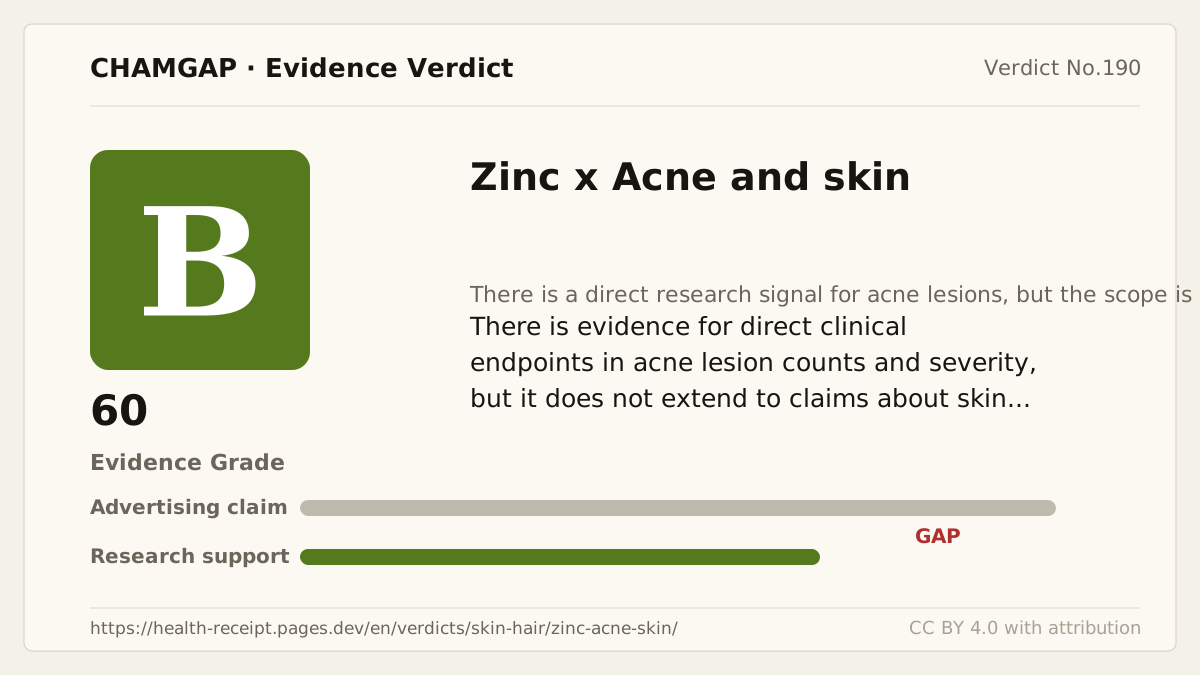
[Chamgap] Zinc x acne and skin — Evidence Grade B·60. 3 cited sources checked. Source: https://chamgap.com/en/verdicts/skin-hair/zinc-acne-skin/ · CC BY 4.0CC BY 4.0 — free to use with attribution; do not distort grades, numbers, or verdict meaning.
What this document does and does not do
Chamgap is an information source. It reports what research has and has not confirmed; it does not tell readers what to take or buy. That decision belongs to readers and, when needed, medical or legal professionals. This verdict reflects literature available up to the search date and may change as new research appears. Nothing here is medical advice.