
DL-phenylalanine,
does it really help with Improvement of depressive symptoms and mood?
research showsThe antidepressant evidence for DLPA is essentially limited to a positive 20-person open study and a 40-person active-comparator trial from the 1970s. The comparator trial found no difference from imipramine, but it had no placebo and only 27 of 40 participants completed it. These human signals are not evidence of ineffectiveness, yet the dated small samples, 33% attrition, and lack of replication place the evidence at the bottom of C.
ads claimProduct descriptions may connect dopamine and norepinephrine precursor status or a proposed inhibition of endorphin breakdown to immediate improvement in mood and motivation. Mechanistic plausibility and old patient observations do not establish modern clinical efficacy.
Useful facts when choosing a product
- DLPA is a mixture of D- and L-phenylalanine and is not interchangeable with evidence on L-phenylalanine alone or dietary phenylalanine.
- Early depression studies used 75 to 200 mg/day, which may differ from marketed product doses.
- Phenylalanine intake requires management in phenylketonuria.
- Pharmacologic interactions are possible with monoamine oxidase inhibitors, levodopa, and dopaminergic medicines.
What the research actually shows
The 1977 open study by Beckmann and colleagues gave DLPA 75 to 200 mg/day for 20 days to 20 patients with depression and described a large response in 12 and a partial response in four. Without a control or blinding, expectation, natural course, and concurrent care cannot be separated. The 1979 double-blind trial by Beckmann and colleagues assigned 40 patients with depression to DLPA 150 to 200 mg/day or imipramine 150 to 200 mg/day, but only 27 completed 30 days. Hamilton and self-rating outcomes did not differ between groups, but the absence of placebo prevents confirmation of DLPA efficacy itself. The 1980 report by Mann and colleagues studied D-phenylalanine alone, not the DL mixture DLPA, so it cannot serve as more than a supporting citation. No modern large placebo-controlled replication of DLPA was identified.
Why this is classified as C (40)
A positive 20-person open study and no difference from imipramine in a 40-person active-comparator trial provide limited human signals. The lack of placebo prevents confirmation but does not establish human ineffectiveness; dated small samples, approximately 33% attrition, and no modern independent replication support the bottom of C with 40 points.
Counterpoint. Positive responses in the early patient group and no difference from imipramine remain as signals. The lack of placebo and high attrition prevent extending them to confirmed antidepressant efficacy.
Rejudgment record. Reassessment (cross-check reflected) — A positive 20-person open study and no difference from imipramine in a 40-person active-comparator trial are not evidence of human ineffectiveness, but no placebo, only 27 completers, dated small samples, and no modern replication limit the judgment to the bottom of C
Cross-check — Codex and Claude
Evidence Table
| Study | Design | Sample | Funding | Endpoint | Result | Weight |
|---|---|---|---|---|---|---|
| Beckmann H et al. 1977 | Open uncontrolled clinical trial | 20 | Unknown | Hamilton depression scale, self-rating, and clinical global impression | Described a large response in 12 and a partial response in four, but causality cannot be inferred without a control group. | Low |
| Beckmann H et al. 1979 | Double-blind active-comparator trial | 30 | Unknown | Hamilton depression scale and Bf-S self-rating | No significant difference between DLPA and imipramine; without placebo, efficacy of DLPA itself cannot be determined. | Key |
| Mann J et al. 1980 | Small clinical report on D-phenylalanine | Unknown | Symptoms of endogenous depression | The study examined the D-isomer rather than the DL mixture, and limited public detail prevents firm supportive interpretation. | Very low |
Receipt — 3 References
All 3 cited sources were verified for existence at the original page (as of 2026-07-11).
Reviewed and approved: Chamgap Editorial Team · Approval date: 2026-07-11 · Corrections: none
Cite this verdict
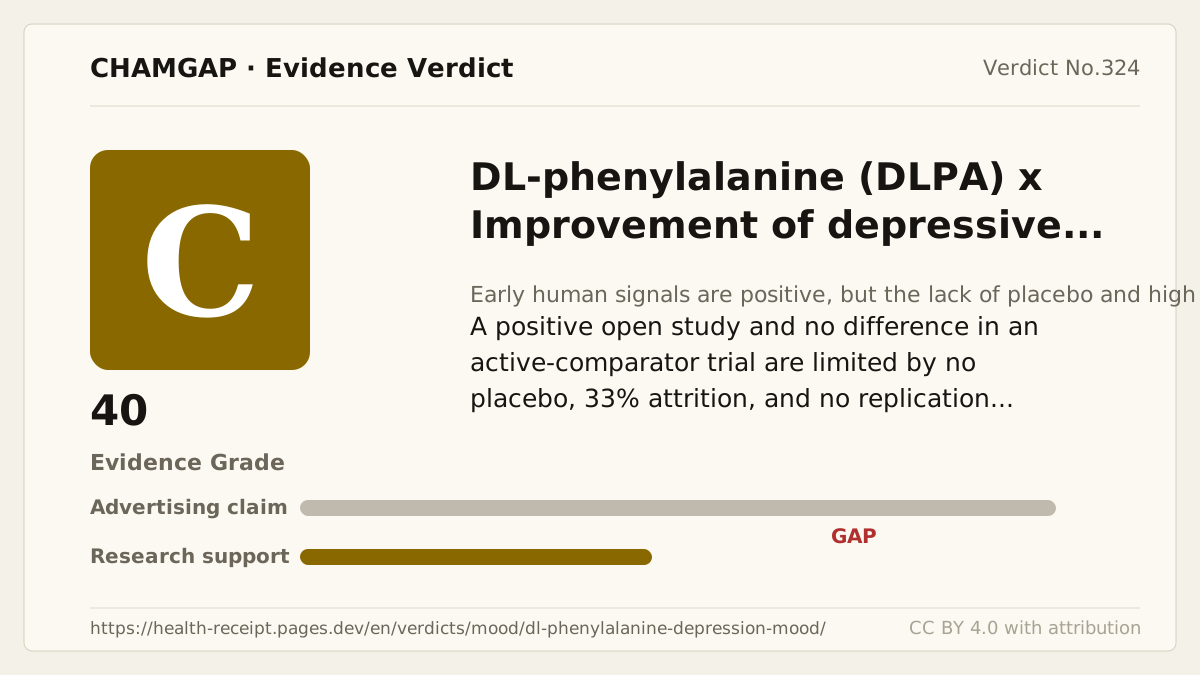
[Chamgap] DL-phenylalanine (DLPA) × Improvement of depressive symptoms and mood — Evidence Grade C·40. 3 cited sources checked. Source: https://chamgap.com/en/verdicts/mood/dl-phenylalanine-depression-mood/ · CC BY 4.0CC BY 4.0 — free to use with attribution; do not distort grades, numbers, or verdict meaning.
What this document does and does not do
Chamgap is an information source. It reports what research has and has not confirmed; it does not tell readers what to take or buy. That decision belongs to readers and, when needed, medical or legal professionals. This verdict reflects literature available up to the search date and may change as new research appears. Nothing here is medical advice.