
Licorice glycyrrhizin,
does it really help with Improvement in hepatitis and liver enzymes?
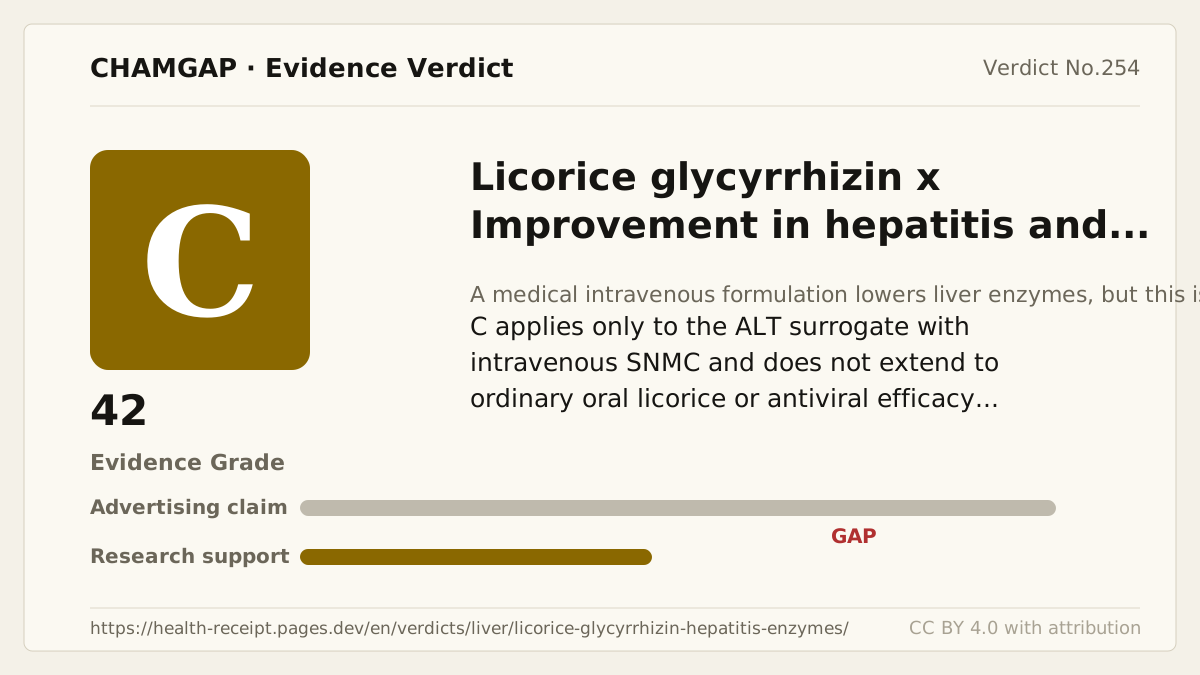
research showsThe C rating applies only to ALT reduction with the intravenous pharmaceutical SNMC formulation. ALT fell by 26% versus 6% in a 57-person trial, and a 379-person phase III trial found at least a 50% ALT reduction in about 29% versus 7%, but both are surrogate outcomes. SNMC is an intravenous combination of glycyrrhizin, glycine, and L-cysteine, so it cannot be extrapolated to ordinary oral licorice supplements. Intravenous liver enzymes are C, ordinary oral licorice is ?, and antiviral efficacy is D, resulting in an overall C with 42 points.
ads claimAdvertisements describe licorice or glycyrrhizin as improving hepatitis, regenerating the liver, or detoxifying the liver. The main human evidence concerns short-term ALT with a medical intravenous combination, not viral clearance or clinical efficacy of ordinary oral products.
Useful facts when choosing a product
- The key placebo-controlled trial administered 80-240 mg intravenous glycyrrhizin three times weekly.
- Stronger Neo-Minophagen C is an intravenous pharmaceutical formulation containing glycyrrhizin, glycine, and L-cysteine.
- The glycyrrhizin content and bioavailability of oral licorice differ from injectable formulations.
- Sustained exposure can cause pseudoaldosteronism and is associated with hypertension, hypokalemia, edema, and arrhythmia.
What the research actually shows
The van Rossum 1999 trial randomized 57 patients with chronic hepatitis C to an intravenous glycyrrhizin formulation or placebo. ALT fell by 26% versus 6% after four weeks, but HCV RNA was unchanged and the effect disappeared after discontinuation. A 379-person placebo-controlled phase III trial found at least a 50% ALT reduction in about 29% versus 7%, again a surrogate rather than a clinical outcome. The tested SNMC formulation combines glycyrrhizin with glycine and L-cysteine for intravenous use. No direct efficacy trial of ordinary oral licorice supplements was identified, so the intravenous results cannot be transferred to that route and product.
Why this is classified as C (42)
Placebo-controlled trials in 57 and 379 participants support C only for the ALT surrogate with intravenous SNMC. HCV RNA was unchanged, SNMC is an intravenous combination of glycyrrhizin, glycine, and L-cysteine, and no direct efficacy trial supports ordinary oral licorice. Separating antiviral efficacy as D and ordinary oral licorice as ? results in an overall C with 42 points.
Counterpoint. Evidence does not negate an on-treatment ALT-lowering effect of medical intravenous glycyrrhizin. The overall grade does not extend that finding to oral licorice or hepatitis treatment as a whole.
Rejudgment record. Reassessment (cross-check reflected) — Only the intravenous SNMC ALT surrogate is C in 57- and 379-person placebo-controlled trials; HCV RNA was unchanged, direct oral evidence is absent, and the intravenous combination cannot be extrapolated
Sub-claim grades by effect
This ingredient is marketed for several effects. A single overall grade blends strong and weak claims together, so each effect is graded separately here. The overall grade reflects the strongest disconfirming or core claim.
| Effect (sub-claim) | Grade | Basis |
|---|---|---|
| Liver enzymes with intravenous glycyrrhizin (SNMC) | C | ALT surrogate signals in placebo-controlled trials of 57 and 379 participants |
| Ordinary oral licorice supplements | ? | No direct oral efficacy trial; intravenous evidence cannot be transferred |
| Antiviral efficacy (HCV RNA) | D | No effect on HCV RNA in a placebo-controlled trial |
Cross-check — Codex and Claude
Evidence Table
| Study | Design | Sample | Funding | Endpoint | Result | Weight |
|---|---|---|---|---|---|---|
| Phase III SNMC trial | Multicenter randomized double-blind placebo-controlled phase III trial | 379 | Related to the pharmaceutical formulation | At least a 50% reduction in ALT | About 29% with intravenous SNMC versus about 7% with placebo achieved at least a 50% ALT reduction; this was a surrogate outcome. | Key |
| van Rossum TG et al. 1999 | Double-blind randomized placebo-controlled phase I/II trial | 57 | Unknown | ALT, HCV RNA, and safety | ALT fell 26% in active groups versus 6% with placebo, but HCV RNA was unchanged and the ALT effect disappeared after discontinuation. | Key |
| Zhang L et al. 2002 | Multicenter randomized dose-comparison trial | 194 | Related to pharmaceutical formulation; details unknown | ALT reduction and normalization | The 40 mL and 100 mL compound injections produced similar ALT responses; there was no placebo group. | Supportive |
| Penninkilampi R et al. 2017 | Safety systematic review and meta-analysis | 337 | Unknown | Blood pressure, potassium, renin, and aldosterone | Sustained glycyrrhizin ingestion was associated with pseudoaldosteronism-related increases in blood pressure and reduced plasma potassium. | Safety |
Receipt — 4 References
All 4 cited sources were verified for existence at the original page (as of 2026-07-11).
Reviewed and approved: Chamgap Editorial Team · Approval date: 2026-07-11 · Corrections: none
Cite this verdict
[Chamgap] Licorice glycyrrhizin x improvement in hepatitis and liver enzymes — Evidence Grade C·42. 4 cited sources checked. Source: https://chamgap.com/en/verdicts/liver/licorice-glycyrrhizin-hepatitis-enzymes/ · CC BY 4.0CC BY 4.0 — free to use with attribution; do not distort grades, numbers, or verdict meaning.
What this document does and does not do
Chamgap is an information source. It reports what research has and has not confirmed; it does not tell readers what to take or buy. That decision belongs to readers and, when needed, medical or legal professionals. This verdict reflects literature available up to the search date and may change as new research appears. Nothing here is medical advice.