
Yeast/mushroom beta-glucan,
does it really help with Immunity?
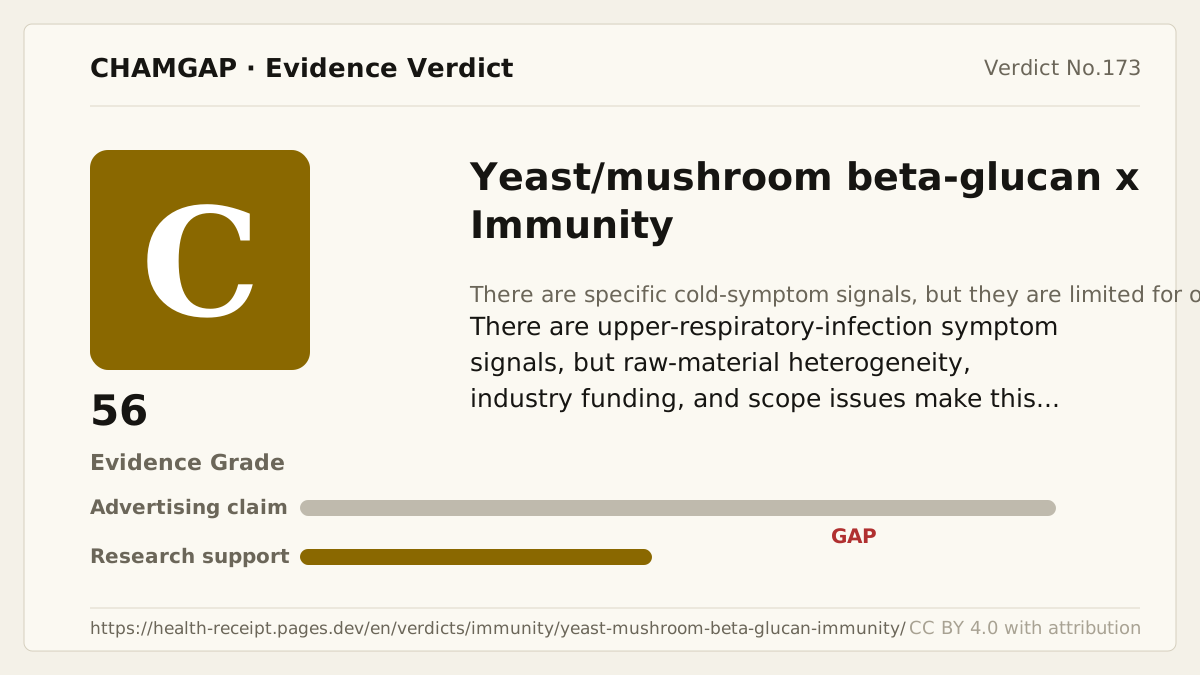
research showsYeast beta-glucan has RCTs that looked at reductions in cold or upper-respiratory-tract infection symptom days, and some meta-analysis signals also exist. However, raw materials differ structurally, positive studies are concentrated around specific commercial ingredients, and the broad claim of "enhancing immunity" has not been sufficiently proven as infection prevention or severity reduction.
ads claimAdvertising bundles 'immune-cell activation,' 'NK cells,' 'cold prevention,' 'anticancer immunity,' and 'yeast/mushroom beta-glucan' into one message.
Useful facts when choosing a product
- Yeast beta-glucan, oat beta-glucan, and mushroom beta-glucan have different efficacy evidence.
- Studies of upper-respiratory-infection symptom days are not authorization evidence for disease prevention.
- Immunocompromised people, people undergoing anticancer treatment, and people with autoimmune disease need to consult clinicians.
- Structure, purification level, and raw-material standardization may matter more than the mg amount on the product.
What the research actually shows
RCTs of yeast β-1,3/1,6-glucan ingredients such as Wellmune reported improvements in upper-respiratory-infection symptom days and quality-of-life markers in highly stressed adults or post-exercise participants. However, many studies are connected to manufacturer support or provision of specific ingredients, and outcomes center on symptom questionnaires and self-reported infections. Mushroom beta-glucan evidence is mixed with separate ingredients and adjunctive-therapy evidence such as lentinan, AHCC, and shiitake, making it difficult to convert into evidence for general immune supplements.
Why this is classified as C (56)
Because there are human RCT signals on direct infection-symptom indicators, this is close to upper-end C, but raw-material heterogeneity, industry funding, self-reporting, and immune surrogate-marker issues are large, so it is C rather than B, 56 points.
Counterpoint. If narrowed to relief of upper-respiratory-infection symptoms with a specific yeast β-glucan ingredient, the evidence may look stronger. This verdict covers overall immune advertising for yeast/mushroom beta-glucan.
Rejudgment record. Draft — Upper-respiratory-infection RCT signals exist, but evidence is centered on raw-material heterogeneity, industry funding, surrogate markers/self-reporting
Cross-check — Codex and Claude
Evidence Table
| Study | Design | Sample | Funding | Endpoint | Result | Weight |
|---|---|---|---|---|---|---|
| Feldman S et al. 2009 | Randomized double-blind placebo-controlled trial | Possible commercial ingredient/product support | Upper-respiratory-tract infection symptoms and quality of life | Reported cold-symptom-related signals in the yeast beta-glucan group. | Core | |
| Talbott SM, Talbott JA. 2012 | Randomized placebo-controlled trial | Possible commercial ingredient support | Upper-respiratory-tract infection symptom days and mood | Reported signals of reduced upper-respiratory-tract infection symptom days and improved well-being markers. | Supporting | |
| Stier H et al. 2014 | Systematic review | Possible industry involvement | Common cold and upper-respiratory-tract infections | Summarized cold-related clinical signals for yeast beta-glucan, but ingredient specificity was large. | Supporting |
Receipt — 4 References
All 4 cited sources were verified for existence at the original page (as of 2026-07-09).
Reviewed and approved: Chamgap Editorial Team · Approval date: 2026-07-09 · Corrections: none
Cite this verdict
[Chamgap] Yeast/mushroom beta-glucan × immunity — Evidence Grade C·56. 4 cited sources checked. Source: https://chamgap.com/en/verdicts/immunity/yeast-mushroom-beta-glucan-immunity/ · CC BY 4.0CC BY 4.0 — free to use with attribution; do not distort grades, numbers, or verdict meaning.
What this document does and does not do
Chamgap is an information source. It reports what research has and has not confirmed; it does not tell readers what to take or buy. That decision belongs to readers and, when needed, medical or legal professionals. This verdict reflects literature available up to the search date and may change as new research appears. Nothing here is medical advice.