
Pelargonium sidoides,
does it really help with Improvement of acute common-cold and bronchitis symptoms and recovery time?
research showsAcross the Cochrane evidence, symptom endpoints were repeatedly positive for liquid EPs 7630 in three adult RCTs with 746 participants and three pediatric RCTs with 819 participants, making D too low. However, certainty was low, formulations were heterogeneous, industry sponsorship was substantial, and both co-primary endpoints were null in an independent 2026 pragmatic trial of 332 participants. That trial is not decisive enough to erase the repeated placebo-controlled positives, but it precludes B; the grade is C with 48 points and applies only to standardized EPs 7630.
ads claimMarket materials use expressions such as 'accelerates bronchitis recovery,' 'shortens a cold,' and 'antiviral respiratory defense.' Positive clinical evidence is almost entirely for the specific standardized extract EPs 7630 and does not transfer directly to general Pelargonium powder or products made with other extraction methods.
Useful facts when choosing a product
- Major positive trials used liquid or tablet forms of the standardized Pelargonium sidoides root extract EPs 7630.
- Results differed between liquid and tablets; Cochrane mentioned that liquid might be more effective, but there were too few trials to establish this.
- Gastrointestinal symptoms and hypersensitivity were the main reported adverse events; in the 2026 trial, adverse events were more frequent with EPs 7630 but were all mild.
- The common-cold evidence depends heavily on one core trial that showed no effect at day 5 and a difference only at day 10.
What the research actually shows
In the Timmer 2013 Cochrane review, liquid EPs 7630 had repeated positive symptom endpoints in three adult acute-bronchitis RCTs with 746 participants and three pediatric RCTs with 819 participants, but certainty was low and formulation heterogeneity and industry sponsorship were important limitations. The independent Bourqui 2026 pragmatic RCT of 332 participants found no significant effect on either co-primary endpoint: the difference in time to a 50% symptom reduction was 0.05 days and antibiotic use had an RR of 0.78. The trial stopped early. Therefore D is too low, B is not supportable, and the judgment is limited to the specific standardized preparation EPs 7630.
Why this is classified as C (48)
Repeated positive symptom endpoints for liquid EPs 7630 across three adult RCTs with 746 participants and three pediatric RCTs with 819 participants place the evidence above D. Low certainty, formulation heterogeneity, industry sponsorship, and null co-primary endpoints plus early termination in the independent 2026 trial of 332 participants prevent B. Because that trial is not decisive enough to erase the repeated positives, the preparation-specific grade is C with 48 points.
Counterpoint. The independent pragmatic trial was null for recovery time and antibiotic use, but repeated placebo-controlled symptom signals for liquid EPs 7630 remain. This judgment does not extend to general Pelargonium products.
Rejudgment record. Reassessment (cross-check reflected) — Repeated positive symptom endpoints for liquid EPs 7630 in three adult RCTs with 746 participants and three pediatric RCTs with 819 participants place the evidence above D, while low certainty, formulation heterogeneity, industry sponsorship, and null co-primary endpoints with early termination in the independent 2026 trial of 332 participants preclude B
Sub-claim grades by effect
This ingredient is marketed for several effects. A single overall grade blends strong and weak claims together, so each effect is graded separately here. The overall grade reflects the strongest disconfirming or core claim.
| Effect (sub-claim) | Grade | Basis |
|---|---|---|
| Improvement of acute common-cold symptoms | C | There are few core placebo-controlled data, Cochrane certainty was very low, and there was no effect at day 5. |
| Improvement of acute bronchitis symptoms | C | Placebo-controlled symptom findings for liquid EPs 7630 were repeatedly positive, but certainty was low and industry sponsorship was concentrated. |
| Shortening recovery time | C | Earlier signals exist, but the 0.05-day difference in time to a 50% symptom reduction was nonsignificant in the independent 2026 trial of 332 participants. |
Cross-check — Codex and Claude
Evidence Table
| Study | Design | Sample | Funding | Endpoint | Result | Weight |
|---|---|---|---|---|---|---|
| Matthys H et al. 2003 | Multicenter randomized double-blind placebo-controlled trial | 468 | Manufacturer-linked investigators; funding not stated | Day-7 BSS change, duration of inability to work, and adverse events | Reported a BSS reduction of 5.9 versus 3.2 points and shorter inability-to-work duration; all adverse events were nonserious. | Supportive |
| Timmer A et al. 2013 | Cochrane systematic review and meta-analysis | 8 | Independent academic review | Resolution of bronchitis, common-cold, and sinusitis symptoms and adverse events | Bronchitis findings were inconsistent but positive overall, while the common-cold evidence depended on one trial; evidence quality was low to very low with suspected publication bias. | Key |
| Bourqui A et al. 2026 | Independent pragmatic open-label randomized controlled trial | 332 | Leenaards Foundation funding and study product supplied by Schwabe; conduct was independent | Co-primary endpoints of time to a 50% symptom reduction and antibiotic use | Neither co-primary endpoint was significant; adverse events were more frequent with EPs 7630 but were all mild. | Decisive |
Receipt — 3 References
All 3 cited sources were verified for existence at the original page (as of 2026-07-13).
Reviewed and approved: Chamgap Editorial Team · Approval date: 2026-07-13 · Corrections: none
Cite this verdict
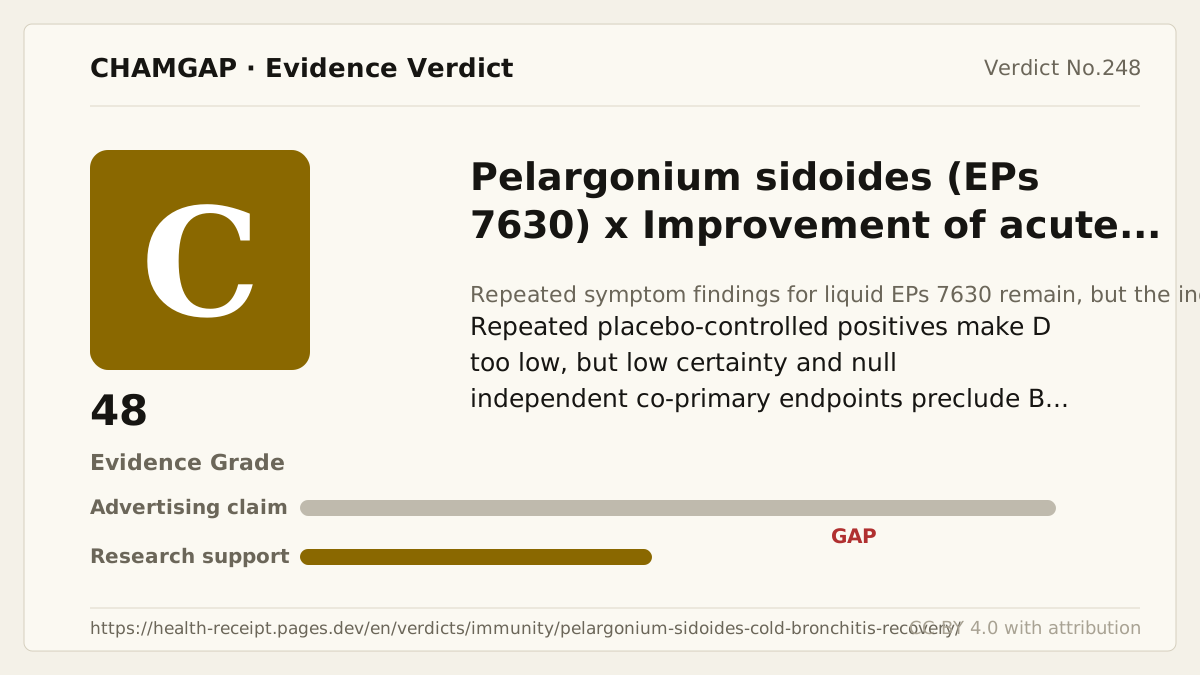
[Chamgap] Pelargonium sidoides (EPs 7630) x improvement of acute common-cold and bronchitis symptoms and recovery time — Evidence Grade C·48. 3 cited sources checked. Source: https://chamgap.com/en/verdicts/immunity/pelargonium-sidoides-cold-bronchitis-recovery/ · CC BY 4.0CC BY 4.0 — free to use with attribution; do not distort grades, numbers, or verdict meaning.
What this document does and does not do
Chamgap is an information source. It reports what research has and has not confirmed; it does not tell readers what to take or buy. That decision belongs to readers and, when needed, medical or legal professionals. This verdict reflects literature available up to the search date and may change as new research appears. Nothing here is medical advice.