
Mistletoe,
does it really help with Immunity, blood pressure, and anticancer effects (adjunctive therapy)?
research showsMistletoe injections have many European studies in adjunctive cancer care, but anticancer efficacy such as survival or tumor response has not been confirmed in high-quality evidence. There are signals for improved quality of life, but there is substantial controversy over study quality, blinding, and the anthroposophic-treatment context, while claims for blood pressure and general immune supplements have very weak human evidence.
ads claimAdvertisements mention 'immune activation,' 'cancer adjunct,' 'anticancer,' and 'blood pressure' together. The actual evidence is concentrated in the quality-of-life debate around injectable adjunctive cancer therapy and is far from claims about oral supplements or blood pressure.
Useful facts when choosing a product
- Most cancer studies are in the context of standardized injections, not oral health foods.
- Local injection reactions, fever, allergy, and rare anaphylaxis are reported.
- Clinician confirmation is especially needed with immune checkpoint inhibitors, autoimmune disease, and hematologic cancers.
- Blood-pressure claims lack evidence beyond traditional use and pharmacologic plausibility.
What the research actually shows
The Horneber 2008 Cochrane review assessed 21 studies and concluded that evidence for survival benefit was not convincing and that study-quality problems were substantial. The Freuding 2019 systematic review summarized that high-quality studies did not show survival or quality-of-life benefits. The Loef 2020 meta-analysis reported a positive quality-of-life signal, but the included studies had substantial risk of bias and heterogeneity. For blood-pressure lowering, it is difficult to verify modern large placebo-controlled RCTs.
Why this is classified as D (34)
Human studies are not entirely absent, but the core anticancer and blood-pressure claims have not been confirmed in high-quality studies, so the grade is D, 34 points.
Counterpoint. If the question is narrowed to possible quality-of-life support, a C discussion is possible, but combined advertising claims about anticancer effects, blood pressure, and immunity should be rated lower.
Rejudgment record. Draft — Human studies are not entirely absent, but the core anticancer and blood-pressure claims have not been confirmed in high-quality studies, so the grade is D, 34 points.
Cross-check — Codex and Claude
Evidence Table
| Study | Design | Sample | Funding | Endpoint | Result | Weight |
|---|---|---|---|---|---|---|
| Horneber MA et al. 2008 | Cochrane systematic review | 21 | Independent | Survival, quality of life, and symptoms | Survival benefit was not confirmed, and study-quality limitations were substantial. | Core |
| Freuding M et al. 2019 | Systematic review | Academic | Survival, quality of life, and adverse effects | In high-quality studies, survival and quality-of-life benefits were not confirmed. | Core | |
| Loef M & Walach H 2020 | Systematic review and meta-analysis | Unknown/complementary-medicine researchers | Quality of life | A positive quality-of-life signal was reported, but risk of bias was substantial. | Supporting |
Receipt — 4 References
All 4 cited sources were verified for existence at the original page (as of 2026-07-10).
Reviewed and approved: Chamgap Editorial Team · Approval date: 2026-07-10 · Corrections: none
Cite this verdict
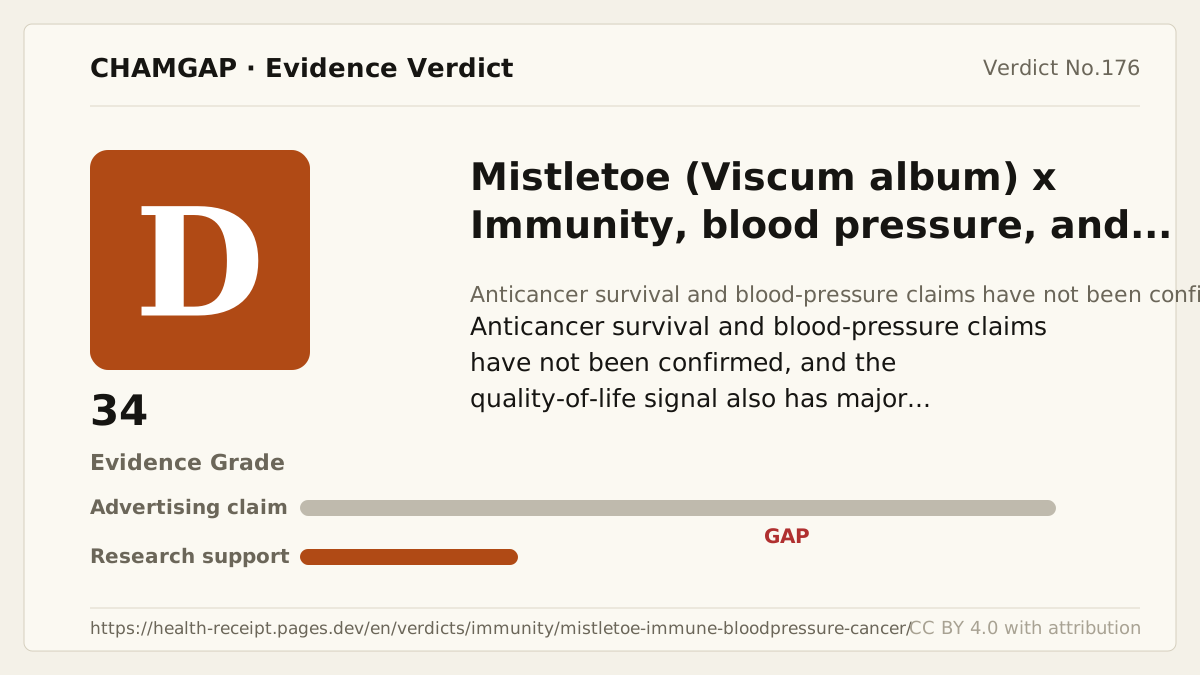
[Chamgap] Mistletoe (Viscum album) × Immunity, Blood Pressure, and Anticancer Effects (Adjunctive Therapy) — Evidence Grade D·34. 4 cited sources checked. Source: https://chamgap.com/en/verdicts/immunity/mistletoe-immune-bloodpressure-cancer/ · CC BY 4.0CC BY 4.0 — free to use with attribution; do not distort grades, numbers, or verdict meaning.
What this document does and does not do
Chamgap is an information source. It reports what research has and has not confirmed; it does not tell readers what to take or buy. That decision belongs to readers and, when needed, medical or legal professionals. This verdict reflects literature available up to the search date and may change as new research appears. Nothing here is medical advice.