
Palmitoylethanolamide,
does it really help with Adjunctive support for intraocular pressure and glaucoma?
research showsSeveral small Italian trials and a 2024 meta-analysis found signals that PEA at 600 mg/day added to existing eye-drop therapy lowers intraocular pressure. Some visual-field and electroretinographic findings were also positive, but samples were small and geographically concentrated, and prevention of disease progression or vision loss is not established, so the grade is C.
ads claimAdvertising may describe PEA as a glaucoma neuroprotectant or replacement for pressure-lowering drops. The evidence centers on pressure values when added to standard care; long-term preservation of visual fields, avoidance of surgery, and prevention of blindness are not established.
Useful facts when choosing a product
- Oral ophthalmic studies generally used micronized or ultramicronized PEA at 600 mg/day.
- Most trials retained standard pressure-lowering eye drops and tested PEA as an adjunct.
- Generic PEA and micronized formulations may differ in absorption.
- Human trials generally reported good tolerability, but long-term safety with glaucoma medications is limited.
What the research actually shows
The 2011 double-blind crossover trial by Gagliano and colleagues studied 42 patients with glaucoma or ocular hypertension receiving timolol and found that PEA 600 mg/day lowered intraocular pressure by about 3.5 mmHg after two months. The 2020 single-blind crossover trial by Rossi and colleagues in 40 patients with stable glaucoma reported positive signals in P50 pattern-electroretinogram amplitude, quality of life, and intraocular pressure. The 2025 review by Crupi and colleagues identified six studies with 199 patients and supported a pressure reduction in a meta-analysis of three studies with 114 patients, while noting that all studies were Italian and had quality and size limitations.
Why this is classified as C (59)
Regulatory recognition is not grading evidence. Pressure reduction was repeated across small trials and a meta-analysis, supporting the top of C, but the evidence is concentrated in manufacturer-specific PEA products and Italian studies, remains surrogate-centered, totals only 199 patients, varies by formulation, lacks large independent replication, and has no robust clinical progression outcomes. The final score is C with 59 points.
Counterpoint. A short-term pressure-lowering possibility has been repeatedly observed for micronized PEA at 600 mg/day added to standard care.
Rejudgment record. Reassessment (cross-check reflected) — Regulatory recognition is not grading evidence; several small RCTs and a six-study review of 199 patients repeatedly support lower intraocular pressure, but the evidence is concentrated in manufacturer-specific products and Italy, is surrogate-centered, varies by formulation, and lacks large independent replication and robust long-term visual-field or vision-loss outcomes
Sub-claim grades by effect
This ingredient is marketed for several effects. A single overall grade blends strong and weak claims together, so each effect is graded separately here. The overall grade reflects the strongest disconfirming or core claim.
| Effect (sub-claim) | Grade | Basis |
|---|---|---|
| Reduction in intraocular pressure | C | Repeated across several small RCTs and a meta-analysis, but all studies were Italian and the total sample was small. |
| Prevention of glaucoma progression and vision loss | C | Positive visual-field and pattern-electroretinogram signals exist, but they are small and exploratory and do not establish long-term clinical progression. |
Cross-check — Codex and Claude
Evidence Table
| Study | Design | Sample | Funding | Endpoint | Result | Weight |
|---|---|---|---|---|---|---|
| Gagliano C et al. 2011 | Randomized double-blind placebo-controlled crossover trial | 42 | Unknown | Intraocular pressure, visual acuity, and visual field | PEA 600 mg/day added to timolol lowered pressure by about 3.5 mmHg at two months; no short-term visual-field change. | Key |
| Rossi GCM et al. 2020 | Randomized single-blind crossover trial | 40 | Unknown | Pattern electroretinogram, intraocular pressure, visual field, and quality of life | P50 amplitude increased, pressure fell by about 1.6 mmHg, and quality of life improved during PEA; participants mainly had early glaucoma. | Key |
| Crupi L et al. 2025 | Systematic review and meta-analysis | 114 | Academic research; details unclear | Intraocular pressure in glaucoma or ocular hypertension | Supported lower pressure with oral PEA, but all studies were Italian and had substantial quality and size limitations. | Key |
Receipt — 3 References
All 3 cited sources were verified for existence at the original page (as of 2026-07-11).
Reviewed and approved: Chamgap Editorial Team · Approval date: 2026-07-11 · Corrections: none
Cite this verdict
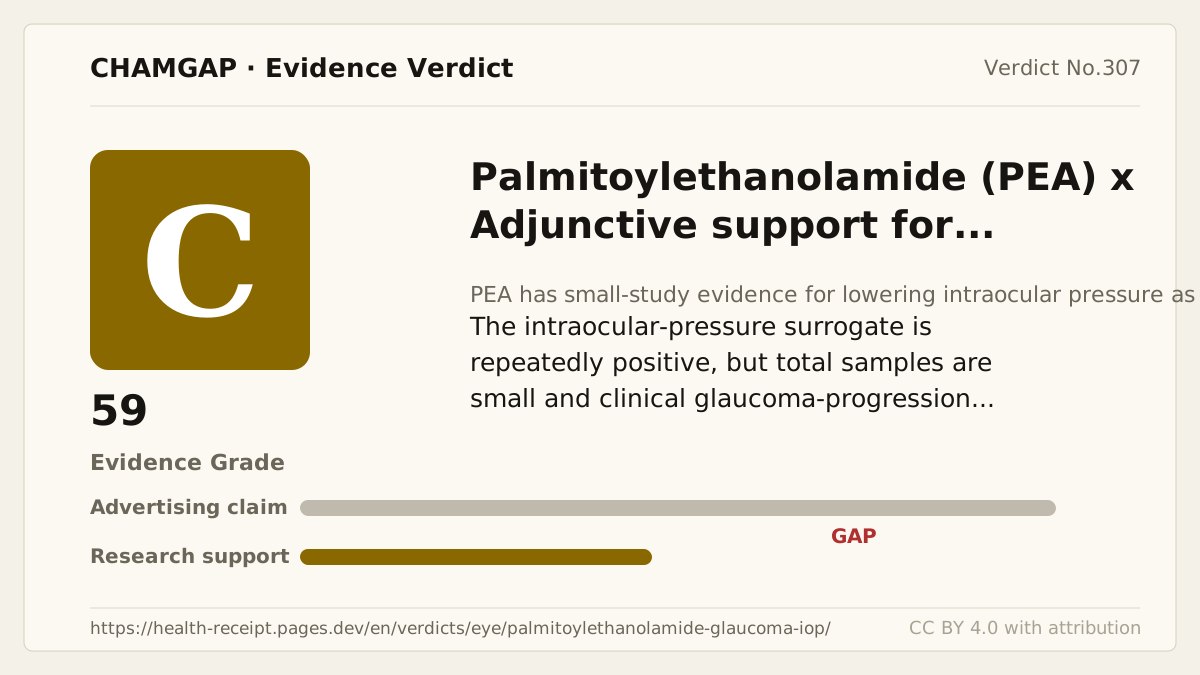
[Chamgap] Palmitoylethanolamide (PEA) × Adjunctive support for intraocular pressure and glaucoma — Evidence Grade C·59. 3 cited sources checked. Source: https://chamgap.com/en/verdicts/eye/palmitoylethanolamide-glaucoma-iop/ · CC BY 4.0CC BY 4.0 — free to use with attribution; do not distort grades, numbers, or verdict meaning.
What this document does and does not do
Chamgap is an information source. It reports what research has and has not confirmed; it does not tell readers what to take or buy. That decision belongs to readers and, when needed, medical or legal professionals. This verdict reflects literature available up to the search date and may change as new research appears. Nothing here is medical advice.