
Theacrine,
does it really help with Improvement of alertness, energy, and fatigue?
research showsA 15-person acute crossover trial found signals for subjective energy, fatigue, and concentration with 200 mg of theacrine. A later 12-person trial found that theacrine alone did not improve energy, focus, or fatigue, and an independent 22-person trial found that acute arousal was largely unchanged. Exercise performance and resistance to fatigue repeatedly did not differ from placebo in several small trials. The overall rating is C because subjective signals and objective null findings diverge.
ads claimAdvertising describes long-lasting caffeine-free energy, non-habituating alertness, reduced fatigue, and better exercise performance, while direct human evidence combines small subjective questionnaire signals with repeated objective performance null results.
Useful facts when choosing a product
- Human-study doses were generally 100-400 mg acutely or 200-300 mg/day over short periods.
- TeaCrine is a standardized branded ingredient and is not equivalent to the theacrine content of ordinary tea.
- Caffeine-combination trials must be separated from evidence for theacrine alone.
- An eight-week safety trial at 200-300 mg/day found no major vital-sign changes, but long-term data are limited.
What the research actually shows
The 15-person double-blind crossover portion of Ziegenfuss 2017 reported group-by-time interactions in energy, fatigue, and concentration after a single 200 mg dose. The 12-person Cesareo 2019 crossover trial found no benefit of 300 mg theacrine alone for strength, endurance, power, or subjective energy, focus, and fatigue; caffeine alone increased subjective energy. The 24-player Bello 2019 soccer trial did not establish a standalone endurance or cognitive advantage for theacrine. The independent 22-person Cerqueira 2022 trial found no between-group difference in jumping, agility, sprint, aerobic, or anaerobic performance. The independent 22-person Gardiner 2024 crossover trial found little effect on acute arousal or subjective sleep, with exploratory improvements only in selected next-morning cognitive tasks.
Why this is classified as C (44)
Subjective alertness and energy receive C because an industry-linked 15-person positive trial conflicts with null 12-person and independent 22-person trials. Objective exercise performance receives D because strength, endurance, and sprint outcomes were repeatedly null. The combined claim is C with 44 points.
Counterpoint. Subjective or next-morning cognitive signals remain at selected times and tasks, but sustained relief of daily fatigue and a caffeine-substitution effect have not been established.
Rejudgment record. Reassessment (cross-check reflected) — Subjective alertness signals are small, industry-concentrated, and inconsistent, while objective exercise performance is repeatedly null across trials
Sub-claim grades by effect
This ingredient is marketed for several effects. A single overall grade blends strong and weak claims together, so each effect is graded separately here. The overall grade reflects the strongest disconfirming or core claim.
| Effect (sub-claim) | Grade | Basis |
|---|---|---|
| Subjective alertness and energy | C | Industry-linked n=15 positive versus null n=12 and independent n=22 trials |
| Objective exercise performance | D | Repeated null findings for strength, endurance, and sprint performance |
Cross-check — Codex and Claude
Evidence Table
| Study | Design | Sample | Funding | Endpoint | Result | Weight |
|---|---|---|---|---|---|---|
| Ziegenfuss TN et al. 2017 | Acute randomized double-blind placebo-controlled crossover trial | 9 | Industry-linked to the branded TeaCrine ingredient | Subjective energy, fatigue, concentration VAS, and vital signs | A single 200 mg dose produced group-by-time interactions for energy, fatigue, and concentration, with no vital-sign changes. | Key, small, industry-linked |
| Cesareo KR et al. 2019 | Randomized double-blind crossover trial | 12 | Supported by Compound Solutions | Strength, repetition endurance, power, and subjective energy, focus, and fatigue | Theacrine 300 mg did not improve objective performance or subjective measures versus placebo. | Key, null, industry-supported |
| Cerqueira HSC et al. 2022 | Randomized double-blind placebo-controlled trial | 22 | No external funding | Jump, agility, 30 m sprint, 40-second run, and 12-minute run | No between-group difference was found in any performance test. | Key, independent null result |
| Gardiner CL et al. 2024 | Randomized double-blind placebo-controlled crossover trial | 22 | No external funding | Arousal VAS, PVT, Simon task, and objective and subjective sleep | Acute arousal and sleep were largely unchanged versus placebo, while selected next-morning cognitive tasks improved with 400 mg. | Supportive, independent mixed result |
Receipt — 4 References
All 4 cited sources were verified for existence at the original page (as of 2026-07-11).
Reviewed and approved: Chamgap Editorial Team · Approval date: 2026-07-11 · Corrections: none
Cite this verdict
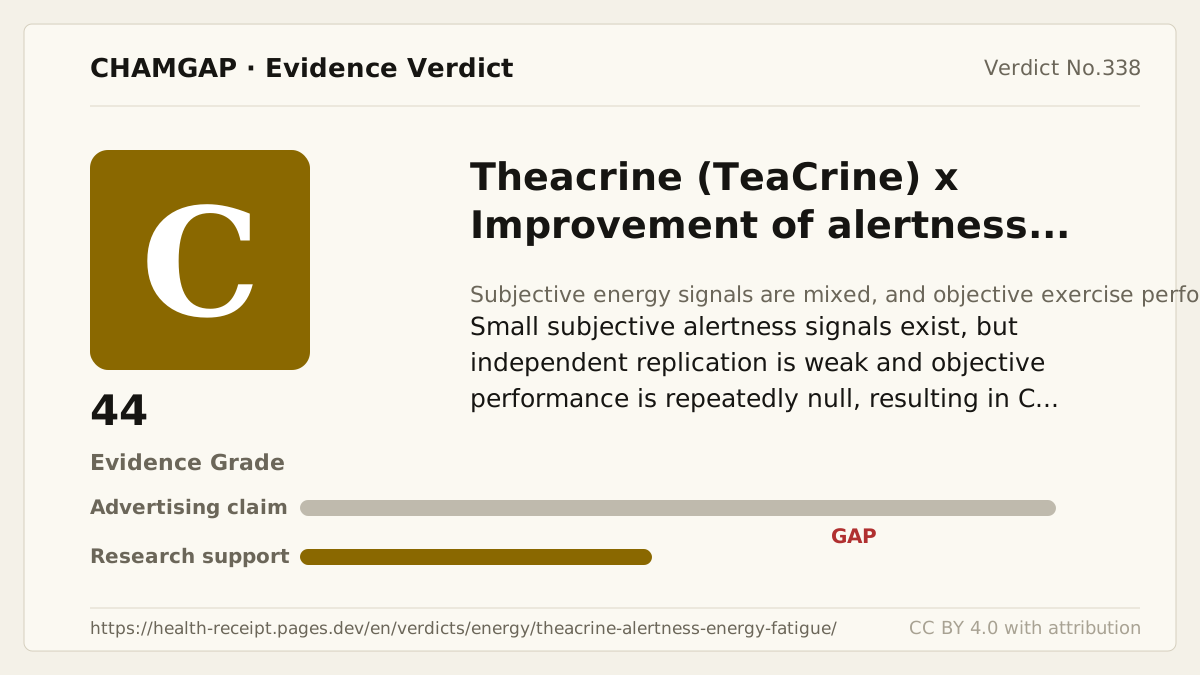
[Chamgap] Theacrine (TeaCrine) x improvement of alertness, energy, and fatigue — Evidence Grade C·44. 4 cited sources checked. Source: https://chamgap.com/en/verdicts/energy/theacrine-alertness-energy-fatigue/ · CC BY 4.0CC BY 4.0 — free to use with attribution; do not distort grades, numbers, or verdict meaning.
What this document does and does not do
Chamgap is an information source. It reports what research has and has not confirmed; it does not tell readers what to take or buy. That decision belongs to readers and, when needed, medical or legal professionals. This verdict reflects literature available up to the search date and may change as new research appears. Nothing here is medical advice.