
Vanadyl sulfate,
does it really help with Improvement in insulin sensitivity and blood glucose?
research showsShort before-and-after studies in 6 to 16 patients with type 2 diabetes found signals of improved insulin-clamp measures and fasting glucose. However, a 2008 systematic review found no controlled trial meeting its criteria of at least two months and ten participants per arm; the five identified studies, covering 48 patients, were all low-quality within-patient comparisons. Insulin sensitivity is C, sustained glycemic control is D, and the overall grade is C.
ads claimAdvertisements use phrases such as 'insulin-mimicking mineral,' 'normalizes blood sugar,' and 'moves glucose into muscle.' Direct human data are short metabolic-ward studies of high-dose vanadium salts, not long-term glycemic-control or complication outcomes.
Useful facts when choosing a product
- Studies included in the systematic review used 50 to 300 mg/day of vanadyl sulfate for three to six weeks.
- Main outcomes were metabolic measures such as insulin clamps, fasting glucose, and HbA1c.
- Every study included in the systematic review reported high rates of gastrointestinal adverse effects.
- The elemental vanadium amount is not the same as the total vanadyl sulfate amount.
What the research actually shows
Cohen 1995 gave 100 mg/day for three weeks to six patients with type 2 diabetes and reported a higher clamp glucose-infusion rate and lower fasting glucose and HbA1c. Cusi 2001 gave 150 mg/day for six weeks to 11 patients and observed modest improvement in hepatic and muscle insulin sensitivity. Goldfine 2000 studied 16 participants across doses and concluded that improvement at tolerated doses was not dramatic. Smith 2008 found five within-patient studies covering 48 patients with diabetes, but none met its rigorous RCT criteria.
Why this is classified as C (40)
Direct metabolic signals mean the evidence is not ungradable, but total samples are small, randomized parallel controls are absent, and durations are too short for stable HbA1c assessment. Insulin sensitivity is C and sustained glycemic control is D, resulting in C with 40 points.
Counterpoint. The hepatic and muscle sensitivity changes measured by clamp remain pharmacologic signals. This judgment does not extend them to long-term glycemic control or prevention of diabetes complications.
Rejudgment record. New judgment — Clamp and glucose signals from short within-patient studies of 6 to 16 participants, but no controlled RCT meeting rigorous criteria and no long-term HbA1c or clinical outcomes
Sub-claim grades by effect
This ingredient is marketed for several effects. A single overall grade blends strong and weak claims together, so each effect is graded separately here. The overall grade reflects the strongest disconfirming or core claim.
| Effect (sub-claim) | Grade | Basis |
|---|---|---|
| Insulin sensitivity | C | Clamp measures improved in short before-and-after studies of 6 to 11 participants |
| Sustained glycemic improvement | D | No rigorous controlled RCT or HbA1c data lasting at least three months |
Cross-check — Codex and Claude
Evidence Table
| Study | Design | Sample | Funding | Endpoint | Result | Weight |
|---|---|---|---|---|---|---|
| Cohen N et al. 1995 | Sequential placebo run-in, treatment, and washout within-patient study | 6 | U.S. public research support | Clamp insulin sensitivity, fasting glucose, and HbA1c | Clamp and glycemic measures improved after 100 mg/day for three weeks, without a parallel control group. | Key mechanistic |
| Cusi K et al. 2001 | Six-week open before-and-after metabolic study | 11 | Indexed as non-U.S. government support | Hepatic and muscle insulin sensitivity and fasting glucose | Hepatic and muscle sensitivity and fasting glucose improved modestly with 150 mg/day. | Supportive |
| Goldfine AB et al. 2000 | Dose-ranging six-week before-and-after study | 16 | U.S. public research support | Insulin sensitivity and glycemic control | Tolerated doses did not dramatically improve insulin sensitivity or glycemic control. | Conflicting |
| Smith DM et al. 2008 | Systematic review | 48 | Royal College of General Practitioners Science Foundation | HbA1c, fasting glucose, and adverse effects | No RCT met the rigorous criteria, and gastrointestinal adverse effects were frequent in every included study. | Judgment key |
Receipt — 4 References
All 4 cited sources were verified for existence at the original page (as of 2026-07-11).
Reviewed and approved: Chamgap Editorial Team · Approval date: 2026-07-11 · Corrections: none
Cite this verdict
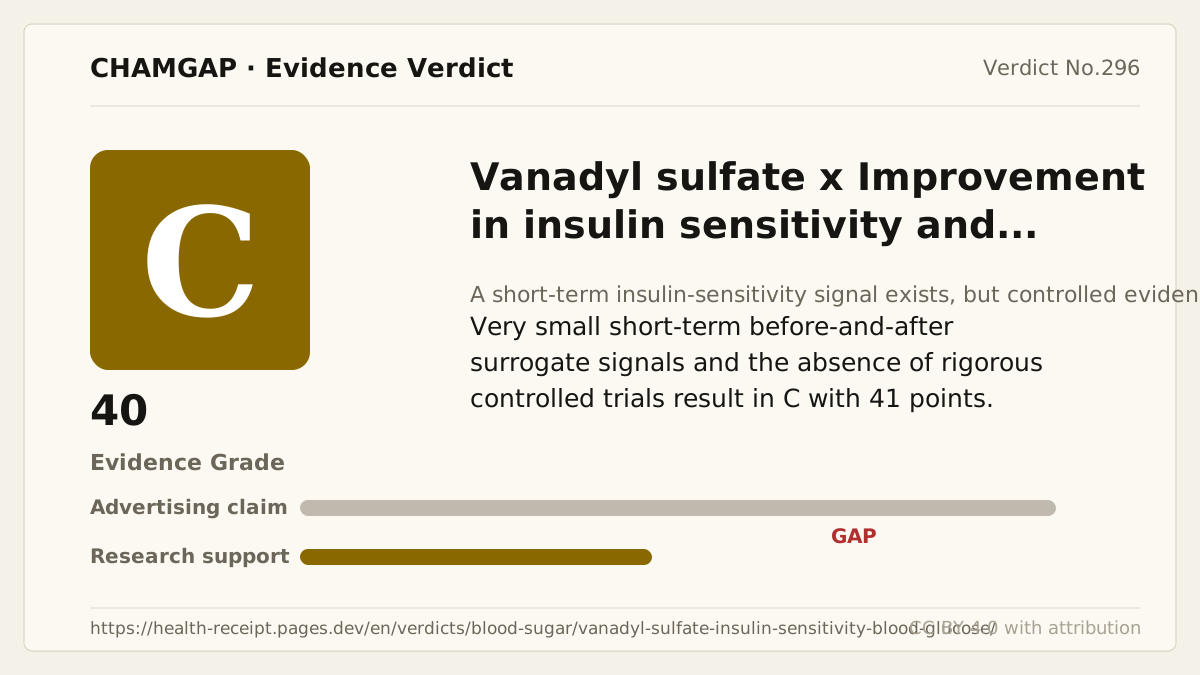
[Chamgap] Vanadyl sulfate x improvement in insulin sensitivity and blood glucose — Evidence Grade C·40. 4 cited sources checked. Source: https://chamgap.com/en/verdicts/blood-sugar/vanadyl-sulfate-insulin-sensitivity-blood-glucose/ · CC BY 4.0CC BY 4.0 — free to use with attribution; do not distort grades, numbers, or verdict meaning.
What this document does and does not do
Chamgap is an information source. It reports what research has and has not confirmed; it does not tell readers what to take or buy. That decision belongs to readers and, when needed, medical or legal professionals. This verdict reflects literature available up to the search date and may change as new research appears. Nothing here is medical advice.