
Okra extract,
does it really help with Improvement in postprandial glucose and HbA1c?
research showsRecent meta-analyses of eight to nine randomized trials found reductions in fasting glucose and HbA1c with okra, and some analyses found lower two-hour postprandial glucose. Studies are concentrated in small short-term trials from regions including Iran, formulations and doses vary, and conflicting trials exist, yielding upper-range C.
ads claimClaims of 'blocking post-meal glucose' and 'managing HbA1c' present varied food, powder, and extract trials as one standardized effect. Drug replacement and prevention of diabetic complications were not tested.
Useful facts when choosing a product
- Trial formulations ranged from 3-4 g/day whole-fruit powder and 20 g/day powder in yogurt to low-dose dried extracts.
- Main outcomes were surrogates such as fasting glucose, two-hour postprandial glucose, and HbA1c.
- Okra fiber may affect absorption of coadministered oral drugs, and glucose-lowering medication is a cointervention variable.
- Most included trials lasted 8-12 weeks.
What the research actually shows
The Zhang 2024 meta-analysis of eight RCTs and 521 participants found lower fasting glucose and HbA1c, with high fasting-glucose heterogeneity. The Bahari 2024 meta-analysis of nine RCTs reported fasting glucose lower by 39.58 mg/dL and HbA1c by 0.46%. The Saatchi 2022 trial in 120 people with type 2 diabetes reported better glycemic markers with 4 g/day whole-fruit capsules, and the Tavakolizadeh 2023 trial was positive at 3 g/day. In contrast, the Nikpayam 2024 diabetic-nephropathy trial found no between-group glycemic difference after 125 mg extract for 10 weeks.
Why this is classified as C (58)
Repeated glycemic signals in multiple RCTs and meta-analyses rule out D, but surrogate-only outcomes, regional and formulation concentration, high heterogeneity, and conflicting trials yield upper-range C with 58 points.
Counterpoint. Adjunctive reductions in fasting glucose and HbA1c remain plausible in type 2 diabetes and prediabetes. This does not extend to preventing clinical events or replacing medication.
Rejudgment record. New verdict — Positive glycemic surrogates in multiple RCT meta-analyses, but regional and formulation concentration, high fasting-glucose heterogeneity, and some negative between-group trials
Sub-claim grades by effect
This ingredient is marketed for several effects. A single overall grade blends strong and weak claims together, so each effect is graded separately here. The overall grade reflects the strongest disconfirming or core claim.
| Effect (sub-claim) | Grade | Basis |
|---|---|---|
| Improvement in two-hour postprandial glucose | C | A reduction appeared in meta-analysis, but the number and certainty of contributing studies are limited. |
| Improvement in HbA1c | C | Four studies with 296 participants and later meta-analyses suggest about a 0.5% reduction, but regional and formulation concentration remains. |
Cross-check — Codex and Claude
Evidence Table
| Study | Design | Sample | Funding | Endpoint | Result | Weight |
|---|---|---|---|---|---|---|
| Zhang X et al. 2024 | Systematic review and meta-analysis of RCTs | 521 | Unknown | Fasting glucose, HbA1c, and lipids | Fasting glucose decreased by 32.56 mg/dL and HbA1c by 0.48%; fasting-glucose I-squared was 84.7%. | Key |
| Bahari H et al. 2024 | Systematic review and meta-analysis of RCTs | 9 | Academic research | Glucose, HbA1c, and cardiometabolic markers | Fasting glucose decreased by 39.58 mg/dL and HbA1c by 0.46%; varied formulations were included. | Key |
| Saatchi A et al. 2022 | Double-blind randomized placebo-controlled trial | 120 | Iranian academic institutions | Fasting glucose, glucose, and HbA1c | All three markers decreased versus control after 4 g/day for eight weeks. | Supportive |
| Nikpayam O et al. 2024 | Triple-blind randomized placebo-controlled trial | 64 | Iranian academic institutions | Fasting glucose, HbA1c, and insulin resistance | Within-group reductions occurred, but between-group differences were not significant. | Contrary |
Receipt — 4 References
All 4 cited sources were verified for existence at the original page (as of 2026-07-11).
Reviewed and approved: Chamgap Editorial Team · Approval date: 2026-07-11 · Corrections: none
Cite this verdict
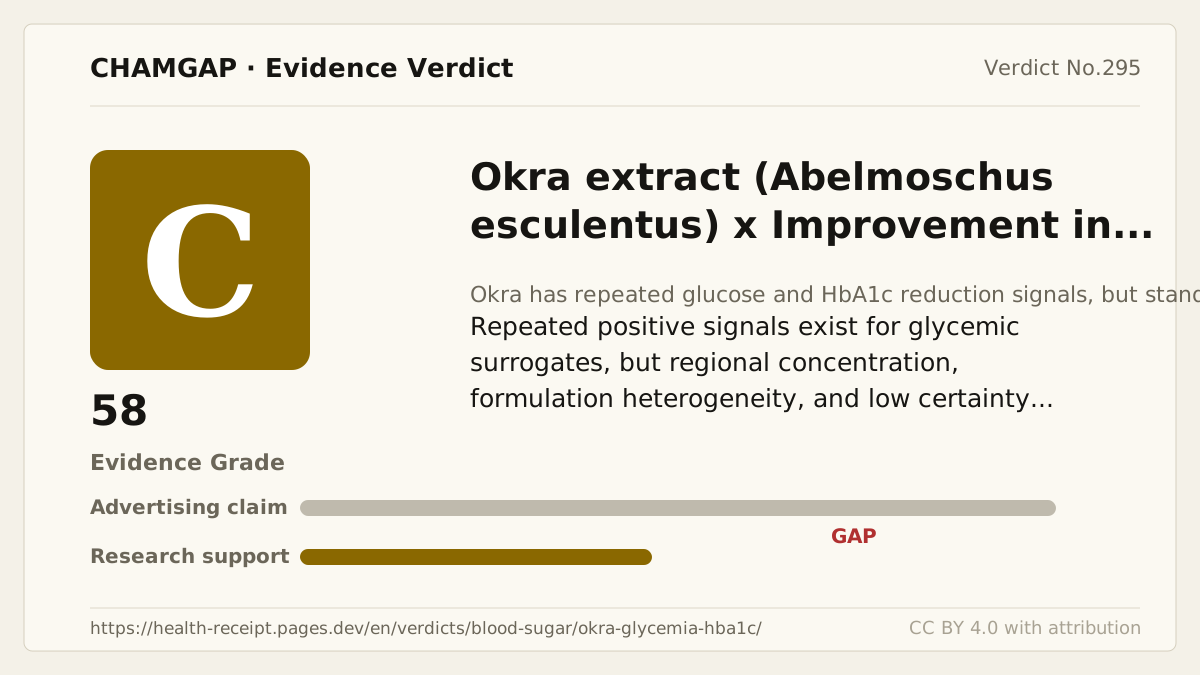
[Chamgap] Okra extract (Abelmoschus esculentus) x improvement in postprandial glucose and HbA1c — Evidence Grade C·58. 4 cited sources checked. Source: https://chamgap.com/en/verdicts/blood-sugar/okra-glycemia-hba1c/ · CC BY 4.0CC BY 4.0 — free to use with attribution; do not distort grades, numbers, or verdict meaning.
What this document does and does not do
Chamgap is an information source. It reports what research has and has not confirmed; it does not tell readers what to take or buy. That decision belongs to readers and, when needed, medical or legal professionals. This verdict reflects literature available up to the search date and may change as new research appears. Nothing here is medical advice.