
Berberine,
does it really help with Blood glucose, cholesterol, and lipids?
research showsBerberine is rated B because there are multiple meta-analyses reporting improvements in blood glucose (HbA1c and fasting blood glucose) and lipids, and some studies have shown effect sizes large enough to be comparable to metformin. However, the endpoints are surrogate markers such as HbA1c and lipid values, not diabetes complications or cardiovascular events, and the evidence does not reach A because of concentration in Chinese studies, heterogeneity, risk of bias, and large differences among formulations.
ads claimAdvertisements commonly use drug-replacement nuances such as 'natural blood sugar medicine,' 'nature's Ozempic,' 'cholesterol cleanup,' 'fat breakdown,' and 'diabetes management.' The actual evidence centers on blood glucose and lipid laboratory values, and is difficult to view as clinical evidence equivalent to weight-loss drugs or drugs that prevent cardiovascular events.
Useful facts when choosing a product
- Research doses are commonly 500 mg two to three times daily, for a total range of 1-1.5 g/day.
- The main outcomes are surrogate markers such as HbA1c, fasting blood glucose, insulin resistance, TC, LDL-C, and TG.
- The content, salt form, and absorption-enhancing formulation of marketed products may differ from the study products.
- Berberine requires caution for CYP3A4/P-gp-related drug interactions, possible hypoglycemia when combined with hypoglycemic agents, and use in pregnancy, lactation, and children.
What the research actually shows
The Yin 2008 RCT showed a signal that berberine 500 mg three times daily lowered HbA1c and fasting blood glucose in patients with type 2 diabetes. The Dong 2012 systematic review summarized 14 RCTs with 1068 participants and found that berberine, alone or combined with oral hypoglycemic agents, improved blood glucose and lipid markers, but judged the study quality to be low. The Lan 2015 meta-analysis and later meta-analyses in metabolic diseases also repeatedly report signals of reduced HbA1c, FPG, TC, LDL-C, and TG, but concentration in Chinese studies, heterogeneity, risk of bias, and differences in formulations are substantial. For lipids, the Dong 2013 Planta Medica meta-analysis reported possible decreases in TC, TG, and LDL-C and an increase in HDL-C, but most studies were short-term surrogate-marker studies.
Why this is classified as B (68)
Human evidence for blood glucose (HbA1c and fasting blood glucose) and lipid markers is relatively strong in this batch, so B is maintained. However, the evidence centers on surrogate markers rather than clinical events, and concentration in Chinese studies, heterogeneity, risk of bias, and differences among formulations remain, so the rating is not A but B with 68 points.
Counterpoint. A signal for adjunctive improvement in laboratory values remains in populations with type 2 diabetes or dyslipidemia. This judgment does not extend to prevention of diabetes complications or cardiovascular events, drug substitution, or weight loss.
Rejudgment record. Final reassessment — Repeated positive blood glucose and lipid meta-analyses, but A is not possible because of surrogate markers, concentration in Chinese studies, heterogeneity, risk of bias, and formulation differences
Cross-check — Codex and Claude
Evidence Table
| Study | Design | Sample | Funding | Endpoint | Result | Weight |
|---|---|---|---|---|---|---|
| Yin J et al. 2008 | Randomized clinical trial | 2 | Unknown | HbA1c, fasting blood glucose, postprandial blood glucose, and lipids | Signal that blood glucose and lipid markers improved with berberine 500 mg three times daily. | Key |
| Dong H et al. 2012 | Systematic review and meta-analysis | 1068 | Unknown/mostly Chinese studies | Blood glucose and lipids | Reported blood glucose and lipid improvement with berberine alone or in combination, but study quality was low. | Key |
| Dong H et al. 2013 | Meta-analysis of RCTs | Unknown | TC, TG, LDL-C, and HDL-C | Reported a signal for improvement in blood lipids, but centered on short-term surrogate markers. | Key | |
| Lan J et al. 2015 | Systematic review and meta-analysis | 27 | Unknown | Blood glucose, lipids, and safety | Reported improvement in metabolic-disease markers, but study quality and heterogeneity were limitations. | Supportive |
Receipt — 4 References
All 4 cited sources were verified for existence at the original page (as of 2026-07-09).
Reviewed and approved: Chamgap Editorial Team · Approval date: 2026-07-09 · Corrections: none
Cite this verdict
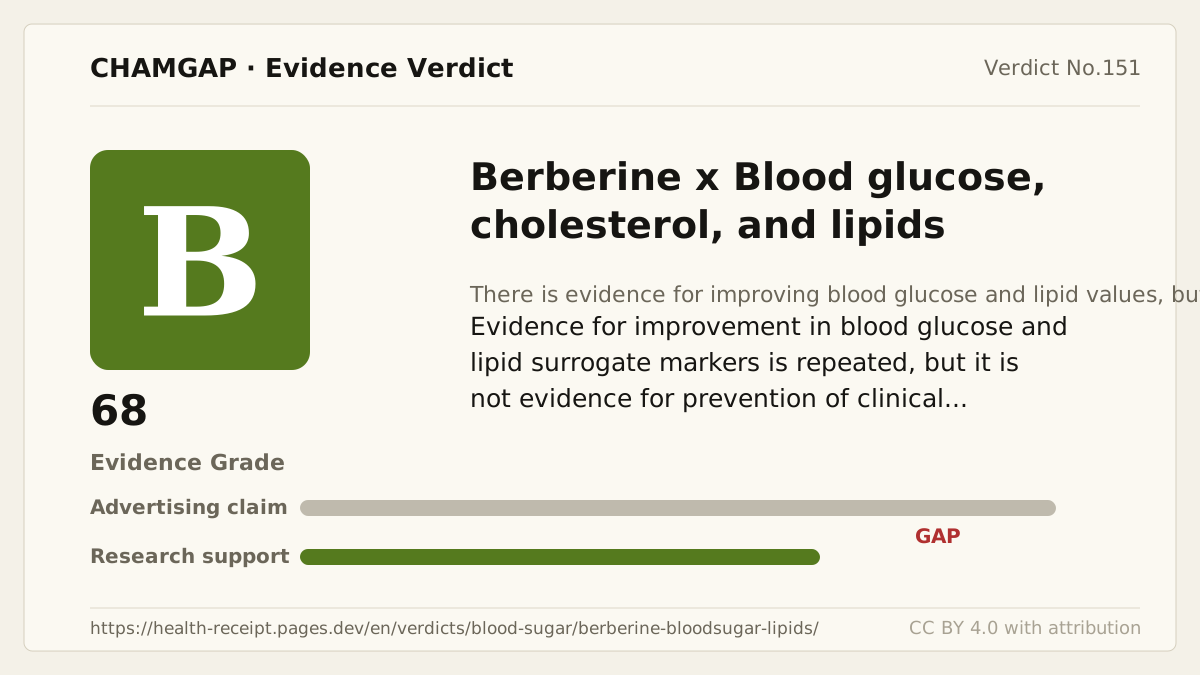
[Chamgap] Berberine x blood glucose, cholesterol, and lipids — Evidence Grade B·68. 4 cited sources checked. Source: https://chamgap.com/en/verdicts/blood-sugar/berberine-bloodsugar-lipids/ · CC BY 4.0CC BY 4.0 — free to use with attribution; do not distort grades, numbers, or verdict meaning.
What this document does and does not do
Chamgap is an information source. It reports what research has and has not confirmed; it does not tell readers what to take or buy. That decision belongs to readers and, when needed, medical or legal professionals. This verdict reflects literature available up to the search date and may change as new research appears. Nothing here is medical advice.