
Mulberry leaf extract,
does it really help with Postprandial blood glucose?
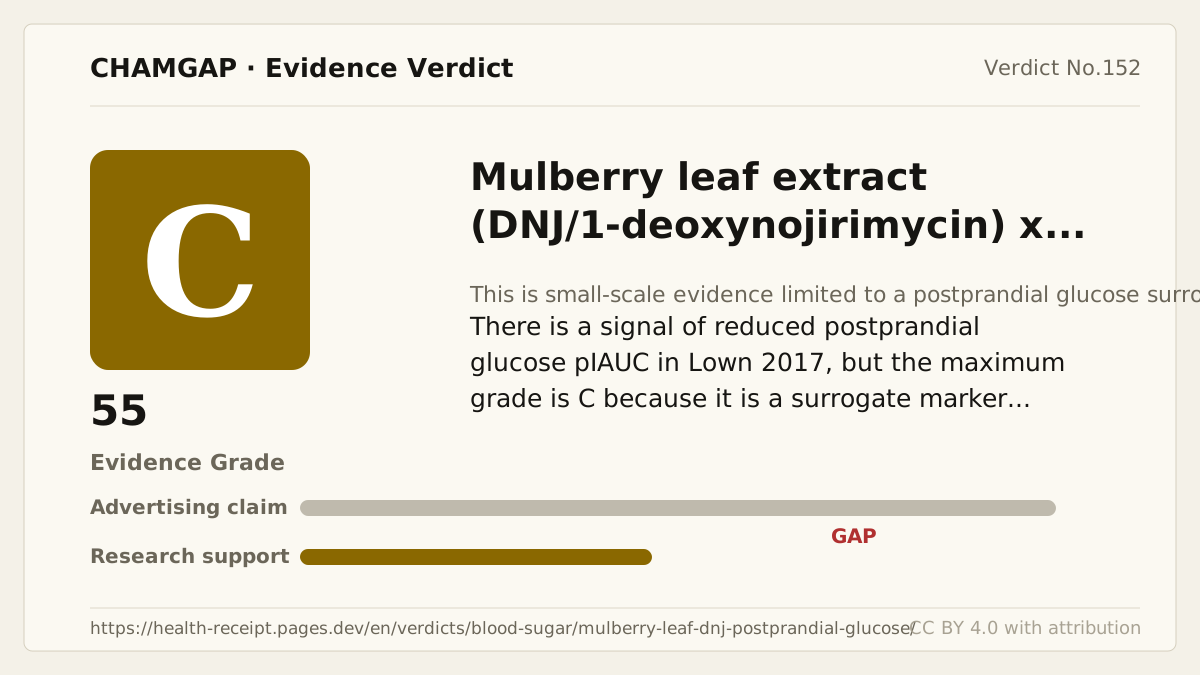
research showsMulberry leaf extract standardized to DNJ has a small human-trial signal of lowering postprandial glucose pIAUC when taken together with a carbohydrate load. However, because the primary endpoint is the surrogate marker of postprandial glucose AUC, the maximum methodological grade is C, and independence is also limited because an executive of the developer was included as a coauthor. Diabetes prevention and clinical efficacy have not been established.
ads claimAdvertisements combine claims such as 'carbohydrate cut,' 'suppresses post-meal blood sugar rise,' 'blocks sugar absorption,' and 'diet blood sugar management.' The actual evidence is the postprandial blood glucose and insulin curve when taken at the same time as a carbohydrate load.
Useful facts when choosing a product
- The study products had specified contents, such as a DNJ 5% standardized extract or DNJ 1.5% enriched powder.
- The effect is consistent with an alpha-glucosidase inhibition mechanism when taken with meals.
- It is hard to expect the same effect when consumed with a low-carbohydrate meal or after time has already passed following a meal.
- People using hypoglycemic agents need caution for possible hypoglycemia and gastrointestinal symptoms.
What the research actually shows
The Kimura 2007 RCT administered 0.4, 0.8, and 1.2 g of DNJ-enriched mulberry leaf powder with 50 g sucrose to healthy volunteers, and the 0.8 g and 1.2 g doses significantly suppressed postprandial glucose rise and insulin secretion. The Lown 2017 PLOS One study was a crossover double-blind trial in 37 normoglycemic adults that administered Reducose with 50 g maltodextrin and reported that at the normal dose and double dose, glucose pIAUC decreased by -14.0% and -22.0%, respectively, and insulin pIAUC decreased by -23.8% and -24.7%. However, the primary endpoint of the study was 120-minute glucose pIAUC, and an executive of the developer Phynova was included as a coauthor.
Why this is classified as C (55)
There is a signal of reduced postprandial glucose pIAUC, but because the primary endpoint is a surrogate marker, the maximum grade under Rule 1 is C. The sample is small and there are product interests and limits to independence, so it is placed at C with 55 points.
Counterpoint. There is a limited signal within the functional scope of lowering the blood glucose peak immediately after a carbohydrate load. This judgment does not generalize to diabetes treatment or prevention, or to clinical efficacy.
Rejudgment record. Final reassessment — Positive postprandial glucose pIAUC, but C because of surrogate-marker Rule 1, small size, and developer conflict of interest
Cross-check — Codex and Claude
Evidence Table
| Study | Design | Sample | Funding | Endpoint | Result | Weight |
|---|---|---|---|---|---|---|
| Kimura T et al. 2007 | Randomized clinical trial | Unknown | Postprandial blood glucose and insulin | Powder equivalent to DNJ 12 mg and 18 mg suppressed increases in blood glucose and insulin after a sucrose load. | Key | |
| Lown M et al. 2017 | Double-blind randomized crossover trial | 37 | Innovate UK grant; coauthor with product-developer conflict of interest | 120-minute glucose pIAUC | At the normal dose and double dose, glucose pIAUC was -14.0% and -22.0%; insulin pIAUC was -23.8% and -24.7%. | Key |
| Mudra M et al. 2007 | Human crossover trial | 2 | Unknown | Blood glucose and breath hydrogen after sucrose load | Signal that mulberry leaf extract lowered sucrose absorption and postprandial glucose response. | Supportive |
Receipt — 3 References
All 3 cited sources were verified for existence at the original page (as of 2026-07-09).
Reviewed and approved: Chamgap Editorial Team · Approval date: 2026-07-09 · Corrections: none
Cite this verdict
[Chamgap] Mulberry leaf extract (DNJ) x postprandial blood glucose — Evidence Grade C·55. 3 cited sources checked. Source: https://chamgap.com/en/verdicts/blood-sugar/mulberry-leaf-dnj-postprandial-glucose/ · CC BY 4.0CC BY 4.0 — free to use with attribution; do not distort grades, numbers, or verdict meaning.
What this document does and does not do
Chamgap is an information source. It reports what research has and has not confirmed; it does not tell readers what to take or buy. That decision belongs to readers and, when needed, medical or legal professionals. This verdict reflects literature available up to the search date and may change as new research appears. Nothing here is medical advice.