
Touchi extract,
does it really help with Suppression of postprandial blood glucose elevation?
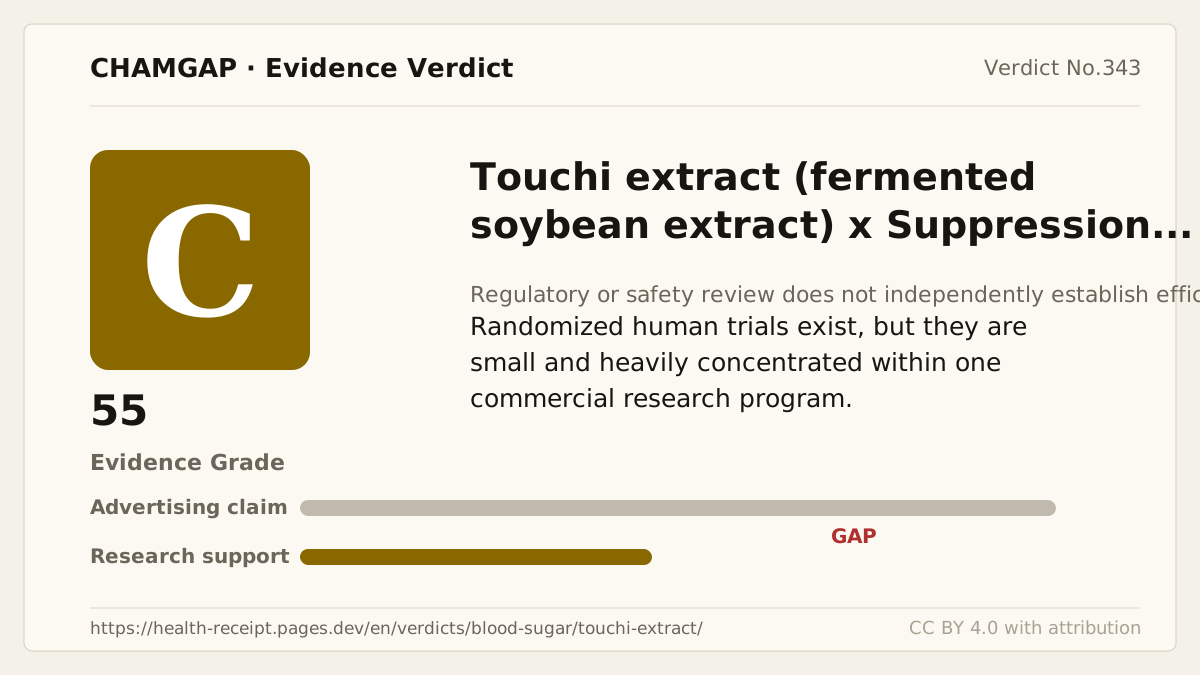
research showsSmall human trials reported improvements in postprandial glucose and longer-term glycemic markers, but efficacy studies are concentrated around the same manufacturer, investigators, and product, with little independent replication.
ads claimMarketing may present fermented soybean extract as broadly blocking dietary sugar absorption, but the public evidence applies to a particular extract and dosing regimen. It cannot be generalized to natto, miso, or fermented soybean foods as a class.
Useful facts when choosing a product
- Studies used 0.3 g of standardized Touchi extract before each meal, totaling 0.9 g daily.
- Some overseas products provide 300 mg tablets three times daily before meals.
- No domestically marketed Korean product with the identical specification was confirmed at the time of review.
- Ordinary fermented soybean foods are not equivalent to the standardized extract used in the trials.
What the research actually shows
Small acute studies and three- and six-month trials in people with borderline hyperglycemia or diabetes reported postprandial glucose and longer-term HbA1c signals. All core efficacy trials, however, are concentrated within the single Touchi development network around the same investigators, manufacturer, and test material, and no large independent replication was identified.
Why this is classified as C (55)
Positive human trials and multi-month marker changes exist, but the samples are small and efficacy research is concentrated around one manufacturer and product family. The grade is therefore capped at C under the manufacturer-specific evidence rule.
Counterpoint. Concentration of authorship does not prove that the findings are false; the multi-month HbA1c signal warrants independent replication.
Rejudgment record. Reassessment (cross-check reflected) — The verdict weighs positive small human trials, including longer-term HbA1c signals, against concentration of all core efficacy evidence within the single Touchi development network and the absence of large independent replication.
Cross-check — Codex and Claude
Evidence Table
| Study | Design | Sample | Funding | Endpoint | Result | Weight |
|---|---|---|---|---|---|---|
| Fujita, Yamagami & Ohshima (2001) | Single-dose, dose-response study | 4 | Nippon Supplement investigators and test material | Blood glucose after 75 g sucrose or 200 g cooked rice | In eight participants with borderline diabetes, doses of at least 0.3 g before sucrose reduced postprandial glucose; a reduction was also reported in four participants with diabetes after a rice challenge. | Acute, very small, and manufacturer-linked |
| Fujita et al. (2001) | Three-month double-blind randomized controlled trial | 36 | Nippon Supplement investigators and product | Fasting glucose, HbA1c, and safety measures | The group taking 0.3 g before each meal reportedly had lower fasting glucose and HbA1c than placebo. | Multi-month randomized trial, but small and manufacturer-concentrated |
| Fujita et al. (2003) | Six-month randomized controlled trial | 24 | Nippon Supplement-linked research | Fasting glucose, HbA1c, and triglycerides | Reductions in fasting glucose, HbA1c, and triglycerides were reported with 0.3 g before each meal. | Relatively long duration, but a small study from the same research program |
Receipt — 5 References
All 5 cited sources were verified for existence at the original page (as of 2026-07-15).
Reviewed and approved: Chamgap Editorial Team · Approval date: 2026-07-15 · Corrections: none
Cite this verdict
[Chamgap] Does Touchi extract suppress postprandial blood glucose elevation? — Evidence Grade C·55. 5 cited sources checked. Source: https://chamgap.com/en/verdicts/blood-sugar/touchi-extract/ · CC BY 4.0CC BY 4.0 — free to use with attribution; do not distort grades, numbers, or verdict meaning.
What this document does and does not do
Chamgap is an information source. It reports what research has and has not confirmed; it does not tell readers what to take or buy. That decision belongs to readers and, when needed, medical or legal professionals. This verdict reflects literature available up to the search date and may change as new research appears. Nothing here is medical advice.