
Nopal/prickly pear cactus,
does it really help with Blood glucose, weight loss, and cholesterol?
research showsNopal has small acute studies suggesting that pads eaten as food lower postprandial blood glucose, and small studies suggesting that fruit or fiber products change oxidative-stress and lipid markers. Weight loss is not clear in randomized-trial syntheses, and cholesterol and blood glucose evidence is also at the metabolic-marker level rather than long-term clinical evidence.
ads claimAdvertisements bundle 'blood sugar control,' 'fat adsorption,' 'diet,' 'cholesterol reduction,' and 'antioxidant' together. Actual human evidence is scattered across markers such as acute postprandial glucose response, oxidative stress, and lipids.
Useful facts when choosing a product
- Studies differ in the part and product used, including pads (nopales), fruit (cactus pear), and fiber supplements.
- Blood glucose studies are strongly affected by meal composition and the amount eaten with the meal.
- The evidence for weight-loss claims is weaker than the evidence for blood glucose and lipid claims.
- Rare cases of bowel obstruction/fecal impaction have been reported with excessive seed intake, and caution for hypoglycemia is needed when used with diabetes medications.
What the research actually shows
Older small studies from the Frati-Munari group reported acute signals of lower postprandial blood glucose when patients with type 2 diabetes ate nopales with specific meals. The Tesoriere 2004 comparative study reported that cactus pear fruit lowered oxidative-stress markers in healthy people, but these are biomarkers, not clinical outcomes. The Onakpoya 2015 systematic review summarized that cactus pear had no significant effect on body weight and only limited signals for some lipid and blood pressure markers.
Why this is classified as C (44)
When the composite claims are separated, blood glucose evidence is acute and small-scale, lipid and antioxidant evidence is surrogate-marker evidence, and weight evidence is negative or unclear. Under boundary rules, the evidence is centered on surrogate markers, so the rating is C with 44 points.
Counterpoint. Eating nopal as a vegetable food is a separate nutritional choice. This judgment evaluates blood glucose, weight-loss, and cholesterol claims in supplement advertising.
Rejudgment record. Draft — Small, acute human studies centered on metabolic markers; weight claim is unclear
Cross-check — Codex and Claude
Evidence Table
| Study | Design | Sample | Funding | Endpoint | Result | Weight |
|---|---|---|---|---|---|---|
| Frati-Munari AC et al. 1980s-1990s | Small acute human trial | 2 | Unknown | Postprandial blood glucose | Signal of lower postprandial blood glucose when nopales were eaten with a meal. | Supportive |
| Tesoriere L et al. 2004 | Comparative human trial | Unknown | Oxidative-stress biomarkers | Improvement in oxidative-stress markers after cactus pear fruit intake. | Supportive | |
| Onakpoya IJ et al. 2015 | Systematic review of RCTs | Unknown | Body weight and cardiovascular risk markers | Weight-loss effect was not clear, and only limited signals for some markers were found. | Key |
Receipt — 3 References
All 3 cited sources were verified for existence at the original page (as of 2026-07-09).
Reviewed and approved: Chamgap Editorial Team · Approval date: 2026-07-09 · Corrections: none
Cite this verdict
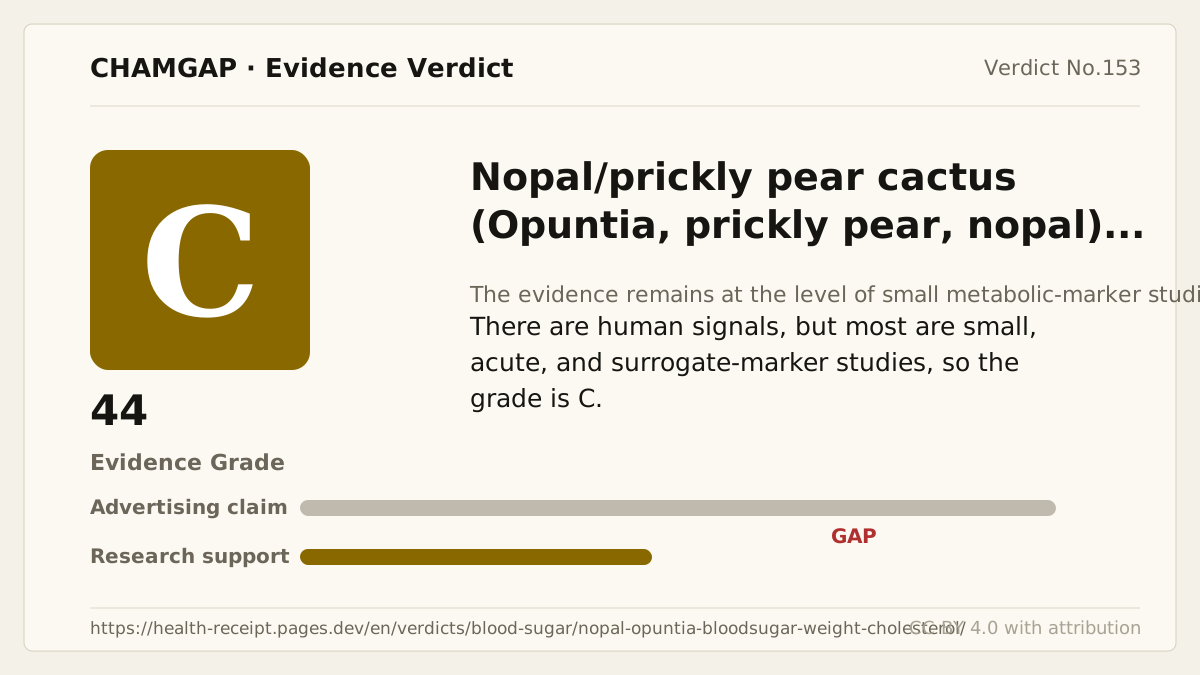
[Chamgap] Nopal/prickly pear cactus (Opuntia) x blood glucose, weight loss, and cholesterol — Evidence Grade C·44. 3 cited sources checked. Source: https://chamgap.com/en/verdicts/blood-sugar/nopal-opuntia-bloodsugar-weight-cholesterol/ · CC BY 4.0CC BY 4.0 — free to use with attribution; do not distort grades, numbers, or verdict meaning.
What this document does and does not do
Chamgap is an information source. It reports what research has and has not confirmed; it does not tell readers what to take or buy. That decision belongs to readers and, when needed, medical or legal professionals. This verdict reflects literature available up to the search date and may change as new research appears. Nothing here is medical advice.