
D-allulose,
does it really help with Attenuation of postprandial glucose rise?
research showsAcute crossover trials and meta-analyses repeatedly show a modest reduction in postprandial glucose iAUC when 5-10 g of allulose is consumed with carbohydrate. Twelve-week trials, however, have not significantly improved HbA1c or fasting glucose, and samples are small. The acute surrogate effect cannot be extended to long-term glycemic control, resulting in C.
ads claimMarketing uses phrases such as 'blocks glucose spikes,' 'stimulates GLP-1,' and 'diabetes management,' while direct evidence is mainly acute load testing and does not confirm long-term HbA1c improvement.
Useful facts when choosing a product
- Pure allulose powders, syrups, and blended sweeteners are widely marketed as conventional foods in South Korea.
- Purity and blending with monk fruit, fructooligosaccharides, or resistant maltodextrin vary, so the allulose-only amount must be checked.
- Acute glycemic trials generally used 5-10 g together with a carbohydrate load.
- High doses can increase diarrhea, bloating, and abdominal pain; an adult tolerance study proposed 0.4 g/kg per occasion and 0.9 g/kg per day as upper intake suggestions.
What the research actually shows
The Osborn 2026 meta-analysis concluded that allulose reduced acute postprandial glucose iAUC but did not significantly improve HbA1c or fasting glucose. Noronha 2018 crossed 24 adults with type 2 diabetes through 0, 5, and 10 g allulose with a 75 g glucose load and found an 8% reduction in glucose iAUC at 10 g. Braunstein 2021 tested 2.5-10 g with 50 g sucrose in 30 adults without diabetes; 30-minute glucose and insulin fell dose-dependently, but total AUC was similar. Preechasuk 2023 found that 7 g twice daily for 12 weeks did not improve glucose homeostasis, including HbA1c, in a 16-person crossover trial.
Why this is classified as C (58)
Multiple acute RCTs and meta-analysis support a postprandial signal, but the effect is modest, meal-dependent, and accompanied by null 12-week HbA1c and fasting-glucose results, yielding C with 58 points.
Counterpoint. The standardized acute signal when co-ingested with carbohydrate may have limited practical relevance.
Rejudgment record. Reassessment (cross-check reflected) — Repeated acute postprandial glucose iAUC reduction, but null 12-week HbA1c and fasting glucose with small samples and surrogate endpoints
Cross-check — Codex and Claude
Evidence Table
| Study | Design | Sample | Funding | Endpoint | Result | Weight |
|---|---|---|---|---|---|---|
| Osborn L et al. 2026 | Systematic review and meta-analysis | 3 | No third-party research funding reported | Postprandial glucose and insulin iAUC, HbA1c, and fasting glucose | Postprandial glucose iAUC decreased with moderate certainty, but HbA1c and fasting glucose did not improve significantly. | Key |
| Noronha JC et al. 2018 | Double-blind randomized multiple-crossover acute trial | 24 | Mixed public, academic, and industry links | Two-hour glucose iAUC during a 75 g OGTT | Ten grams of allulose reduced glucose iAUC by about 8% versus control. | Key, acute |
| Braunstein CR et al. 2021 | Randomized double-blind placebo-controlled crossover trial | 30 | Academic institutions | Glucose and insulin time points and AUC after 50 g sucrose | Thirty-minute values fell dose-dependently, but total AUC was similar. | Mixed |
| Preechasuk L et al. 2023 | Double-blind randomized controlled crossover trial | 16 | Unknown | Twelve-week HbA1c, fasting glucose, insulin, and HOMA-IR | Allulose 7 g twice daily did not significantly improve glucose homeostasis. | Key long-term |
Receipt — 4 References
All 4 cited sources were verified for existence at the original page (as of 2026-07-15).
Reviewed and approved: Chamgap Editorial Team · Approval date: 2026-07-15 · Corrections: none
Cite this verdict
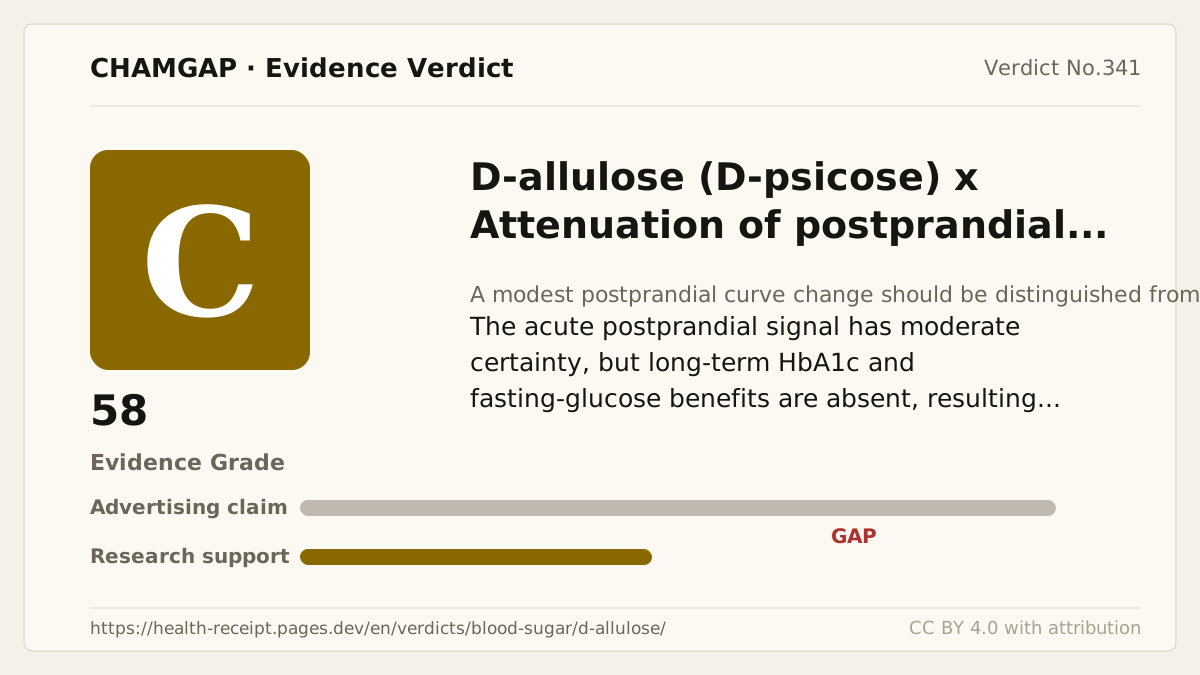
[Chamgap] D-allulose x attenuation of postprandial glucose rise — Evidence Grade C·58. 4 cited sources checked. Source: https://chamgap.com/en/verdicts/blood-sugar/d-allulose/ · CC BY 4.0CC BY 4.0 — free to use with attribution; do not distort grades, numbers, or verdict meaning.
What this document does and does not do
Chamgap is an information source. It reports what research has and has not confirmed; it does not tell readers what to take or buy. That decision belongs to readers and, when needed, medical or legal professionals. This verdict reflects literature available up to the search date and may change as new research appears. Nothing here is medical advice.