
Black seed oil,
does it really help with Combined improvement of blood glucose, blood pressure, and lipids?
research showsA meta-analysis of 31 trials and 2,145 participants found repeated signals for glucose, blood pressure, and lipids, placing the evidence above D. However, all are surrogate markers rather than clinical events, so C is the maximum. Earlier meta-analyses pooled seed powder, extracts, and oil, and the blood-pressure effect was larger for powder than oil; the full result cannot be attributed to black seed oil. The grade is C with 49 points.
ads claimMarketed products use expressions such as 'manage blood sugar, blood pressure, and cholesterol together,' 'metabolic balance,' 'cardiovascular protection,' and 'diabetes management.' The research concerns changes in laboratory values and blood pressure and is not evidence evaluating prevention of myocardial infarction, stroke, kidney disease, or diabetes complications.
Useful facts when choosing a product
- Clinical research includes different formulations such as Nigella sativa seed oil, seed powder, and capsules.
- One oil RCT used 2.5 mL twice daily for 8 weeks.
- Thymoquinone content and extraction and oxidation status vary among products, so marketed products may not match the research formulations.
- Reported adverse events are mainly mild gastrointestinal symptoms, and the possibility of effects in the same direction as glucose- and blood-pressure-lowering medication is relevant to safety classification.
What the research actually shows
The Sahebkar 2016 blood-pressure meta-analysis of 11 RCTs and 860 participants reported, after a mean 8.3 weeks, differences versus control of -3.26 mmHg for SBP (95% CI -5.10 to -1.42) and -2.80 mmHg for DBP (95% CI -4.28 to -1.32), with heterogeneity of I² 59% and 60%, respectively. The lipid meta-analysis from the same year included 17 RCTs and reported reductions in TC, LDL-C, and TG, but not a significant HDL-C effect, and effects differed between oil and powder. The Daryabeygi-Khotbehsara 2017 meta-analysis of 7 trials in type 2 diabetes reported FBS -17.84 mg/dL, HbA1c -0.71%, and lower TC and LDL-C, but overall TG and HDL-C effects were not significant. The Shoaei-Hagh 2021 oil RCT gave 2.5 mL twice daily for 8 weeks to 55 patients with hypertension and reported improvements in blood pressure, FBS, and some lipids; it was a small, short trial.
Why this is classified as C (49)
Repeated metabolic-marker signals across 31 trials and 2,145 participants place the evidence above D. Because glucose, blood pressure, and lipids are surrogates rather than clinical events, rule ① caps the grade at C. Pooling of seed powder, extracts, and oil, plus the larger blood-pressure effect for powder than oil, prevents attribution of the full evidence to oil and supports C with 49 points.
Counterpoint. Signals of small short-term changes in laboratory values and blood pressure remain in metabolically at-risk populations across several analyses. This judgment does not extend those signals to prevention of clinical events or replacement of medication.
Rejudgment record. Reassessment (cross-check reflected) — Repeated signals across 31 trials and 2,145 participants place the evidence above D, but glucose, blood pressure, and lipids are surrogates rather than clinical events and cap the grade at C; prior meta-analyses pooled seed powder, extracts, and oil, with a larger blood-pressure effect for powder than oil, so all findings cannot be attributed to oil
Sub-claim grades by effect
This ingredient is marketed for several effects. A single overall grade blends strong and weak claims together, so each effect is graded separately here. The overall grade reflects the strongest disconfirming or core claim.
| Effect (sub-claim) | Grade | Basis |
|---|---|---|
| Improvement of blood glucose | C | Meta-analyses show signals of lower FBS and HbA1c, but formulation and population heterogeneity are substantial and there are no complication endpoints. |
| Improvement of blood pressure | C | A meta-analysis of 11 RCTs reported reductions of about 3/3 mmHg, but this is a short-term surrogate endpoint with moderate or greater heterogeneity. |
| Improvement of lipids | C | There are signals of lower TC, LDL-C, and TG, but HDL-C findings are inconsistent and effects differed between oil and powder. |
Cross-check — Codex and Claude
Evidence Table
| Study | Design | Sample | Funding | Endpoint | Result | Weight |
|---|---|---|---|---|---|---|
| Sahebkar A et al. 2016a | Systematic review and meta-analysis of RCTs | 860 | Academic research; industry funding not reported | Systolic and diastolic blood pressure | Versus control, SBP was -3.26 mmHg and DBP was -2.80 mmHg; I² was 59% to 60%. | Key |
| Sahebkar A et al. 2016b | Systematic review and meta-analysis of RCTs | 17 | Academic research; industry funding not reported | TC, LDL-C, HDL-C, and TG | TC was -15.65, LDL-C -14.10, and TG -20.64 mg/dL; HDL-C was not significant and effects differed by formulation. | Key |
| Daryabeygi-Khotbehsara R et al. 2017 | Systematic review and meta-analysis in type 2 diabetes | 7 | Academic research; industry funding not reported | FBS, HbA1c, TC, LDL-C, TG, and HDL-C | FBS was -17.84 mg/dL and HbA1c -0.71%, with lower TC and LDL-C; overall TG and HDL-C effects were negative. | Key |
| Shoaei-Hagh P et al. 2021 | Double-blind randomized placebo-controlled trial | 55 | University research; industry funding not reported | Blood pressure, FBS, lipids, and oxidative stress | A small short trial reported improved blood pressure, FBS, TC, and LDL with seed oil 5 mL/day for 8 weeks. | Supportive |
Receipt — 4 References
All 4 cited sources were verified for existence at the original page (as of 2026-07-13).
Reviewed and approved: Chamgap Editorial Team · Approval date: 2026-07-13 · Corrections: none
Cite this verdict
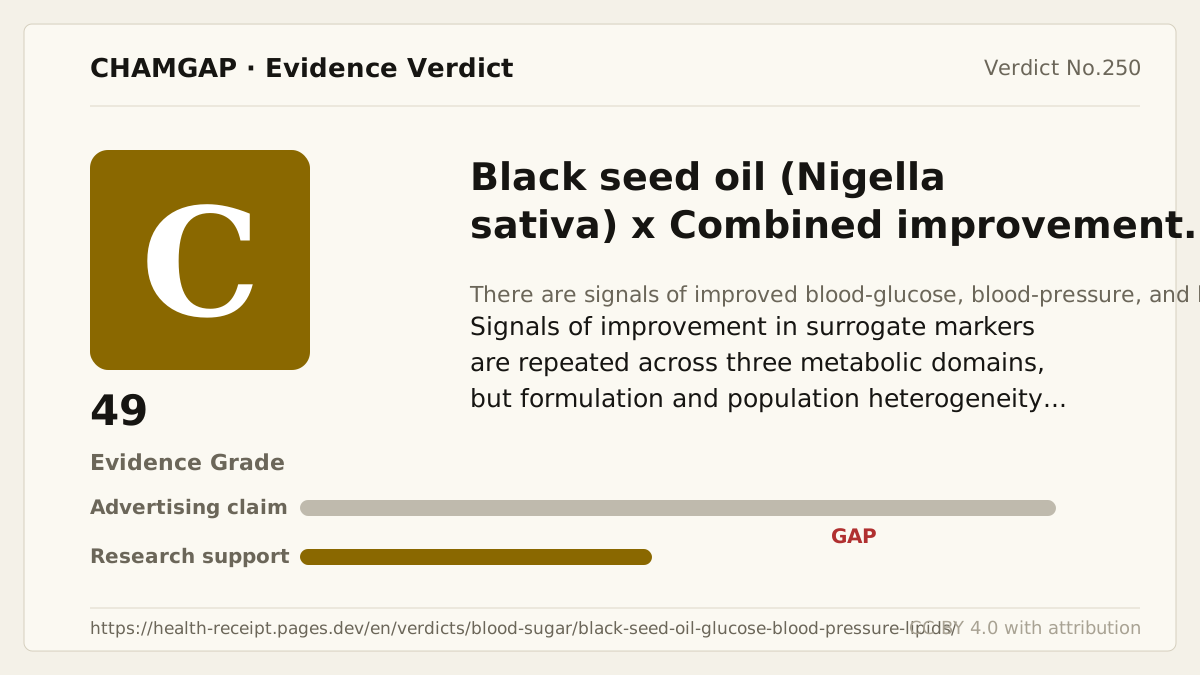
[Chamgap] Black seed oil (Nigella sativa) x combined improvement of blood glucose, blood pressure, and lipids — Evidence Grade C·49. 4 cited sources checked. Source: https://chamgap.com/en/verdicts/blood-sugar/black-seed-oil-glucose-blood-pressure-lipids/ · CC BY 4.0CC BY 4.0 — free to use with attribution; do not distort grades, numbers, or verdict meaning.
What this document does and does not do
Chamgap is an information source. It reports what research has and has not confirmed; it does not tell readers what to take or buy. That decision belongs to readers and, when needed, medical or legal professionals. This verdict reflects literature available up to the search date and may change as new research appears. Nothing here is medical advice.