
Sulforaphane/broccoli sprout extract,
does it really help with Antioxidant, detoxification, and anticancer?
research showsSulforaphane has human RCT signals of "detoxification/defense response," such as benzene and acrolein excretion, aflatoxin-related biomarkers, and Nrf2-related markers. However, evidence for clinical endpoints showing reduced cancer incidence or mortality, or enhanced anticancer treatment effect, is insufficient, so anticancer claims should be read as surrogate-marker-level claims.
ads claimAdvertisements broadly claim 'Nrf2 activation,' 'detoxification,' 'anticancer,' 'liver detox,' 'cell protection,' and 'inflammation suppression.' The strongest human evidence is biomarker change, not reduced clinical disease.
Useful facts when choosing a product
- Actual exposure from broccoli sprout products varies greatly depending on glucoraphanin, sulforaphane, and myrosinase activity.
- Heating, processing methods, and gut microbiota affect sulforaphane formation.
- During anticancer treatment, concomitant supplement use should be discussed with the treating clinician.
- Food-level intake is generally safe, but long-term safety of high-concentration supplements is limited.
What the research actually shows
The Kensler 2005 Qidong study evaluated the effect of a glucosinolate-rich broccoli sprout beverage on carcinogen-related biomarkers such as aflatoxin-DNA adducts and phenanthrene tetraol. The Egner 2014 Cancer Prevention Research RCT provided a broccoli sprout beverage to 291 adults in Qidong, China for 12 weeks and reported a 61% increase in benzene metabolite excretion rate and a 23% increase in acrolein metabolite excretion rate. Some clinical trials exist in prostate cancer, pancreatic cancer, and other settings, but they are small or centered on PSA, gene expression, or survival secondary analyses, and are insufficient for conclusions on cancer prevention or treatment.
Why this is classified as C (52)
Because of the size of the human RCTs and biological consistency, it can be viewed as the upper end of C. However, under boundary rules, surrogate markers alone cannot raise anticancer or detoxification clinical effects to B, so the score is 52.
Counterpoint. The study signal for lowering environmental carcinogen exposure biomarkers is noteworthy. This judgment does not extend that signal to cancer prevention or treatment effects.
Rejudgment record. Draft — Human biomarker RCTs exist, but cancer and detoxification clinical endpoints are absent
Cross-check — Codex and Claude
Evidence Table
| Study | Design | Sample | Funding | Endpoint | Result | Weight |
|---|---|---|---|---|---|---|
| Egner PA et al. 2014 | Randomized clinical trial | 291 | U.S. NIH and other public research funding | Benzene and acrolein metabolite excretion | Benzene excretion rate increased by 61%, and acrolein excretion rate by 23%. | Key |
| Kensler TW et al. 2005 | Randomized clinical trial | 200 | Primarily public research funding | Aflatoxin-DNA adduct and phenanthrene tetraol | Evaluated changes in carcinogen-related biomarkers. | Key |
| Study 3 | Prostate-cancer-related dietary intervention RCT | Public/mixed | PSA, gene expression, and progression markers | Some biological signals were present, but conclusions on cancer clinical endpoints were limited. | Supportive |
Receipt — 3 References
All 3 cited sources were verified for existence at the original page (as of 2026-07-09).
Reviewed and approved: Chamgap Editorial Team · Approval date: 2026-07-09 · Corrections: none
Cite this verdict
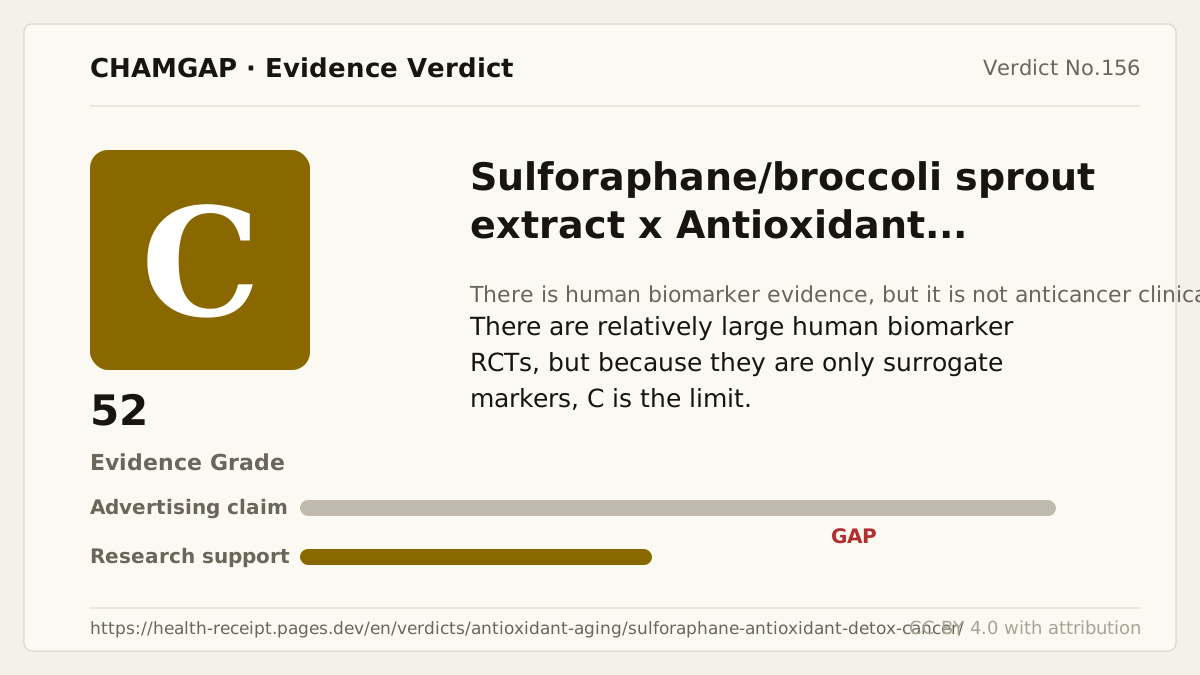
[Chamgap] Sulforaphane/broccoli sprout extract x antioxidant, detoxification, and anticancer — Evidence Grade C·52. 3 cited sources checked. Source: https://chamgap.com/en/verdicts/antioxidant-aging/sulforaphane-antioxidant-detox-cancer/ · CC BY 4.0CC BY 4.0 — free to use with attribution; do not distort grades, numbers, or verdict meaning.
What this document does and does not do
Chamgap is an information source. It reports what research has and has not confirmed; it does not tell readers what to take or buy. That decision belongs to readers and, when needed, medical or legal professionals. This verdict reflects literature available up to the search date and may change as new research appears. Nothing here is medical advice.