
Luteolin,
does it really help with Senolytic action and inhibition of neurological aging?
research showsEvidence for senolytic and neuroprotective effects of luteolin is mainly from cellular and animal models. No ingredient-only efficacy trial directly testing clearance of senescent cells or inhibition of neurological aging in humans was identified. Because human efficacy literature itself is absent, the grade is ?.
ads claimProduct descriptions may translate anti-inflammatory, antioxidant, or cellular-senescence pathways from cell and animal work into clearance of senescent cells, protection from brain aging, or preserved memory in humans. Direct human efficacy data were not identified.
Useful facts when choosing a product
- Luteolin is a flavone present in many plants; food exposure is not equivalent to a high-dose single-ingredient supplement.
- Human oral bioavailability is low and circulating material is mostly conjugated metabolites.
- A senolytic is functionally defined by selective removal of senescent cells and is not synonymous with antioxidant or anti-inflammatory activity.
- Safety and interaction data for long-term high-dose single-ingredient use are also limited.
What the research actually shows
The 2024 review by Jayawickreme and colleagues summarized luteolin studies in Alzheimer disease, Parkinson disease, and related disorders, but the key efficacy evidence came from in vitro and animal models and the authors found clinical efficacy evidence deficient. The 2024 pharmacokinetic and clinical-development review by Shi and colleagues described unfavorable oral bioavailability and noted that luteolin circulates mainly as glucuronide and sulfate conjugates. Available human information is closer to absorption, pharmacokinetics, or observations involving luteolin-containing mixtures than an ingredient-only clinical efficacy trial for the target claims.
Why this is classified as ?
No ingredient-only human efficacy trial evaluated senolytic action or inhibition of neurological aging, so the grade is ? rather than D. The score is null.
Counterpoint. Preclinical neuroprotective signals can support future human trials. The current judgment means that direct human evidence is absent, not that repeated trials have shown no effect.
Rejudgment record. Reassessment (cross-check reflected) — No luteolin-only efficacy trial directly evaluating senescent-cell clearance or inhibition of neurological aging in humans was identified, so the no-human-efficacy-literature rule applies
Cross-check — Codex and Claude
Evidence Table
| Study | Design | Sample | Funding | Endpoint | Result | Weight |
|---|---|---|---|---|---|---|
| Jayawickreme DK et al. 2024 | Review of neurodegenerative diseases | Unknown | Preclinical neurodegeneration markers in Alzheimer and Parkinson diseases and related disorders | Concluded that preclinical potential exists but clinical therapeutic efficacy evidence is deficient. | Key | |
| Shi M et al. 2024 | Pharmacokinetic and clinical-development review | Unknown | Bioavailability, metabolism, and clinical-trial development | Reported unfavorable oral bioavailability and circulating exposure dominated by conjugated metabolites. | Supportive |
Receipt — 2 References
All 2 cited sources were verified for existence at the original page (as of 2026-07-11).
Reviewed and approved: Chamgap Editorial Team · Approval date: 2026-07-11 · Corrections: none
Cite this verdict
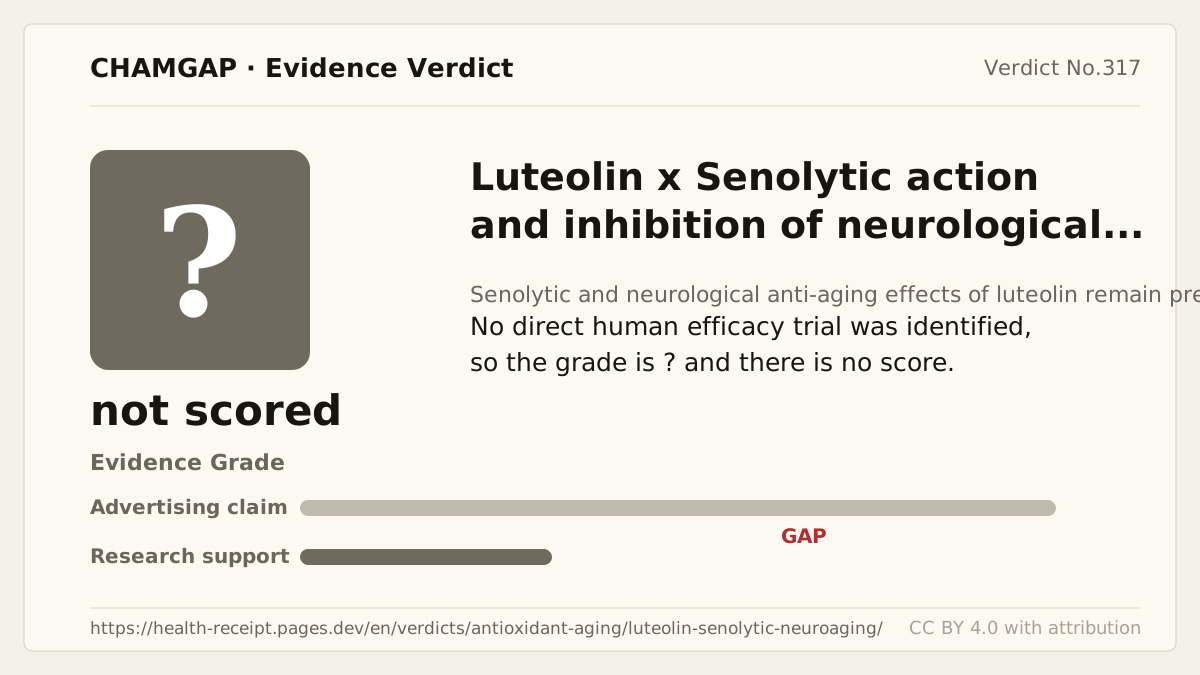
[Chamgap] Luteolin × Senolytic action and inhibition of neurological aging — Evidence Grade ?. 2 cited sources checked. Source: https://chamgap.com/en/verdicts/antioxidant-aging/luteolin-senolytic-neuroaging/ · CC BY 4.0CC BY 4.0 — free to use with attribution; do not distort grades, numbers, or verdict meaning.
What this document does and does not do
Chamgap is an information source. It reports what research has and has not confirmed; it does not tell readers what to take or buy. That decision belongs to readers and, when needed, medical or legal professionals. This verdict reflects literature available up to the search date and may change as new research appears. Nothing here is medical advice.