
Acai berry,
does it really help with Antioxidant and anti-aging?
research showsHuman evidence for acai berry remains limited to surrogate markers such as antioxidant capacity, anthocyanin absorption, and a small (n=10) fasting glucose/lipid pilot study. EFSA also did not recognize a cause-and-effect relationship for antioxidant activity or protection from oxidative damage for anthocyanin-rich foods. There is no clinical evidence supporting anti-aging or health-benefit claims, so the grade is D.
ads claimAdvertisements combine 'superfood,' 'powerful antioxidant,' 'anti-aging,' 'youthful skin,' and 'body fat/detox.' Actual evidence consists of small studies on bioavailability, oxidative stress, and metabolic markers.
Useful facts when choosing a product
- Acai bowls and frozen pulp often include sugars and toppings, so their nutritional composition differs from supplements.
- Test-tube antioxidant values such as ORAC are not evidence of delayed aging in humans.
- Issues of Chagas disease contamination from raw or unhygienic material have been reported regionally, so processing and pasteurization quality are important.
- Long-term safety data for high-concentration supplements in pregnancy, lactation, and medication users are limited.
What the research actually shows
The Mertens-Talcott 2008 study was a small human trial that examined anthocyanin absorption and changes in plasma antioxidant capacity after consumption of acai juice/pulp. The Udani 2011 pilot study had 10 overweight adults consume 100 g of acai pulp twice daily for 1 month and reported signals of decreased fasting blood glucose, insulin, and total cholesterol, but it was not randomized or placebo-controlled and the sample was very small. EFSA did not recognize a cause-and-effect relationship for antioxidant activity or protection from oxidative damage for anthocyanin-rich foods.
Why this is classified as D (38)
Human studies are not entirely absent, but they consist only of surrogate markers such as antioxidant capacity, anthocyanin absorption, and n=10 pilot metabolic markers. Because there are no clinical endpoints for anti-aging or health benefits, this is not C but D with 38 points.
Counterpoint. The fact that it has nutrients as a food remains. This judgment targets antioxidant and anti-aging supplement efficacy claims.
Rejudgment record. Final reassessment — Human evidence consists only of antioxidant capacity, absorption, and small pilot surrogate markers, and EFSA also did not recognize a cause-and-effect relationship for antioxidant/protection from oxidative damage claims
Cross-check — Codex and Claude
Evidence Table
| Study | Design | Sample | Funding | Endpoint | Result | Weight |
|---|---|---|---|---|---|---|
| Mertens-Talcott SU et al. 2008 | Small human bioavailability study | Unknown/possible product provision | Anthocyanin absorption and antioxidant capacity | Reported changes in antioxidant-related biomarkers after acai intake. | Supportive | |
| Udani JK et al. 2011 | Pilot open-label study | 10 | Possibly product-related | Fasting blood glucose, insulin, and cholesterol | Signal of decreases in some metabolic markers in overweight adults. | Supportive |
| EFSA NDA Panel 2010 | Regulatory scientific opinion | Public agency | Health claims related to antioxidant activity and premature aging | Pointed to insufficient clinical substantiation for general antioxidant/premature-aging health claims. | Key |
Receipt — 3 References
All 3 cited sources were verified for existence at the original page (as of 2026-07-09).
Reviewed and approved: Chamgap Editorial Team · Approval date: 2026-07-09 · Corrections: none
Cite this verdict
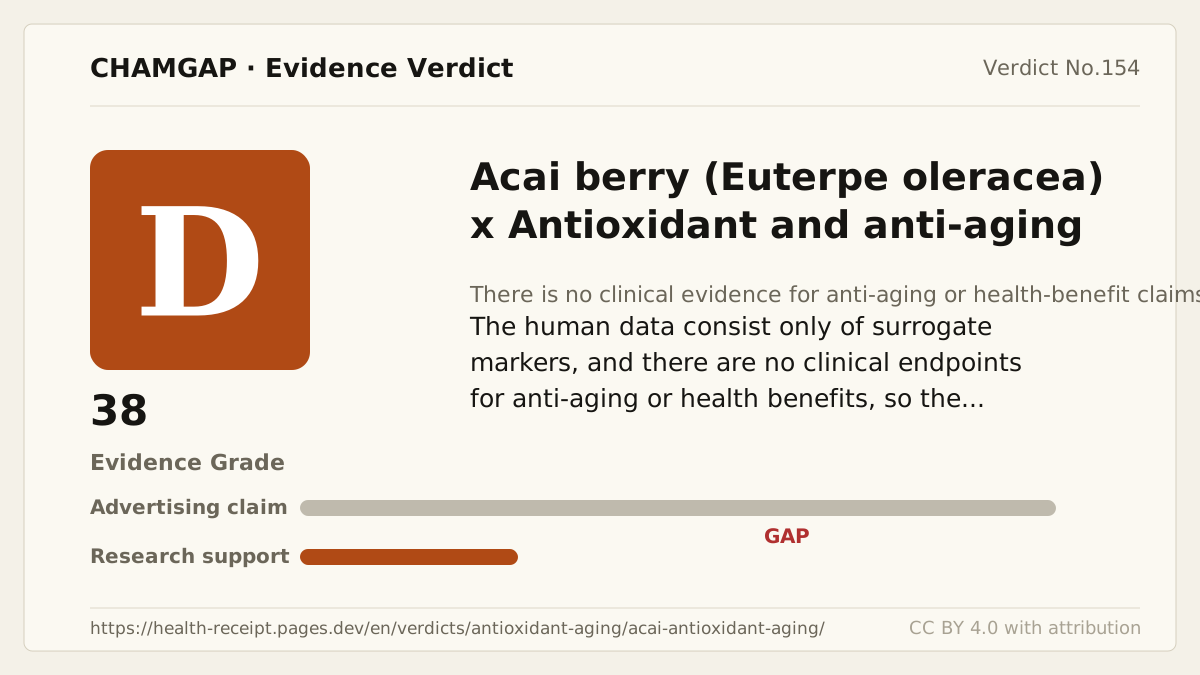
[Chamgap] Acai berry x antioxidant and anti-aging — Evidence Grade D·38. 3 cited sources checked. Source: https://chamgap.com/en/verdicts/antioxidant-aging/acai-antioxidant-aging/ · CC BY 4.0CC BY 4.0 — free to use with attribution; do not distort grades, numbers, or verdict meaning.
What this document does and does not do
Chamgap is an information source. It reports what research has and has not confirmed; it does not tell readers what to take or buy. That decision belongs to readers and, when needed, medical or legal professionals. This verdict reflects literature available up to the search date and may change as new research appears. Nothing here is medical advice.