
Wild yam extract,
does it really help with Menopausal symptoms and a 'natural progesterone' effect?
research showsA 23-person double-blind crossover RCT of Dioscorea villosa wild-yam cream was null for both menopausal symptoms and serum or salivary progesterone. There is also no human pathway converting diosgenin to progesterone. A positive oral D. alata trial used a different species and formulation and cannot be attributed to this claim; because there is only one direct disconfirming trial, the grade is D rather than F.
ads claimAdvertisements use phrases such as 'natural progesterone cream,' 'hormone balance,' and 'relieves hot flashes and night sweats.' Industrial chemical conversion of diosgenin and conversion inside the human body are different processes, and progesterone did not increase in the direct trial.
Useful facts when choosing a product
- The key trial used topical D. villosa cream twice daily for two separate three-month periods.
- Different species and formulations, including D. villosa and D. alata, are sold under the wild-yam name.
- Diosgenin is a laboratory synthesis raw material and is not the same as progesterone in a finished product.
- No serious events emerged in the short topical trial, but composition and long-term safety of varied marketed creams are unclear.
What the research actually shows
Komesaroff 2001 had 23 women with menopausal symptoms use active D. villosa cream and placebo for three months each in random order. Some symptoms changed in both periods, but there was no between-treatment difference and no change in FSH, estradiol, or serum or salivary progesterone. The Hsu 2011 oral D. alata trial is a positive psychological-symptom signal for a different species and formulation without product equivalence.
Why this is classified as D (27)
The direct crossover RCT of the target species, D. villosa, was null for menopausal symptoms and hormones, and there is no human diosgenin-to-progesterone conversion pathway. The positive D. alata trial differs in species and formulation. Because there is only one direct disconfirming trial, the grade is D rather than F, with 27 points.
Counterpoint. An oral extract of another Dioscorea species produced a symptom signal, but it is not the same ingredient or formulation. This judgment focuses on D. villosa products and the human progesterone-conversion claim.
Rejudgment record. Reassessment (cross-check reflected) — The direct 23-person D. villosa crossover RCT was null for symptoms and hormones, no human conversion pathway exists, and D. alata differs in species and formulation; one direct disconfirming trial supports D rather than F
Sub-claim grades by effect
This ingredient is marketed for several effects. A single overall grade blends strong and weak claims together, so each effect is graded separately here. The overall grade reflects the strongest disconfirming or core claim.
| Effect (sub-claim) | Grade | Basis |
|---|---|---|
| Relief of menopausal symptoms | D | The direct placebo-controlled D. villosa cream trial was null, with no replication. |
| A natural progesterone effect | F | Serum and salivary progesterone did not increase in the direct trial, and human conversion has not been demonstrated. |
Cross-check — Codex and Claude
Evidence Table
| Study | Design | Sample | Funding | Endpoint | Result | Weight |
|---|---|---|---|---|---|---|
| Komesaroff PA et al. 2001 | Double-blind randomized placebo-controlled crossover trial | 23 | Unknown | Hot flashes, night sweats, other symptoms, and serum and salivary hormones | There was no symptom difference between active cream and placebo and no change in progesterone, estradiol, or FSH. | Decisive |
| Hsu CC et al. 2011 | Double-blind randomized placebo-controlled trial | 50 | Unknown | Greene Climacteric Scale and plasma hormones | Reported primarily psychological-domain improvement with oral D. alata, a different species and formulation from D. villosa cream. | Counterevidence; low directness |
Receipt — 2 References
All 2 cited sources were verified for existence at the original page (as of 2026-07-11).
Reviewed and approved: Chamgap Editorial Team · Approval date: 2026-07-11 · Corrections: none
Cite this verdict
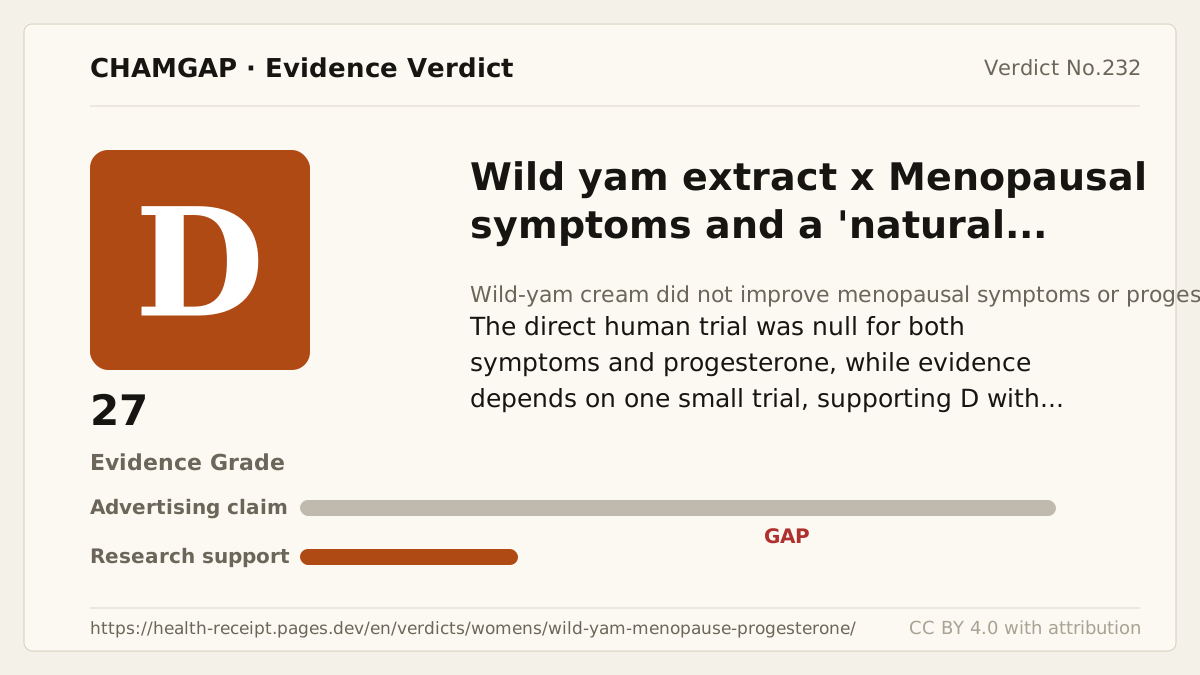
[Chamgap] Wild yam extract x menopausal symptoms and a 'natural progesterone' effect — Evidence Grade D·27. 2 cited sources checked. Source: https://chamgap.com/en/verdicts/womens/wild-yam-menopause-progesterone/ · CC BY 4.0CC BY 4.0 — free to use with attribution; do not distort grades, numbers, or verdict meaning.
What this document does and does not do
Chamgap is an information source. It reports what research has and has not confirmed; it does not tell readers what to take or buy. That decision belongs to readers and, when needed, medical or legal professionals. This verdict reflects literature available up to the search date and may change as new research appears. Nothing here is medical advice.