
Chasteberry,
does it really help with PMS and premenstrual syndrome?
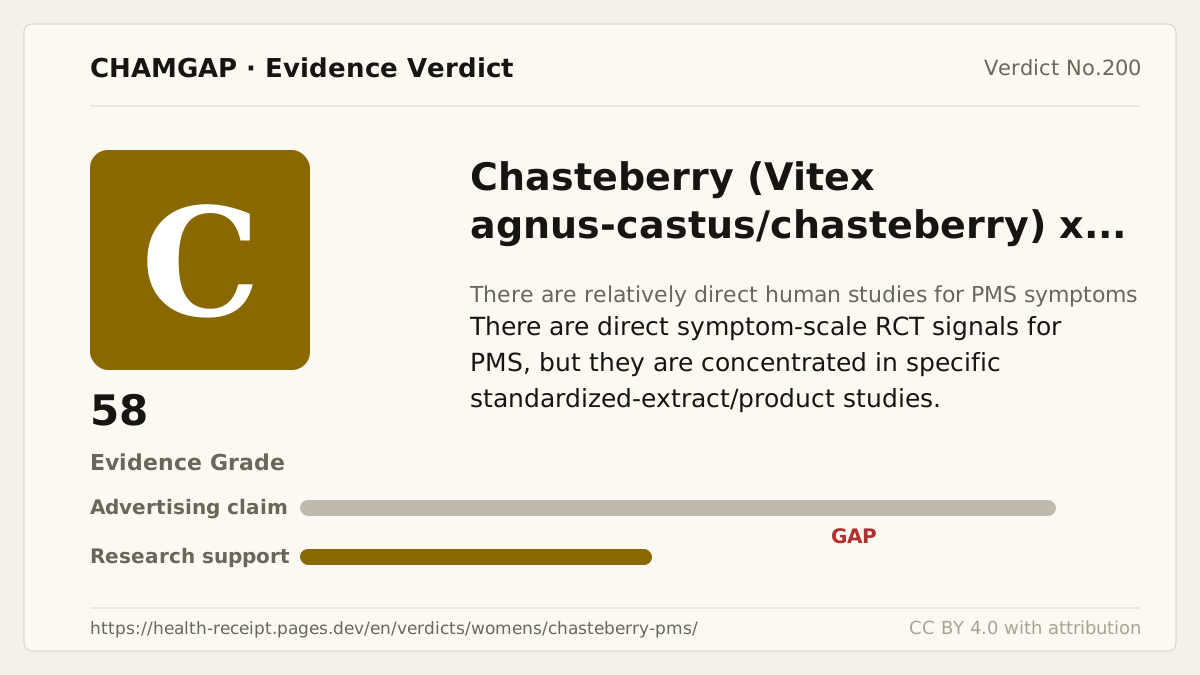
research showsChasteberry extract has direct symptom-scale RCT signals for reducing PMS symptoms. Schellenberg 2001 and others reported improved PMS symptom response rates, but NCCIH summarizes the quality of human studies as low to moderate and considers higher-quality evidence necessary for firm conclusions. Because positive evidence is concentrated in studies of specific standardized extracts/products such as Ze 440 and BNO, and the layer of large independent replication is weak, this is judged at a maximum of C under methodology ②-b.
ads claimAdvertisements mention "PMS," "breast pain," "mood swings," "premenstrual discomfort," and "hormone balance." The judgment is limited to PMS symptom studies.
Useful facts when choosing a product
- Representative studies used specific extracts such as Ze 440 at 20 mg/day for at least 3 cycles.
- Nausea, headache, gastrointestinal discomfort, skin reactions, and menstrual changes are reported.
- Use during pregnancy or lactation, dopaminergic drugs, antipsychotics, Parkinson disease medications, and concomitant hormone therapy or oral contraceptives require separate checking.
- PMS and PMDD differ in severity and diagnostic criteria.
What the research actually shows
Schellenberg 2001 gave Vitex agnus-castus extract or placebo to 170 women with PMS for 3 cycles, and the overall symptom response rate for irritability, mood alteration, anger, headache, breast fullness, and other symptoms was higher than placebo. Atmaca 2003 compared fluoxetine and Vitex in PMDD and reported differences by symptom domain, but it was a small active-comparator study. van Die 2013 and later reviews summarized generally positive signals in PMS but noted study quality and product heterogeneity. NCCIH also summarizes that human studies are of low-to-moderate quality and that more high-quality evidence is needed for firm conclusions. Positive evidence is concentrated in studies of specific standardized extracts/products such as Ze 440 and BNO, so the layer of independent large-scale replication is weak.
Why this is classified as C (58)
There are direct PMS symptom-scale RCT signals, but concentration in specific standardized-extract/product studies, low-to-moderate quality assessment, and lack of a large independent replication layer are reflected; under methodology ②-b this is C at 58 points.
Counterpoint. PMS evidence is not extended to infertility, menopause, or male supplement claims.
Rejudgment record. Draft — Direct PMS RCT signals exist, but concentration in specific standardized extracts/products such as Ze 440/BNO and lack of large independent replication cap it at C under methodology ②-b
Cross-check — Codex and Claude
Evidence Table
| Study | Design | Sample | Funding | Endpoint | Result | Weight |
|---|---|---|---|---|---|---|
| Schellenberg R 2001 | Randomized double-blind placebo-controlled multicenter trial | 170 | Possible manufacturer/product relation | PMS symptom change and response rate | The response rate in the Vitex extract group was higher than placebo. | Core |
| van Die MD et al. 2013 | Systematic review | Academic | PMS and other female reproductive-health symptoms | Summarized positive signals in PMS but noted study quality and product differences. | Core | |
| Daniele C et al. 2005 | Systematic review of adverse events | Academic | Safety | Summarized adverse events including gastrointestinal symptoms, headache, skin reactions, and menstrual changes. | Safety |
Receipt — 4 References
All 4 cited sources were verified for existence at the original page (as of 2026-07-10).
Reviewed and approved: Chamgap Editorial Team · Approval date: 2026-07-10 · Corrections: none
Cite this verdict
[Chamgap] Chasteberry x PMS and premenstrual syndrome — Evidence Grade C·58. 4 cited sources checked. Source: https://chamgap.com/en/verdicts/womens/chasteberry-pms/ · CC BY 4.0CC BY 4.0 — free to use with attribution; do not distort grades, numbers, or verdict meaning.
What this document does and does not do
Chamgap is an information source. It reports what research has and has not confirmed; it does not tell readers what to take or buy. That decision belongs to readers and, when needed, medical or legal professionals. This verdict reflects literature available up to the search date and may change as new research appears. Nothing here is medical advice.