
Taped site on one randomized foot versus an untaped site on the same foot,
does it really help with Prevention of foot blisters during long-distance walking or running?
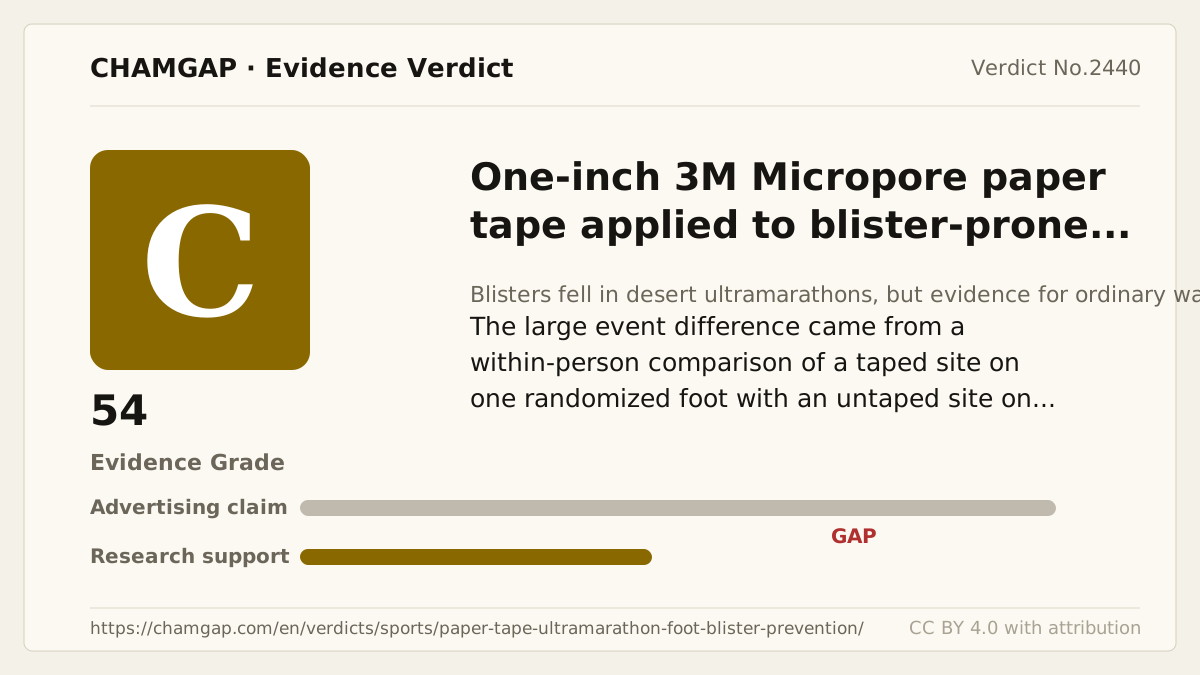
research showsThe grade is C. Among 128 runners in a 250-km six-stage desert ultramarathon, blisters occurred at the taped site on one randomized foot in 30/128 (23%) versus an untaped site on that same foot in 81/128 (63%). These values compare two sites on the same foot, not risks in two independent groups, and the reported NNT of 1.31 is a nonstandard calculation for a within-person site comparison. Important site-selection and analysis limitations prevent broad extrapolation.
ads claimIn Korean hiking and running markets, paper tape is inexpensive, but a 250-km desert-race result should not be advertised as proven for ordinary walking or short runs. Footwear fit, socks, and moisture control remain central, and users should trial tape during shorter training.
Useful facts when choosing a product
- The tested product was one-inch 3M Micropore paper tape.
- It was applied before racing to a blister-prone or randomly selected spot.
- The within-person comparison used taped and untaped sites on one randomized foot in 250-km desert ultramarathon runners.
What the research actually shows
Pre-TAPED II enrolled 128 ultramarathon runners in the 2014 RacingThePlanet 250-km, six-stage self-supported races across four deserts. Before racing, one foot was randomized; tape was placed on a prior blister-prone site or, without such history, a random site. The design compared the taped site on that randomized foot with an untaped site on the same foot. Medical staff examined runners' feet after stages and recorded friction blisters; 106 runners developed 117 blisters. A first blister outside tape counted as success and one under tape as failure. The ITT values of 30/128 versus 81/128 compare the taped and untaped sites on the same foot; they are not risks in two independent groups. The reported NNT of 1.31 is a nonstandard calculation for this within-person site design. The reported incidence comparisons and logistic and linear models did not account for within-person correlation. This failure to account for within-person correlation is one of the avoidable flaws supporting axis 6 B2. The earlier Pre-TAPED enrolled 136 but analyzed 90 completers and found 47 versus 35 blisters, P=.22, using taped versus contralateral feet. Because intervention coverage and comparator changed, the estimates were not treated as the same question.
Why this is classified as C (54)
A large event difference is tempered by incomplete site randomization, failure to account for within-person correlation, and a specialized 128-runner sample, giving C with 54 points.
Counterpoint. Adhesive reactions, tape rolling, moisture, and wrinkles may create new friction points, and absolute benefit in ordinary walkers is unknown.
Rejudgment record. Cross-check applied — Large blister-count difference tempered by incomplete site randomization and failure to account for within-person correlation
| Endpoint | H | Hard endpoint - actual events such as death |
| Replication | R1 | Single confirmatory trial |
| Independence | I1 | Mixed funding sources |
| Effect size | E+ | Meets the clinically important threshold |
The scoring table and the verdict agree (C).
Sub-claim grades by effect
This ingredient is marketed for several effects. A single overall grade blends strong and weak claims together, so each effect is graded separately here. The overall grade reflects the strongest disconfirming or core claim.
| Effect (sub-claim) | Grade | Basis |
|---|---|---|
| Reduced blisters at taped sites in 250-km ultramarathons | C | The within-person event difference was large, with site-selection and correlation-analysis limitations. |
Cross-check — Codex and Claude
Evidence Table
| Study | Design | Sample | Funding | Endpoint | Result | Weight |
|---|---|---|---|---|---|---|
| Study 1 | Within-person prevention trial of taped and untaped sites on one randomized foot | 109 | Acknowledgments thanked Mary Gadams and RacingThePlanet staff for supporting research; no separate Funding wording was verified in the accessible record | First blister under tape or at an untaped comparison site on the same randomized foot | Same-foot site comparison of 30/128 (23%) versus 81/128 (63%), not risks in two independent groups; NNT 1.31 was a nonstandard calculation; within-person correlation was not accounted for | Pivotal positive trial |
| Study 2 | Randomized taped-foot versus contralateral-foot trial | 90 | Exact Funding wording could not be verified in the accessible record | Hot spot or blister anywhere on either foot | 47 versus 35, 52% versus 39%, P=.22 | Not treated as direct replication because intervention coverage and comparator differed |
Receipt — 3 References
All 3 cited sources were verified for existence at the original page (as of 2026-08-08).
Reviewed and approved: Chamgap Editorial Team · Approval date: 2026-08-08 · Corrections: none
Cite this verdict
[Chamgap] Taped site on one randomized foot versus an untaped site on the same foot x foot-blister prevention in ultramarathons — Evidence Grade C·54. 3 cited sources checked. Source: https://chamgap.com/en/verdicts/sports/paper-tape-ultramarathon-foot-blister-prevention/ · CC BY 4.0CC BY 4.0 — free to use with attribution; do not distort grades, numbers, or verdict meaning.
What this document does and does not do
Chamgap is an information source. It reports what research has and has not confirmed; it does not tell readers what to take or buy. That decision belongs to readers and, when needed, medical or legal professionals. This verdict reflects literature available up to the search date and may change as new research appears. Nothing here is medical advice.