
Medium-chain triglyceride oil,
does it really help with Improved endurance and exercise energy?
research showsMCT can increase circulating fatty acids, ketones, or low-intensity fat oxidation during exercise, but most trials in trained athletes found no improvement in time-trial performance or muscle-glycogen sparing, and MCT alone worsened performance in one trial. One six-person trial and one eight-person recreational-athlete trial were positive, so the rating is D with 32 points rather than replicated-null F.
ads claimMarketing links rapid absorption and ketone production to 'instant exercise energy,' 'glycogen sparing,' and greater endurance. In human trials, changes in circulating fuels did not consistently translate into better time-trial performance.
Useful facts when choosing a product
- Exercise-trial doses ranged from 2-6 g/day to more than about 80 g consumed during exercise.
- High-dose MCT can cause nausea, abdominal cramping, diarrhea, and vomiting.
- Results differ between carbohydrate coadministration and MCT-only conditions.
- MCT oil does not have the same overall composition as coconut oil.
What the research actually shows
The Van Zyl 1996 crossover trial in six cyclists found that carbohydrate plus MCT shortened 40 km time from 66.8 to 65.1 minutes versus carbohydrate alone, while MCT alone slowed it to 72.1 minutes. The Angus 2000 trial in eight trained athletes found no added benefit from MCT during a 100 km time trial, and four reported gastrointestinal discomfort. The Horowitz 2000 trial in seven trained men found that about 25 g MCT did not reduce muscle-glycogen use during high-intensity exercise. The Nosaka 2009 trial in eight recreational athletes reported longer time to exhaustion at 80% VO2peak after 6 g/day for two weeks.
Why this is classified as D (32)
Some exercise-energy metabolic markers are positive and receive C, but the target's central endurance-performance claim was null or worse in multiple athlete trials and receives D. Coexisting small positive studies prevent an F rating, producing an overall D with 32 points.
Counterpoint. Low-intensity fat oxidation and metabolic changes under specific carbohydrate coadministration conditions remain, but are separate from performance efficacy.
Rejudgment record. New verdict — Fuel and ketone metabolic changes were separated from actual performance; multiple null time-trial and glycogen studies were weighed alongside a few positive small trials
Sub-claim grades by effect
This ingredient is marketed for several effects. A single overall grade blends strong and weak claims together, so each effect is graded separately here. The overall grade reflects the strongest disconfirming or core claim.
| Effect (sub-claim) | Grade | Basis |
|---|---|---|
| Fuel metabolism during exercise | C | Some trials observed higher circulating fatty acids, ketones, or low-intensity fat oxidation |
| Endurance and exercise performance | D | Multiple time-trial and glycogen-sparing studies were null, while worse MCT-only performance and a few positive trials coexist |
Cross-check — Codex and Claude
Evidence Table
| Study | Design | Sample | Funding | Endpoint | Result | Weight |
|---|---|---|---|---|---|---|
| Van Zyl CG et al. 1996 | Randomized crossover exercise trial | 6 | Academic institution; otherwise unknown | 40 km time trial after two hours of exercise and substrate oxidation | Carbohydrate plus MCT was about 3% faster than carbohydrate, while MCT alone was slower. | Supportive |
| Angus DJ et al. 2000 | Randomized double-blind crossover trial | 8 | Unknown; academic institutions | 100 km time trial, substrate oxidation, and gastrointestinal symptoms | Adding MCT to carbohydrate provided no additional performance benefit, and four participants reported gastrointestinal discomfort. | Key |
| Horowitz JF et al. 2000 | Crossover metabolic and muscle-biopsy trial | 7 | Academic institution; otherwise unknown | Muscle-glycogen use and substrate oxidation | About 25 g MCT did not reduce muscle-glycogen use during high-intensity exercise. | Key |
| Nosaka N et al. 2009 | Crossover feeding trial | 8 | Japanese academic and food-research institutions | High-intensity time to exhaustion after moderate exercise, lactate, and perceived exertion | After 6 g/day for two weeks, longer high-intensity time to exhaustion and lower lactate and perceived exertion were reported. | Supportive |
Receipt — 4 References
All 4 cited sources were verified for existence at the original page (as of 2026-07-11).
Reviewed and approved: Chamgap Editorial Team · Approval date: 2026-07-11 · Corrections: none
Cite this verdict
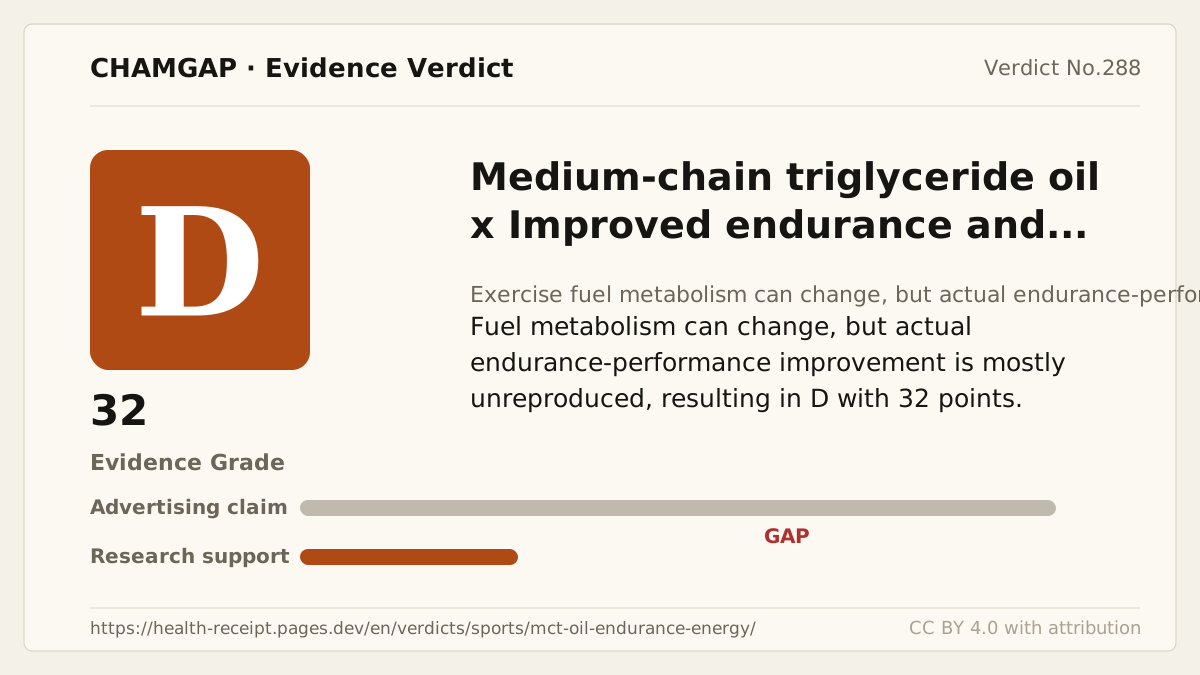
[Chamgap] Medium-chain triglyceride oil x Improved endurance and exercise energy — Evidence Grade D·32. 4 cited sources checked. Source: https://chamgap.com/en/verdicts/sports/mct-oil-endurance-energy/ · CC BY 4.0CC BY 4.0 — free to use with attribution; do not distort grades, numbers, or verdict meaning.
What this document does and does not do
Chamgap is an information source. It reports what research has and has not confirmed; it does not tell readers what to take or buy. That decision belongs to readers and, when needed, medical or legal professionals. This verdict reflects literature available up to the search date and may change as new research appears. Nothing here is medical advice.