
Vitamin C,
does it really help with Skin and collagen production?
research showsVitamin C is an essential cofactor required for collagen synthesis, and deficiency causes problems involving skin, wounds, and blood vessels. However, independent RCT evidence that additional oral vitamin C intake clinically improves skin elasticity, wrinkles, or collagen production in people without confirmed deficiency mostly remains at the level of surrogate markers, combination products, and topical-agent studies.
ads claimAdvertisements mention "collagen production," "skin elasticity," "antioxidant," and "brightening" together. The collagen-synthesis mechanism is a surrogate marker and must be distinguished from clinical outcomes such as wrinkles and elasticity.
Useful facts when choosing a product
- Adult recommended intake is roughly 75-90 mg/day, and absorption decreases at high doses.
- The U.S. adult UL is 2,000 mg/day, and high doses can cause diarrhea and abdominal pain.
- A history of kidney stones, iron-overload disorders, and interference with certain tests require separate consideration.
- Topical vitamin C serum studies are separated from evidence for oral supplements.
What the research actually shows
Pullar 2017 summarized that vitamin C participates in collagen stabilization and skin antioxidation as a cofactor for prolyl/lysyl hydroxylase. NIH ODS also presents scurvy and connective-tissue abnormalities in deficiency. In contrast, clinical studies in skin beauty often involve topical vitamin C, combination with vitamin E and ferulic acid, or combination products such as collagen and hyaluronic acid, making it difficult to isolate the effect of oral vitamin C alone.
Why this is classified as C (43)
The mechanism as an essential cofactor for collagen synthesis is solid, but direct clinical skin effects of general supplements are centered on surrogate markers and combination products, so this is C at 43 points.
Counterpoint. Evidence for correcting deficiency and evidence for cosmetic efficacy in people without deficiency are not treated as the same grade.
Rejudgment record. Draft — Essential-nutrient and mechanism evidence is solid, but skin efficacy of general oral supplementation is centered on surrogate markers and combination products
Cross-check — Codex and Claude
Evidence Table
| Study | Design | Sample | Funding | Endpoint | Result | Weight |
|---|---|---|---|---|---|---|
| Pullar JM et al. 2017 | Narrative literature review | Academic | Skin vitamin C and collagen mechanisms | Summarized the role of vitamin C as a collagen-synthesis cofactor and its skin antioxidant role. | Surrogate marker | |
| NIH ODS Vitamin C Fact Sheet | Nutrition and safety reference | Public | Deficiency, recommended intake, and safety | Summarizes scurvy, collagen-related deficiency symptoms, and UL 2,000 mg/day. | Safety | |
| Cosmetic vitamin C trials | Topical-agent and combination-product clinical studies | Mixed/many industry studies | Wrinkles, elasticity, and pigmentation | It is difficult to isolate the effect of oral vitamin C alone. | Indirect |
Receipt — 3 References
All 3 cited sources were verified for existence at the original page (as of 2026-07-10).
Reviewed and approved: Chamgap Editorial Team · Approval date: 2026-07-10 · Corrections: none
Cite this verdict
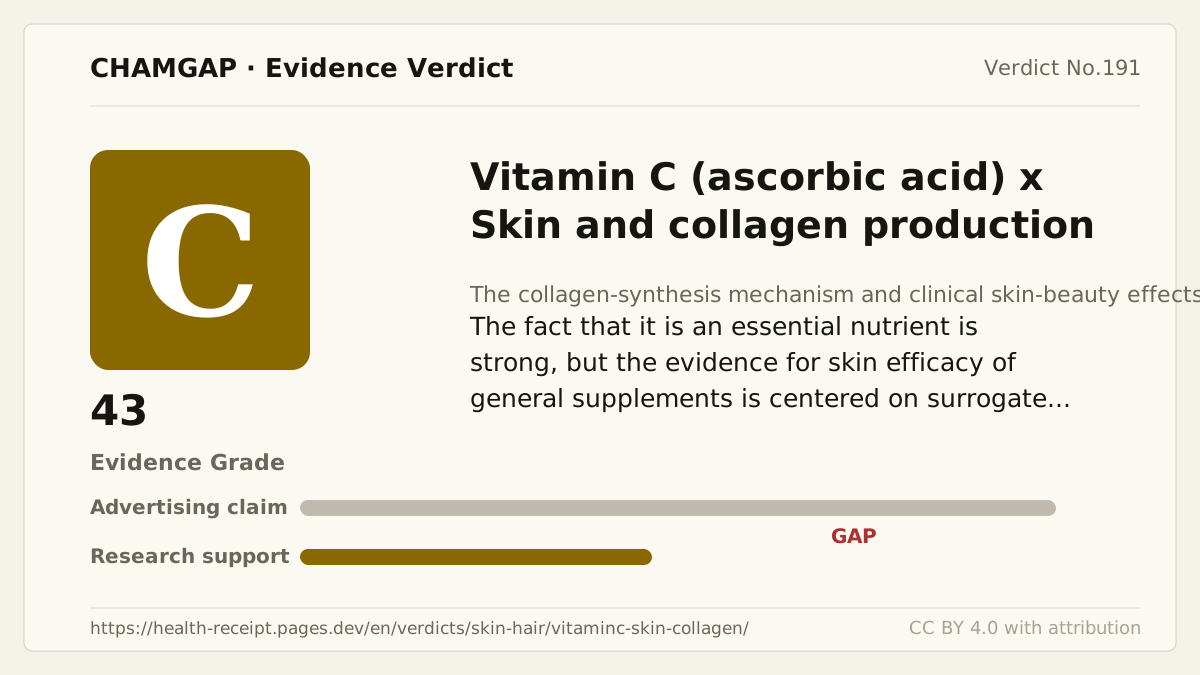
[Chamgap] Vitamin C x skin and collagen production — Evidence Grade C·43. 3 cited sources checked. Source: https://chamgap.com/en/verdicts/skin-hair/vitaminc-skin-collagen/ · CC BY 4.0CC BY 4.0 — free to use with attribution; do not distort grades, numbers, or verdict meaning.
What this document does and does not do
Chamgap is an information source. It reports what research has and has not confirmed; it does not tell readers what to take or buy. That decision belongs to readers and, when needed, medical or legal professionals. This verdict reflects literature available up to the search date and may change as new research appears. Nothing here is medical advice.