
Pomegranate,
does it really help with Antioxidant, vascular, blood pressure, and skin effects?
research showsPomegranate has a signal for lowering systolic blood pressure, but because blood-pressure numbers themselves are surrogate markers rather than clinical events, I view it as C. If cardiovascular-event prevention or skin efficacy is bundled in, the evidence is even more insufficient.
ads claimProducts combine 'antioxidant,' 'vascular health,' 'blood pressure,' 'women/skin,' and 'ellagic acid.' The actual evidence centers on numerical or experimental markers such as blood pressure, ischemia, and UVB erythema, and does not connect directly to disease prevention or perceived skin effects.
Useful facts when choosing a product
- Pomegranate juice can be high in sugar, so people who need blood-glucose management should check the product form.
- Pomegranate extracts and juice differ in polyphenol and ellagic-acid content.
- If taking medications, it is better to check for possible interactions before using pomegranate concentrates or extracts.
- Improvement in antioxidant markers does not mean reduced skin aging or fewer cardiovascular events.
What the research actually shows
Sahebkar 2017 meta-analysis reported a systolic blood-pressure reduction signal in pomegranate-juice RCTs, but diastolic blood pressure was less consistent. Sumner 2005 RCT (n=45) reported improvement in stress-induced myocardial ischemia markers in people with coronary artery disease, but it was a small surrogate-marker study. Henning 2019 RCT reported a signal that pomegranate juice/extract increased resistance to UVB erythema, but there are limitations from product support and skin surrogate markers. Therefore, I view blood-pressure-number improvement as C, and claims bundling cardiovascular-event prevention or skin efficacy as insufficiently supported.
Why this is classified as C (52)
There is a systolic blood-pressure reduction signal, but blood-pressure numbers are surrogate markers and diastolic blood pressure is less consistent. Myocardial ischemia and skin studies are also small, product-supported, and surrogate-marker based, so I place it at C, 52 points.
Counterpoint. There is a large gap between a blood-pressure-number signal and applying it to cardiovascular-event prevention or skin/anti-aging effects in generally healthy people.
Rejudgment record. Draft — Systolic blood-pressure signal exists, but blood pressure is a surrogate marker; diastolic blood pressure is less consistent; myocardial ischemia and skin studies are small, product-supported, and surrogate-marker based
Cross-check — Codex and Claude
Evidence Table
| Study | Design | Sample | Funding | Endpoint | Result | Weight |
|---|---|---|---|---|---|---|
| Sahebkar A et al. 2017 | Systematic review and meta-analysis | 8 | Mixed | Systolic and diastolic blood pressure | Reported a systolic blood-pressure reduction signal, while diastolic blood pressure was more uncertain. | Core |
| Sumner MD et al. 2005 | Randomized placebo-controlled trial | 45 | POM Wonderful product provision/support possible | Stress-induced myocardial ischemia | Reported improvement in perfusion/ischemia markers after 3 months of intake. | Supporting |
| Henning SM et al. 2019 | Randomized placebo-controlled trial | 74 | POM Wonderful-related support | UVB minimal erythema dose and skin microbiome/markers | Reported a signal of improved resistance to UVB erythema with pomegranate juice/extract. | Skin supporting |
Receipt — 4 References
All 4 cited sources were verified for existence at the original page (as of 2026-07-09).
Reviewed and approved: Chamgap Editorial Team · Approval date: 2026-07-09 · Corrections: none
Cite this verdict
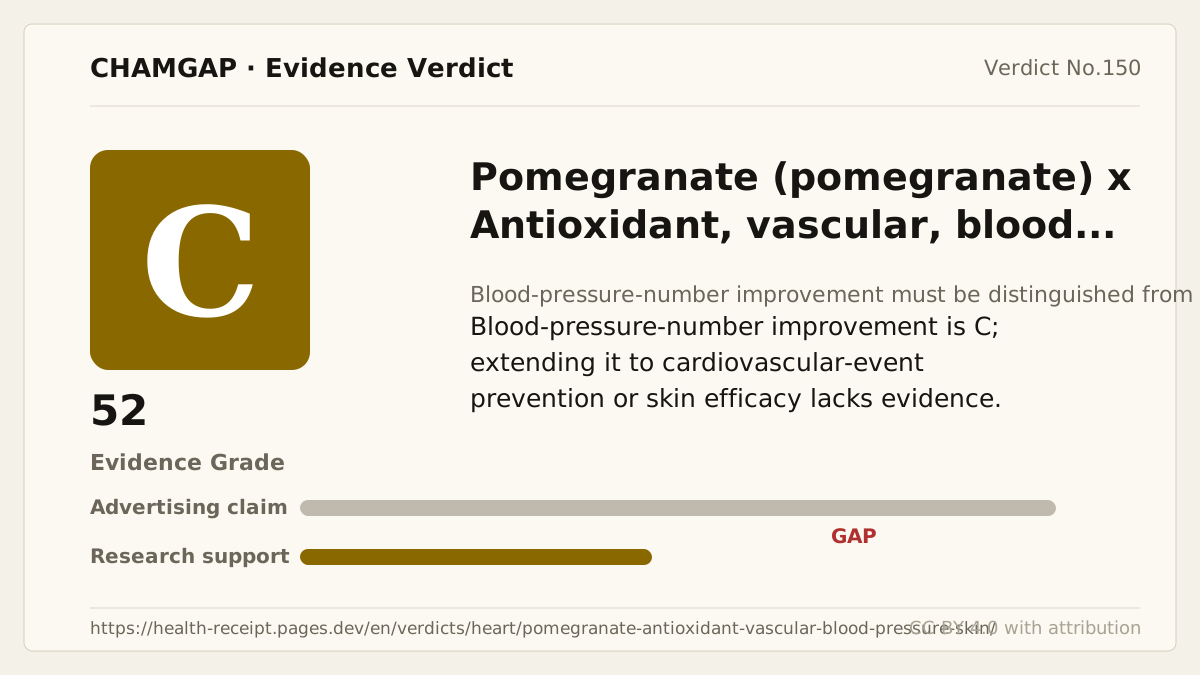
[Chamgap] Pomegranate x antioxidant, vascular, blood pressure, and skin effects — Evidence Grade C·52. 4 cited sources checked. Source: https://chamgap.com/en/verdicts/heart/pomegranate-antioxidant-vascular-blood-pressure-skin/ · CC BY 4.0CC BY 4.0 — free to use with attribution; do not distort grades, numbers, or verdict meaning.
What this document does and does not do
Chamgap is an information source. It reports what research has and has not confirmed; it does not tell readers what to take or buy. That decision belongs to readers and, when needed, medical or legal professionals. This verdict reflects literature available up to the search date and may change as new research appears. Nothing here is medical advice.