
Cilantro leaf extract,
does it really help with Heavy-metal elimination and detoxification?
research showsA small randomized placebo-controlled trial directly evaluating heavy-metal elimination found no between-group difference in blood lead, urinary lead, or renal lead clearance. No human efficacy trial was identified for other metals, so the lead subclaim is D and the overall rating is D with 27 points.
ads claimAdvertisements expand the claim to 'pulls mercury from the brain,' 'heavy-metal chelator,' and liver or kidney detoxification across several metals. Human evidence consists of one small 14-day lead trial with no placebo-comparative effect.
Useful facts when choosing a product
- Culinary cilantro and concentrated extracts or tinctures differ in dose and composition.
- Reduced tissue lead in animals is not the same endpoint as human urinary elimination or clinical recovery.
- An increase in urinary metal concentration does not automatically establish a reduced total body burden.
- Long-term safety data for concentrated cilantro extract are limited.
What the research actually shows
The Deldar 2008 trial randomized 32 children aged three to seven years whose parents worked with lead to coriander extract or placebo. After 14 days, between-group results were null for both blood lead (p=0.93) and urinary lead (p=0.93), and renal clearance also did not differ; the investigators concluded that the extract was not effective for lead elimination. No human trial testing removal of mercury, cadmium, or arsenic was identified. The English report does not clearly identify the plant part or extraction specification, so narrowing the tested material to cilantro leaf remains unverified.
Why this is classified as D (27)
The rating is D rather than ? because a direct controlled human lead trial found no effect versus placebo. The lack of literature for other metals is separated as a ? subclaim, and the rating is not F because null efficacy has not been repeatedly demonstrated.
Counterpoint. Preclinical chelation signals remain hypothesis-generating. This judgment addresses human heavy-metal elimination rather than cilantro as a food or its other potential effects.
Rejudgment record. Reassessment (cross-check reflected) — Blood and urinary lead were both null at p=0.93 in a randomized placebo-controlled human trial; no direct human trial exists for other metals
Sub-claim grades by effect
This ingredient is marketed for several effects. A single overall grade blends strong and weak claims together, so each effect is graded separately here. The overall grade reflects the strongest disconfirming or core claim.
| Effect (sub-claim) | Grade | Basis |
|---|---|---|
| Lead elimination | D | A 32-person randomized placebo-controlled trial found null between-group results for blood lead and urinary lead at p=0.93, with no difference in renal clearance. |
| Elimination of mercury, cadmium, and other heavy metals | ? | No human efficacy trial was identified assessing body burden or elimination of these metals with cilantro alone. |
Cross-check — Codex and Claude
Evidence Table
| Study | Design | Sample | Funding | Endpoint | Result | Weight |
|---|---|---|---|---|---|---|
| Deldar K et al. 2008 | Randomized placebo-controlled clinical trial | n=32 | Unknown | Blood lead, urinary lead, and renal lead clearance | After 14 days, between-group results were null for blood lead (p=0.93) and urinary lead (p=0.93), and renal clearance also did not differ. | Key |
| Aga M et al. 2001 | Preclinical mouse experiment | mice | Unknown | Tissue lead deposition | Reduced lead deposition in some tissues was reported after cilantro exposure. | Preclinical context |
Receipt — 3 References
Of 3 cited sources, 1 had limited original-page access (blocked or summary-only) and were verified via index/summary, marked partial; the rest were verified at the original page. As of 2026-07-11.
Reviewed and approved: Chamgap Editorial Team · Approval date: 2026-07-11 · Corrections: none
Cite this verdict
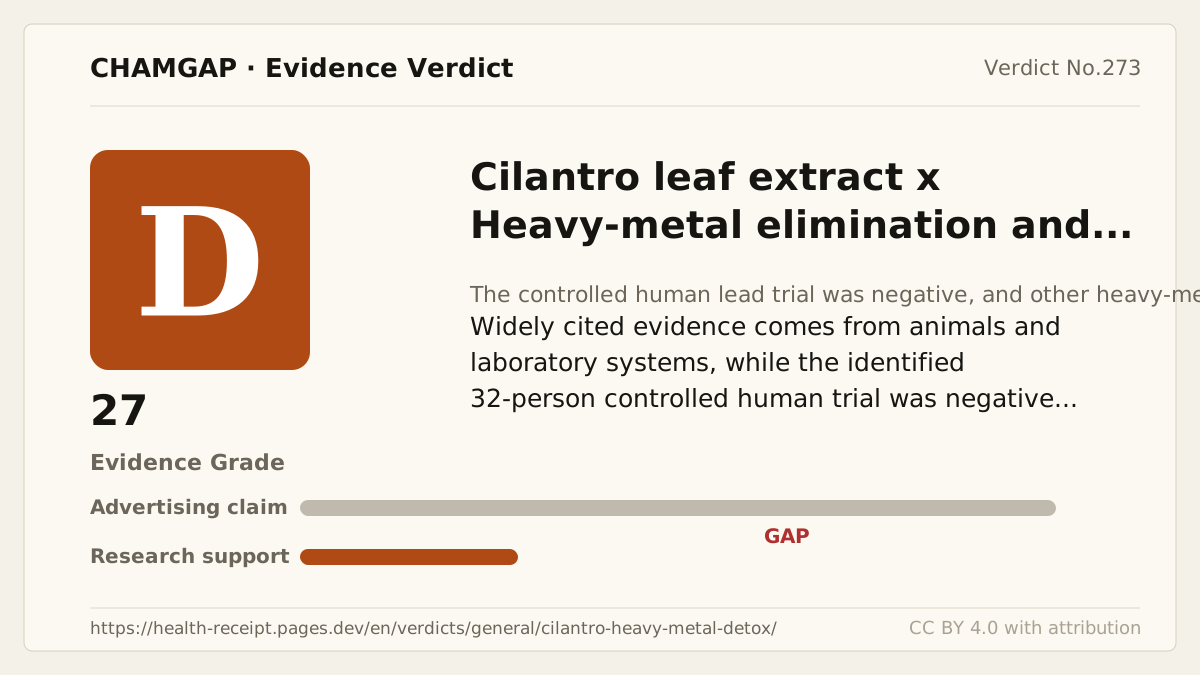
[Chamgap] Cilantro leaf extract x heavy-metal elimination and detoxification — Evidence Grade D·27. 3 cited sources checked. Source: https://chamgap.com/en/verdicts/general/cilantro-heavy-metal-detox/ · CC BY 4.0CC BY 4.0 — free to use with attribution; do not distort grades, numbers, or verdict meaning.
What this document does and does not do
Chamgap is an information source. It reports what research has and has not confirmed; it does not tell readers what to take or buy. That decision belongs to readers and, when needed, medical or legal professionals. This verdict reflects literature available up to the search date and may change as new research appears. Nothing here is medical advice.