
Purple corn cob and husk extract powder,
does it really help with Improvement of dry eyes?
research showsThe ingredient developer states that the exact purple corn cob and husk extract at 500 mg/day was evaluated in a 12-week randomized placebo-controlled human trial. However, the sample size, prespecified endpoints, numerical results, and a peer-reviewed human paper are not public, while published evidence consists only of cell and animal work, so the grade is low C.
ads claimAdvertising may connect restored tear volume in animals and the existence of a human trial to a confirmed human dry-eye effect. Public data do not disclose clinical effect size, symptom scores, tear-film findings, or safety results.
Useful facts when choosing a product
- The developer-reported human-trial dose was 500 mg/day for 12 weeks.
- The extract uses purple corn cobs and husks and contains cyanidin-3-O-glucoside.
- It is not interchangeable with generic purple corn foods or kernel extracts.
- Long-term safety is unknown because public human safety data are limited.
What the research actually shows
PCE-PRO developer materials describe a randomized, placebo-controlled parallel human trial of Korean purple corn cob and husk extract at 500 mg/day for 12 weeks in adults with dry-eye symptoms. No peer-reviewed human paper was identified. The 2023 study by Lee and colleagues reported that a 30% ethanolic extract of the same cob and husk material improved tear volume, corneal surface, and goblet-cell measures in desiccation-stressed cells and a lacrimal-gland-excision rat model, but all authors were employed by the developer.
Why this is classified as C (47)
Regulatory recognition itself is not grading evidence, but a human trial of the exact ingredient was conducted, so the grade is not unknown. Positive evidence is confined to one manufacturer-specific proprietary product, no full results or independent replication are public, and published evidence is manufacturer preclinical work, supporting C with 47 points.
Counterpoint. The specific 500 mg/day ingredient was evaluated in a 12-week human trial and has preclinical plausibility.
Rejudgment record. Reassessment (cross-check reflected) — Regulatory recognition is not grading evidence, but a 12-week randomized human trial of the exact manufacturer-specific 500 mg/day product is confirmed; sample size, endpoints, numerical results, and a peer-reviewed paper are absent, and there is no independent replication while public evidence is limited to manufacturer preclinical work
Cross-check — Codex and Claude
Evidence Table
| Study | Design | Sample | Funding | Endpoint | Result | Weight |
|---|---|---|---|---|---|---|
| PCE-PRO human clinical study | Developer-disclosed randomized placebo-controlled parallel trial; results not public | 12 | Associated with the ingredient developer | Dry-eye symptoms in adults | Only evaluation at 500 mg/day was disclosed; numerical results were not available. | Key |
| Lee JM et al. 2023 | Cell and lacrimal-gland-excision rat study | 5 | Supported by the Korean Ministry of SMEs and Startups; all authors employed by MEDIENCE | Tear volume, cornea, goblet cells, and inflammation | Purple corn cob and husk extract improved preclinical measures. | Supportive |
Receipt — 1 References
All 1 cited sources were verified for existence at the original page (as of 2026-07-11).
Reviewed and approved: Chamgap Editorial Team · Approval date: 2026-07-11 · Corrections: none
Cite this verdict
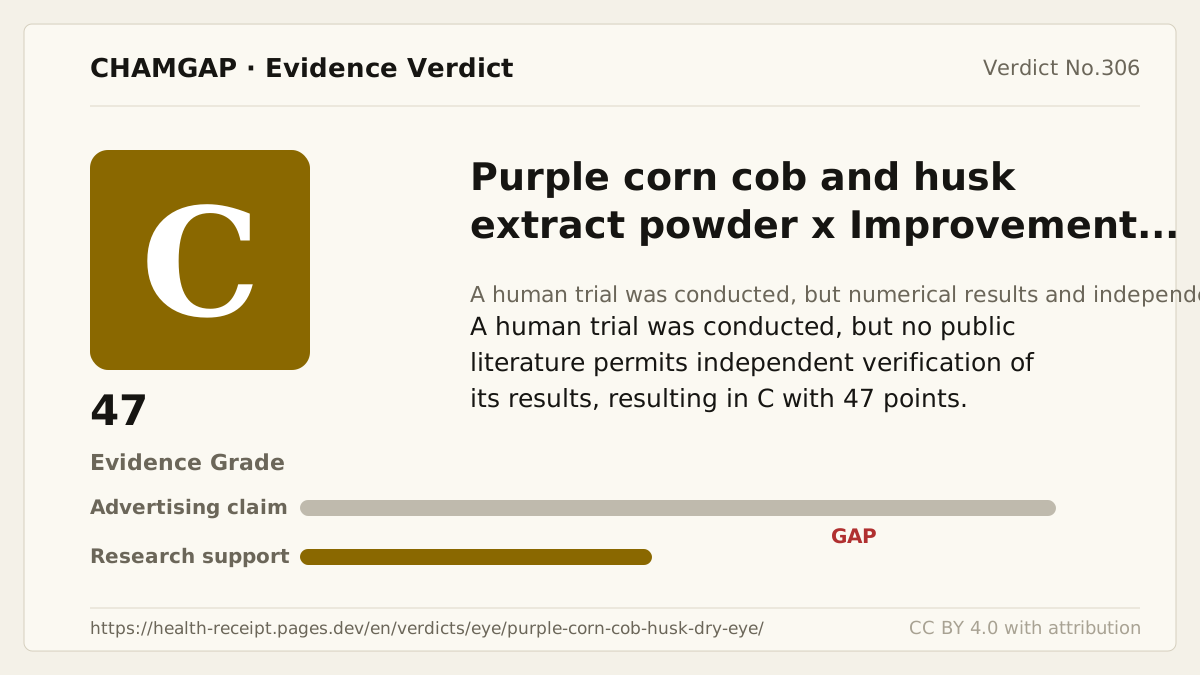
[Chamgap] Purple corn cob and husk extract powder × Improvement of dry eyes — Evidence Grade C·47. 1 cited sources checked. Source: https://chamgap.com/en/verdicts/eye/purple-corn-cob-husk-dry-eye/ · CC BY 4.0CC BY 4.0 — free to use with attribution; do not distort grades, numbers, or verdict meaning.
What this document does and does not do
Chamgap is an information source. It reports what research has and has not confirmed; it does not tell readers what to take or buy. That decision belongs to readers and, when needed, medical or legal professionals. This verdict reflects literature available up to the search date and may change as new research appears. Nothing here is medical advice.