
Omega-3,
does it really help with Dry eye disease?
research showsThere were small studies suggesting omega-3 may help dry eye disease, but in the most important independent large RCT, the DREAM study, 12 months of EPA/DHA 3 g/day did not improve the primary symptom endpoint compared with placebo. Current evidence is closer to "treatment effect not confirmed."
ads claimAdvertising mentions 'tear film,' 'dry eyes,' 'inflammation relief,' and 'eye fatigue.' The key RCT did not confirm symptom improvement.
Useful facts when choosing a product
- The DREAM dose was EPA 2000 mg plus DHA 1000 mg/day, which is relatively higher than the daily intake of many general products.
- Dry eye disease has diverse causes, so the average effect of a single supplement may appear small.
- High-dose omega-3 has issues such as gastrointestinal discomfort, fishy burps, co-use with anticoagulants, and discussions about atrial fibrillation risk.
- Prescription omega-3 and health-supplement omega-3 differ in quality, dose, and purpose.
What the research actually shows
The DREAM study assigned 535 people with moderate-to-severe dry eye disease to EPA 2000 mg plus DHA 1000 mg/day or olive-oil placebo for 12 months. The primary endpoint, change in OSDI score, improved substantially in both groups, but the between-group difference was not significant. A 2019 Cochrane review examined 34 RCTs and 4314 participants and concluded that the certainty of evidence was low and the symptom-improving effect of long-chain omega-3 supplementation was uncertain.
Why this is classified as D (32)
Because a large RCT with direct clinical symptoms was null on its primary endpoint, this is D under methodology boundary rule ②. Rather than lowering it to F as repeated strong counterevidence, small positive and uncertain evidence remains, so this is kept at D, 32 points.
Counterpoint. Signals from observational studies on dietary fish intake or blood fatty-acid status and eye health are separate. Supplement treatment effects should be read with the DREAM results first.
Rejudgment record. Draft — Independent large RCT primary endpoint null; Cochrane evidence uncertain
Cross-check — Codex and Claude
Evidence Table
| Study | Design | Sample | Funding | Endpoint | Result | Weight |
|---|---|---|---|---|---|---|
| DREAM Research Group. 2018 | Multicenter randomized double-blind placebo-controlled trial | 535 | Public research funding including the US National Eye Institute | Change in OSDI symptom score | EPA/DHA 3 g/day showed no difference in OSDI improvement compared with placebo. | Core |
| Downie LE et al. 2019 | Cochrane systematic review | 4314 | Cochrane/academic | Dry eye symptoms and signs | The effect of long-chain omega-3 was uncertain based on low-certainty evidence. | Core |
Receipt — 2 References
All 2 cited sources were verified for existence at the original page (as of 2026-07-09).
Reviewed and approved: Chamgap Editorial Team · Approval date: 2026-07-09 · Corrections: none
Cite this verdict
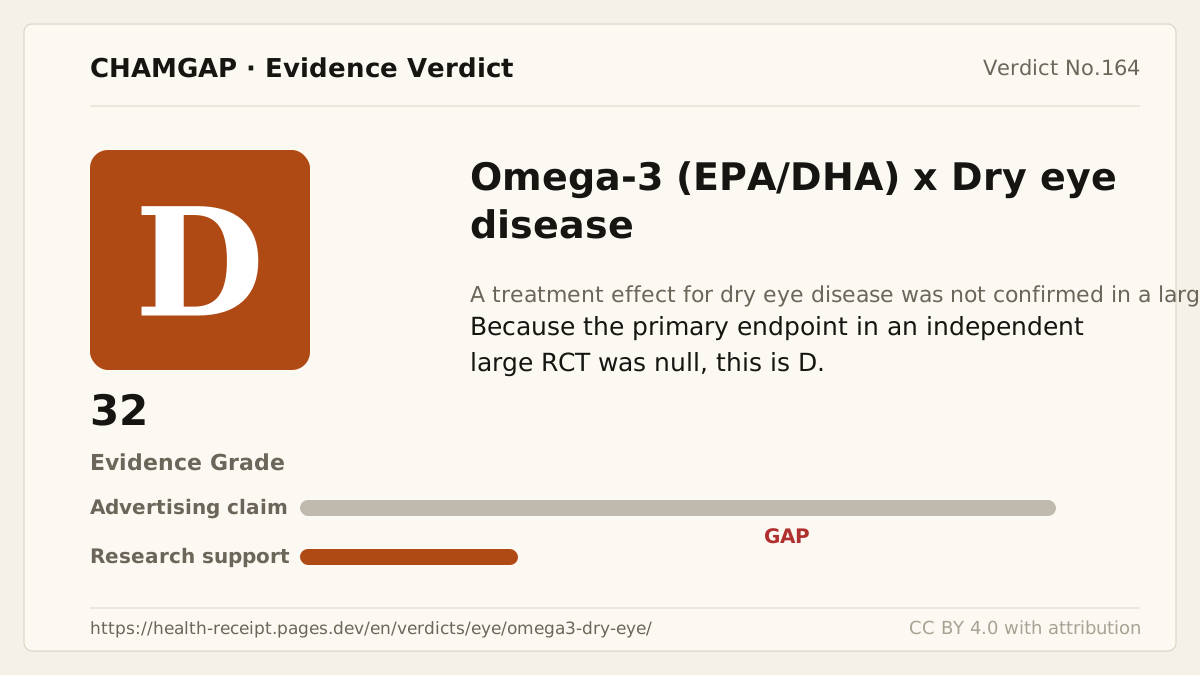
[Chamgap] Omega-3 (EPA/DHA) × dry eye disease — Evidence Grade D·32. 2 cited sources checked. Source: https://chamgap.com/en/verdicts/eye/omega3-dry-eye/ · CC BY 4.0CC BY 4.0 — free to use with attribution; do not distort grades, numbers, or verdict meaning.
What this document does and does not do
Chamgap is an information source. It reports what research has and has not confirmed; it does not tell readers what to take or buy. That decision belongs to readers and, when needed, medical or legal professionals. This verdict reflects literature available up to the search date and may change as new research appears. Nothing here is medical advice.