
Grape-skin enzymatic fermented extract,
does it really help with Improvement of dry eye and tear-film measures?
research showsA randomized trial in 108 patients with dry eye found that 800 mg/day of grape-skin-derived anthocyanin oligomers improved symptoms and some tear-film and ocular-surface measures. The grade is C because the published evidence is concentrated in one trial linked to the developer of KL-GEFE.
ads claimAdvertisements may describe KL-GEFE as if it generates tears or treats dry-eye disease. The public data concern one short-term trial of the exact ingredient and do not address replacement of standard care or long-term disease course.
Useful facts when choosing a product
- The study and individually recognized dose is 800 mg/day.
- KL-GEFE is a standardized anthocyanin-oligomer ingredient produced by fermentation of grape skin.
- Its process and composition differ from generic grape-seed or grape-skin extracts.
- The published clinical study was short term, and long-term safety and recurrence data are limited.
What the research actually shows
The 2023 trial by Fan and colleagues assigned 108 patients with mild-to-moderate dry eye to anthocyanin oligomers at 800 mg/day or a maltodextrin placebo. The paper reported improvements in tear break-up time, ocular-surface disease measures, symptoms, and quality of life, but it was a single study and included a Kitto Life researcher as an author. Trial registration KCT0007073 corresponds to the same 108-participant study.
Why this is classified as C (57)
Regulatory recognition is not grading evidence. A 108-participant RCT assessed both symptoms and objective measures, but all positive evidence is concentrated in one developer-linked proprietary KL-GEFE product trial without independent replication, so rule 2-b caps the grade at C. The range of positive endpoints supports 57 points.
Counterpoint. A signal for improving dry-eye symptoms and tear-film measures remains for the exact KL-GEFE formulation at 800 mg/day.
Rejudgment record. Reassessment (cross-check reflected) — Regulatory recognition is not grading evidence; a 108-participant RCT was positive for symptoms and tear-film measures, but it was a single developer-linked trial of the proprietary KL-GEFE product with no independent replication or long-term outcomes
Cross-check — Codex and Claude
Evidence Table
| Study | Design | Sample | Funding | Endpoint | Result | Weight |
|---|---|---|---|---|---|---|
| Fan M et al. 2023 | Randomized double-blind placebo-controlled trial | 12 | A Kitto Life researcher was a coauthor; detailed funding was unclear | Tear break-up time, ocular-surface disease measures, symptoms, and quality of life | Reported improvement in multiple dry-eye measures with anthocyanin oligomers at 800 mg/day. | Key |
| KCT0007073 | Prospectively registered clinical trial | 108 | Dong-A University sponsor; proprietary ingredient | Effect of grape-skin anthocyanin oligomers in patients with dry eye | Completed registry record corroborates prospective registration of the published trial. | Supportive |
Receipt — 2 References
All 2 cited sources were verified for existence at the original page (as of 2026-07-11).
Reviewed and approved: Chamgap Editorial Team · Approval date: 2026-07-11 · Corrections: none
Cite this verdict
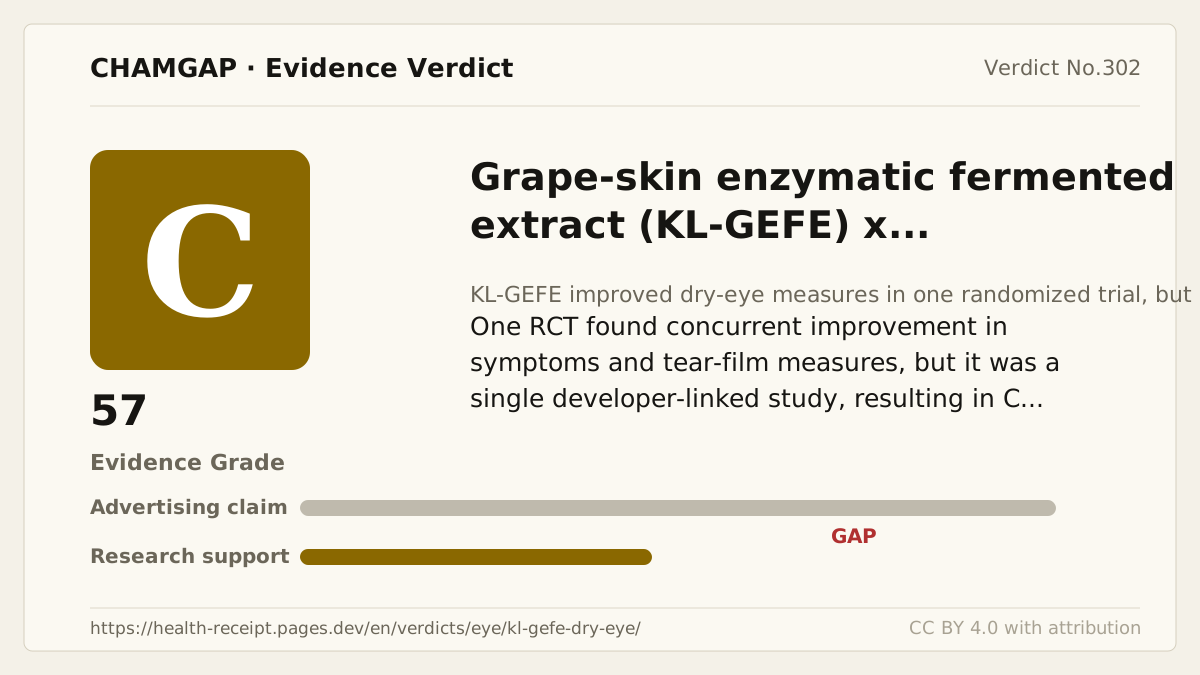
[Chamgap] Grape-skin enzymatic fermented extract (KL-GEFE) × Improvement of dry eye and tear-film measures — Evidence Grade C·57. 2 cited sources checked. Source: https://chamgap.com/en/verdicts/eye/kl-gefe-dry-eye/ · CC BY 4.0CC BY 4.0 — free to use with attribution; do not distort grades, numbers, or verdict meaning.
What this document does and does not do
Chamgap is an information source. It reports what research has and has not confirmed; it does not tell readers what to take or buy. That decision belongs to readers and, when needed, medical or legal professionals. This verdict reflects literature available up to the search date and may change as new research appears. Nothing here is medical advice.