
Goji berry,
does it really help with Eye, fatigue, immunity, antioxidant?
research showsGoji berry has small human studies showing increases in markers such as macular pigment and plasma zeaxanthin on the eye side, and small trials also show signals in antioxidant markers. However, independent large RCTs confirming direct clinical effects such as preservation of vision, improvement of fatigue, or reduction of infections are lacking.
ads claimAdvertising mentions 'eye fatigue,' 'vision protection,' 'immunity,' 'antioxidant,' 'fatigue recovery,' and 'anti-aging' together. The actual human evidence is closer to eye pigment and oxidative-stress markers.
Useful facts when choosing a product
- Whole goji berries, concentrates, juices, and polysaccharide extracts differ in composition.
- Macular pigment and zeaxanthin, the key markers in eye studies, are surrogate markers for preservation of vision.
- Case reports of interactions with anticoagulants such as warfarin have been reported, so caution is needed with combined use.
- Fatigue and immunity claims cannot be proven by eye-pigment studies instead.
What the research actually shows
A 30-day double-blind placebo-controlled study of GoChi juice reported improvements in some subjective questionnaires such as energy and sleep, and in antioxidant enzyme markers, in healthy adults, but it was product-company-related research and objective clinical endpoints were limited. A study of 114 people with early AMD and small studies in healthy adults showed improvements in plasma zeaxanthin or macular pigment optical density, but they did not directly prove clinical endpoints such as prevention of vision loss or suppression of AMD progression. Meta-analyses of goji berry lipid and metabolic outcomes are also generally centered on small RCTs and laboratory values.
Why this is classified as C (43)
Because there are human surrogate-marker signals and small RCTs, this is not D or unknown; however, direct clinical effects and independent large-scale replication are lacking. Among the combined claims, the evidence for fatigue and immunity is especially weak, so this is placed at the lower end of C, 43 points.
Counterpoint. Its value as a dietary source of zeaxanthin is a separate issue. This verdict evaluates the eye, fatigue, immunity, and antioxidant claims made in supplement advertising together.
Rejudgment record. Draft — Centered on small human surrogate-marker studies, with insufficient direct clinical endpoints for fatigue and immunity
Cross-check — Codex and Claude
Evidence Table
| Study | Design | Sample | Funding | Endpoint | Result | Weight |
|---|---|---|---|---|---|---|
| Amagase H, Nance DM. 2008 | Randomized double-blind placebo-controlled trial | 120 | Product-company-related/GoChi product study | Subjective health questionnaires and antioxidant markers | Reported signals of improvement in some subjective questionnaires and antioxidant markers, but objective clinical effects were limited. | Supporting |
| Bucheli P et al. 2011 | Randomized placebo-controlled trial | 114 | Possible industry/product involvement | Macular pigment and plasma zeaxanthin | Reported signals that macular pigment and zeaxanthin markers were preserved or increased in the goji berry intake group. | Core |
| Li Y et al. 2023 | Systematic review and meta-analysis | 4 | Unknown | Blood lipid laboratory values | Reported signals of triglyceride reduction and HDL increase, but the number and quality of studies were limited. | Supporting |
Receipt — 4 References
All 4 cited sources were verified for existence at the original page (as of 2026-07-09).
Reviewed and approved: Chamgap Editorial Team · Approval date: 2026-07-09 · Corrections: none
Cite this verdict
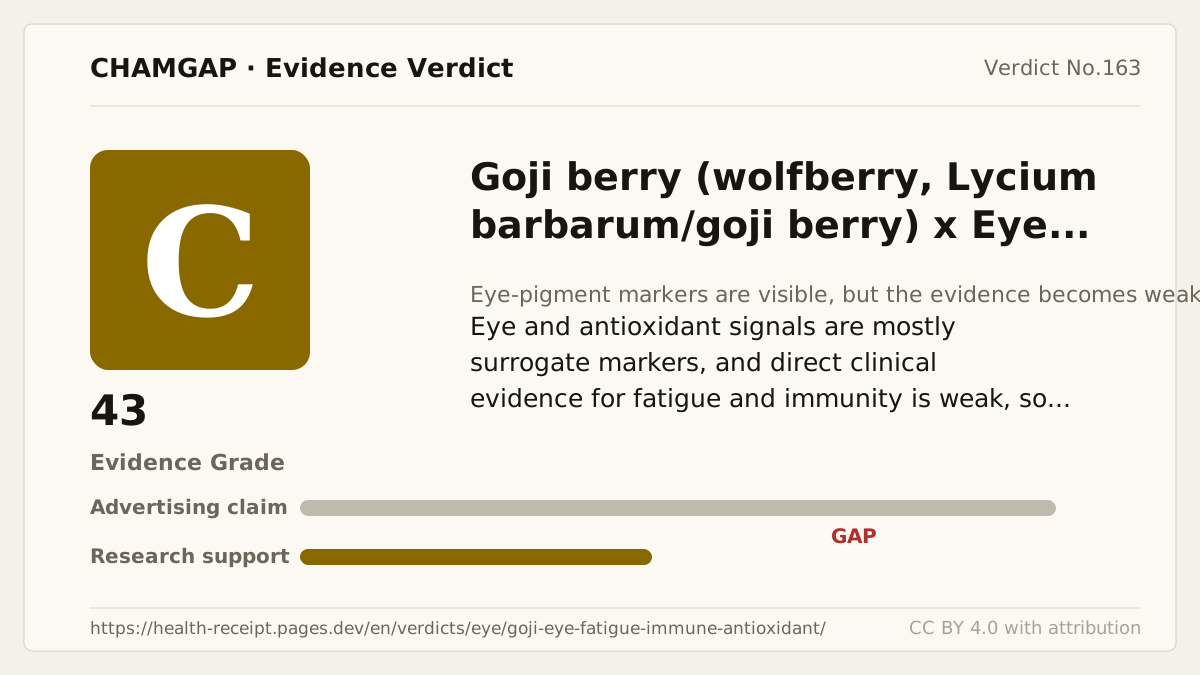
[Chamgap] Goji berry (wolfberry) × eye, fatigue, immunity, antioxidant — Evidence Grade C·43. 4 cited sources checked. Source: https://chamgap.com/en/verdicts/eye/goji-eye-fatigue-immune-antioxidant/ · CC BY 4.0CC BY 4.0 — free to use with attribution; do not distort grades, numbers, or verdict meaning.
What this document does and does not do
Chamgap is an information source. It reports what research has and has not confirmed; it does not tell readers what to take or buy. That decision belongs to readers and, when needed, medical or legal professionals. This verdict reflects literature available up to the search date and may change as new research appears. Nothing here is medical advice.