
Chrysanthemum flower,
does it really help with Eye-fatigue relief and vision protection?
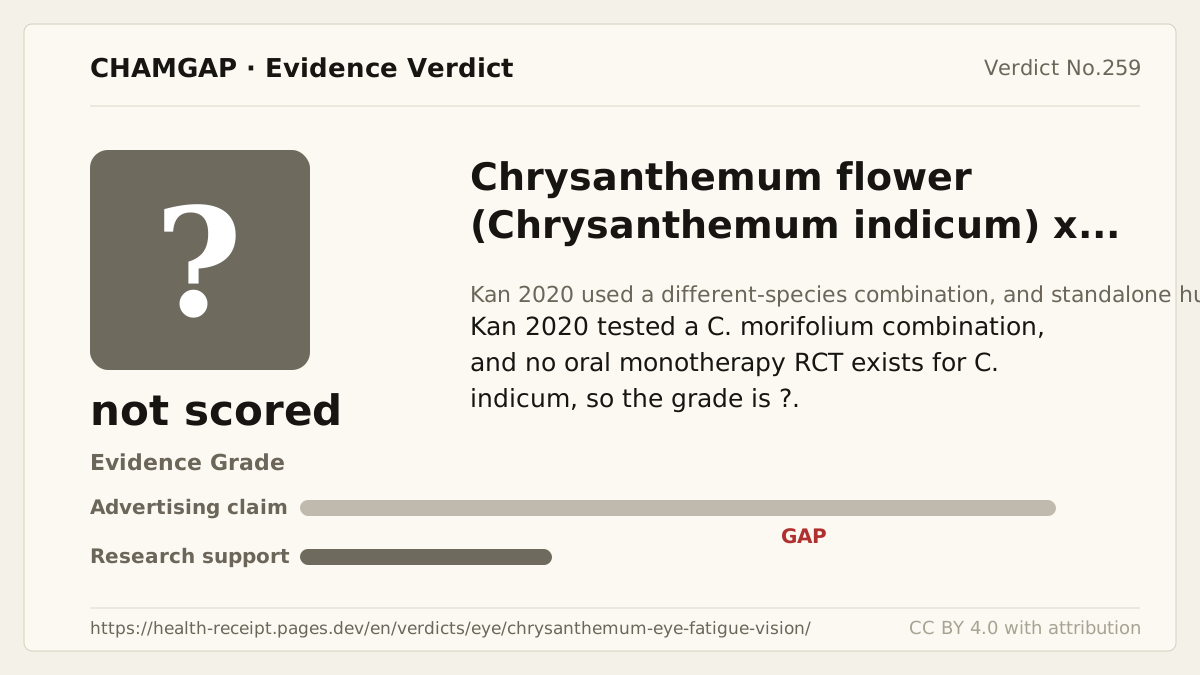
research showsNo human efficacy trial was identified for oral Chrysanthemum indicum alone on eye fatigue or vision protection. The 360-participant Kan 2020 formula used C. morifolium and also contained lutein, zeaxanthin, and other ingredients, so it is not evidence for C. indicum. Removing this species-and-combination double misattribution leaves the rating at ?.
ads claimTea, powder, and pill advertising connects the traditional vision-related use of chrysanthemum with modern claims of vision protection, macular protection, and digital eye-fatigue relief. Traditional use, combination-formula results, and standalone RCT evidence are different evidence categories.
Useful facts when choosing a product
- The Kan 2020 eye-fatigue RCT used C. morifolium in a multi-ingredient formula, not C. indicum alone.
- Flavonoid and carotenoid composition can vary by chrysanthemum species, cultivar, and extraction method.
- Tea intake is not equivalent to a standardized clinical extract dose.
- Hypersensitivity is a separate safety issue for people allergic to plants in the Asteraceae family.
What the research actually shows
The 360-participant Kan 2020 RCT used C. morifolium in a formula that also contained lutein, zeaxanthin, blackcurrant, goji berry, and other ingredients. Because both the species and formulation differ, it is not cited as evidence for C. indicum. The Xiong 2024 review summarized flavonoids and mechanisms for several plants including C. indicum but did not identify an oral C. indicum monotherapy RCT for eye fatigue or vision.
Why this is classified as ?
Kan 2020 was a multi-ingredient C. morifolium formula and was doubly misattributed by species and composition to C. indicum. Once removed, no oral C. indicum monotherapy efficacy trial remains, so the grade is ?.
Counterpoint. A signal from a different-species combination is not counted as evidence for C. indicum alone.
Rejudgment record. Reassessment (cross-check reflected) — Kan 2020 was a multi-ingredient C. morifolium formula doubly misattributed by species and composition; no oral C. indicum monotherapy efficacy trial exists
Cross-check — Codex and Claude
Evidence Table
| Study | Design | Sample | Funding | Endpoint | Result | Weight |
|---|---|---|---|---|---|---|
| Xiong S et al. 2024 | Narrative review | Unknown | Liver- and eye-related mechanisms of flavonoids from Chrysanthemum indicum and other plants | Summarized preclinical and mechanistic evidence but did not present an oral monotherapy RCT for eye fatigue or vision. | Evidence-gap confirmation |
Receipt — 1 References
All 1 cited sources were verified for existence at the original page (as of 2026-07-11).
Reviewed and approved: Chamgap Editorial Team · Approval date: 2026-07-11 · Corrections: none
Cite this verdict
[Chamgap] Chrysanthemum flower (Chrysanthemum indicum) x eye-fatigue relief and vision protection — Evidence Grade ?. 1 cited sources checked. Source: https://chamgap.com/en/verdicts/eye/chrysanthemum-eye-fatigue-vision/ · CC BY 4.0CC BY 4.0 — free to use with attribution; do not distort grades, numbers, or verdict meaning.
What this document does and does not do
Chamgap is an information source. It reports what research has and has not confirmed; it does not tell readers what to take or buy. That decision belongs to readers and, when needed, medical or legal professionals. This verdict reflects literature available up to the search date and may change as new research appears. Nothing here is medical advice.