
Fermented amino acid complex,
does it really help with Fatigue reduction during endurance exercise?
research showsThis composition-specific BCAA complex is registered as an individually recognized functional ingredient in South Korea, but this search found no public paper reporting the sample, endpoints, and results of the human trial used for recognition. General BCAA evidence is also inconsistent for endurance and fatigue, so regulatory recognition alone does not justify a high grade; the verdict is C.
ads claimMarketing uses the individually recognized wording to claim less fatigue and greater stamina during long exercise. The publicly verifiable record consists of recognition status and generic BCAA literature, not a reproducible effect size for this composition.
Useful facts when choosing a product
- Korean ingredient records list recognition numbers 2010-21 and 2011-40 for fatigue reduction during endurance exercise.
- Specification records for 2011-40 describe a BCAA composition with at least 985 mg/g combined leucine, isoleucine, and valine.
- Distribution materials cite 4.7-5.0 g/day for the recognized ingredient, but the product label should control.
- A Korean energy gel launched in 2026 declares 1,410 mg of the complex, which may differ from the recognized daily amount.
What the research actually shows
Public searches confirmed the functional wording for both recognition numbers but did not identify a paper disclosing the authors, sample, exercise protocol, primary endpoint, and funding of the dossier trial. Martinho 2022 reviewed 24 oral BCAA studies in athletes and trained participants and found negligible performance benefits with inconsistent endurance findings. Kim 2013 randomized 26 male college students to BCAA or placebo and measured serotonin, ammonia, lactate, CK, and related markers after cycling to exhaustion, but it did not test this specific fermented complex or establish improved endurance performance.
Why this is classified as C (40)
Regulatory recognition supports the possible existence of a dossier trial, but the absence of a public composition-specific RCT, independent replication, and consistent generic BCAA endurance evidence limits the grade to C with 40 points.
Counterpoint. Publication of the dossier and independent replication using the same exercise protocol and fatigue or performance primary endpoint could change the verdict.
Rejudgment record. Reassessment (cross-check reflected) — Individual recognition is confirmed, but public composition-specific RCTs and independent replication are sparse and generic BCAA endurance findings are inconsistent
Cross-check — Codex and Claude
Evidence Table
| Study | Design | Sample | Funding | Endpoint | Result | Weight |
|---|---|---|---|---|---|---|
| Martinho DV et al. 2022 | Systematic review | 24 | No conflicts declared | Performance, recovery, soreness, and biomarkers | Performance benefits were negligible and endurance findings were inconsistent; this was not a review of the specific fermented complex. | Indirect |
| Kim DH et al. 2013 | Randomized placebo-controlled trial | 26 | No clear industry funding identified | Serotonin, ammonia, lactate, CK, and LDH after cycling to exhaustion | Reported differences in selected fatigue and muscle-damage markers, but did not test the recognized composition or establish better endurance performance. | Indirect surrogate |
Receipt — 2 References
All 2 cited sources were verified for existence at the original page (as of 2026-07-15).
Reviewed and approved: Chamgap Editorial Team · Approval date: 2026-07-15 · Corrections: none
Cite this verdict
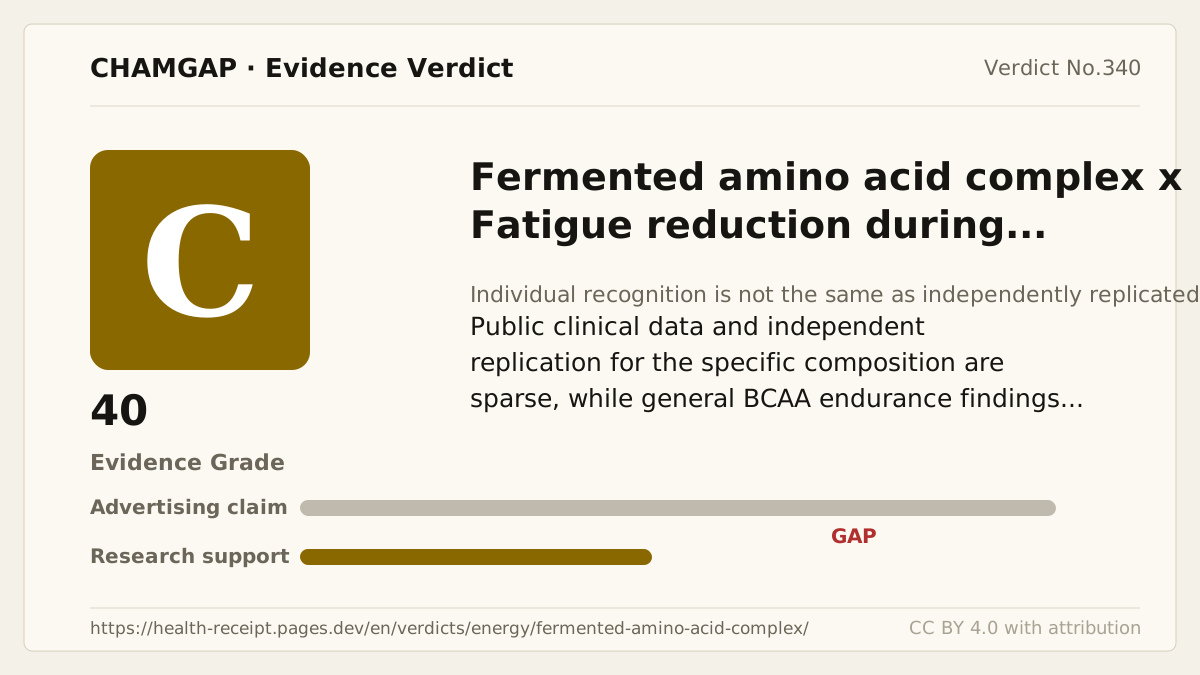
[Chamgap] Fermented amino acid complex x fatigue reduction during endurance exercise — Evidence Grade C·40. 2 cited sources checked. Source: https://chamgap.com/en/verdicts/energy/fermented-amino-acid-complex/ · CC BY 4.0CC BY 4.0 — free to use with attribution; do not distort grades, numbers, or verdict meaning.
What this document does and does not do
Chamgap is an information source. It reports what research has and has not confirmed; it does not tell readers what to take or buy. That decision belongs to readers and, when needed, medical or legal professionals. This verdict reflects literature available up to the search date and may change as new research appears. Nothing here is medical advice.