
Phosphatidylcholine/lecithin,
does it really help with Cognition and liver?
research showsFor the cognition-improvement claim of lecithin/phosphatidylcholine, clear clinical cognitive benefit was not confirmed in the 2003 Cochrane review of 12 RCTs (Alzheimer disease, Parkinson dementia, and self-reported memory problems). However, because this is not primarily a harm-based judgment, it is D rather than F, meaning negative/insufficient for cognitive efficacy. Deficiency and correction of TPN-related fatty liver are separate nutritional contexts.
ads claimAdvertisements combine 'brain cell membrane,' 'memory,' 'focus,' 'liver detox,' 'fatty liver,' and 'choline supply.' RCT evidence for cognition is negative, and liver claims need to distinguish deficiency correction from general supplementation.
Useful facts when choosing a product
- Lecithin is not only phosphatidylcholine but a mixture of several phospholipids.
- The actual choline amount provided by a product differs from the number of grams of lecithin.
- High-dose choline is associated with discussions of fishy body odor, gastrointestinal symptoms, hypotension, and TMAO.
- Soy lecithin contains little allergenic protein, but sensitive people should check source labeling.
What the research actually shows
The Higgins/Flicker 2003 Cochrane review examined 12 RCTs using lecithin in Alzheimer disease, Parkinson dementia, and self-reported memory problems and did not confirm clear clinical cognitive benefit. Earlier large/multicenter lecithin studies in Alzheimer disease also did not show consistent cognitive improvement compared with placebo. For the liver, studies show that choline deficiency can be related to fatty liver in long-term TPN patients and can be reversed with choline administration, but this is evidence for deficiency treatment, not for general health-functional supplements.
Why this is classified as D (30)
For the representative cognition claim, the Cochrane review of 12 RCTs did not find clear clinical benefit. However, this is not a harm-centered judgment, and because there is a separate nutritional context of deficiency and TPN-related fatty liver correction, the grade is not F but D with 30 points.
Counterpoint. Choline nutritional status can matter in low-choline diets, TPN, and specific deficiency-risk groups. This judgment targets cognition and liver efficacy advertising for lecithin/PC supplements in non-deficient adults.
Rejudgment record. Final reassessment — No clinical cognitive benefit in 12 Cochrane RCTs; because the judgment is not harm-centered, D rather than F
Cross-check — Codex and Claude
Evidence Table
| Study | Design | Sample | Funding | Endpoint | Result | Weight |
|---|---|---|---|---|---|---|
| Higgins JPT, Flicker L 2003/2009 | Cochrane systematic review | Public/unknown | Cognitive function and clinical status | Could not confirm evidence of benefit of lecithin for dementia or cognitive impairment. | Key | |
| Study 2 | Randomized placebo-controlled trials | Unknown | Cognitive scores | No consistent cognitive improvement compared with placebo. | Key | |
| Buchman AL et al. 1992/1995 | Deficiency/TPN-related clinical study | Unknown | Plasma choline and liver fat | Shows an association between choline deficiency and fatty liver, but is not evidence of general supplement efficacy. | Supportive |
Receipt — 3 References
All 3 cited sources were verified for existence at the original page (as of 2026-07-09).
Reviewed and approved: Chamgap Editorial Team · Approval date: 2026-07-09 · Corrections: none
Cite this verdict
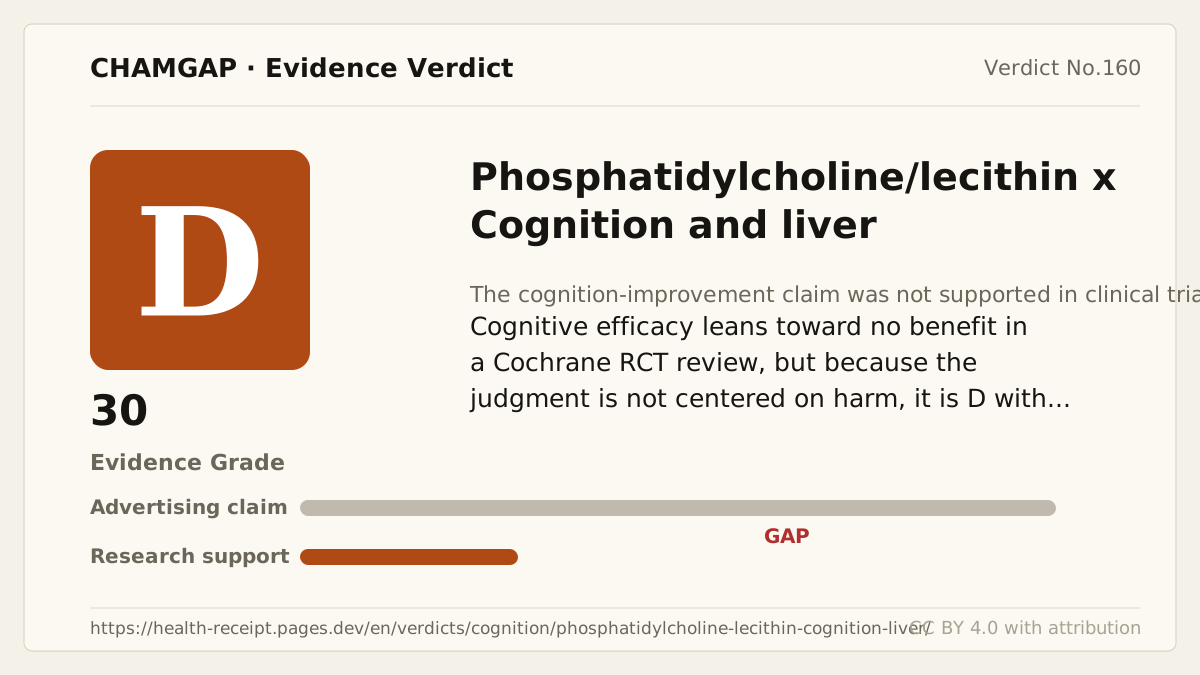
[Chamgap] Phosphatidylcholine/lecithin x cognition and liver — Evidence Grade D·30. 3 cited sources checked. Source: https://chamgap.com/en/verdicts/cognition/phosphatidylcholine-lecithin-cognition-liver/ · CC BY 4.0CC BY 4.0 — free to use with attribution; do not distort grades, numbers, or verdict meaning.
What this document does and does not do
Chamgap is an information source. It reports what research has and has not confirmed; it does not tell readers what to take or buy. That decision belongs to readers and, when needed, medical or legal professionals. This verdict reflects literature available up to the search date and may change as new research appears. Nothing here is medical advice.