
Acetyl-L-carnitine,
does it really help with Cognition and diabetic neuropathy?
research showsALCAR has human RCT signals for diabetic neuropathy pain and some nerve markers, but the 2019 Cochrane review rated the evidence for pain reduction as very uncertain. The Cochrane review on dementia and cognition also concluded that it is unlikely to be important as a treatment for Alzheimer's disease, so the overall judgment is C.
ads claimAdvertising combines phrases such as 'mitochondrial energy,' 'brain fog,' 'nerve health,' and 'diabetic foot tingling.' However, mitochondrial mechanisms are surrogate markers, and diabetic neuropathy is a medical disease area.
Useful facts when choosing a product
- Neuropathy studies commonly use doses in the 1500-3000 mg/day range.
- General cognitive-supplement doses may differ from the doses and populations in disease RCTs.
- Gastrointestinal discomfort, insomnia, agitation, and changes in body odor may be reported.
- Case reports of increased warfarin anticoagulant effect and caution in people with a seizure history are mentioned.
What the research actually shows
The two RCTs in Sima 2005 Diabetes Care reported that ALCAR 500 or 1000 mg three times daily for 1 year showed signals for some pain measures and nerve-fiber regeneration markers in patients with diabetic neuropathy. However, the 2019 Cochrane review examined 4 studies with 907 participants and assessed whether pain decreased over 6-12 months as very uncertain. For dementia, the 2003 Cochrane review examined Alzheimer's disease trials but concluded that pharmacologic understanding and efficacy evidence were limited and that it was unlikely to be an important treatment.
Why this is classified as C (49)
There are large RCTs for diabetic neuropathy, but Cochrane certainty is low, and cognition has a negative assessment as an Alzheimer's treatment. For health-functional-food claims about cognition and nerves, directness and certainty are insufficient, so it is judged C, 49 points.
Counterpoint. Studies in patients with painful diabetic neuropathy and claims about cognitive enhancement in healthy adults are separate. This judgment addresses consumer supplement claims that bundle the two.
Rejudgment record. Draft — RCTs exist, but Cochrane certainty is low and generalization to cognition is limited.
Cross-check — Codex and Claude
Evidence Table
| Study | Design | Sample | Funding | Endpoint | Result | Weight |
|---|---|---|---|---|---|---|
| Sima AAF et al. 2005 | 2 randomized placebo-controlled trials | Possible industry ties | Pain and nerve-fiber markers | Reported signals for some pain measures and nerve-regeneration markers. | Core | |
| Cochrane 2019 | Cochrane review | 907 | Independent review | Diabetic neuropathy pain | Assessed the evidence for pain reduction over 6-12 months as very uncertain. | Core |
| Cochrane 2003 | Cochrane review | Independent review | Dementia and cognition | Concluded that ALCAR is unlikely to be an important treatment for Alzheimer's disease. | Core counterexample | |
| Li S et al. 2015/2017 | Meta-analysis | Mixed | Pain and electrophysiology | Reported a pain-reduction signal but emphasized the need for additional RCTs. | Supporting |
Receipt — 3 References
All 3 cited sources were verified for existence at the original page (as of 2026-07-09).
Reviewed and approved: Chamgap Editorial Team · Approval date: 2026-07-09 · Corrections: none
Cite this verdict
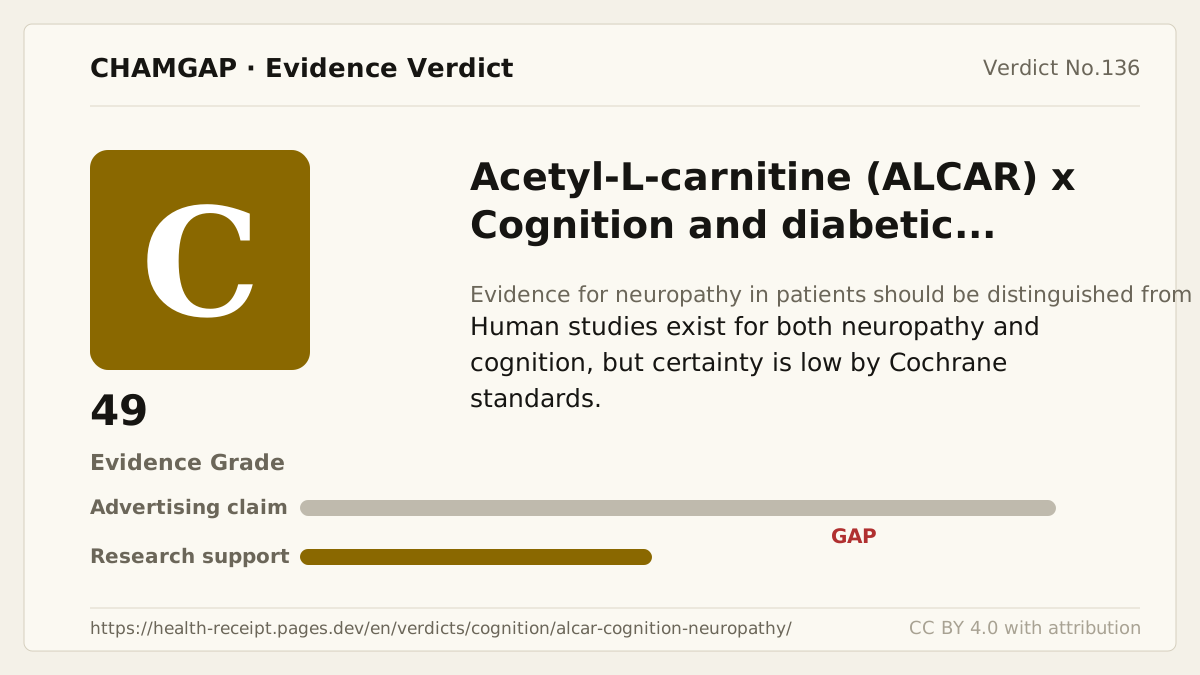
[Chamgap] Acetyl-L-carnitine (ALCAR) x cognition and diabetic neuropathy — Evidence Grade C·49. 3 cited sources checked. Source: https://chamgap.com/en/verdicts/cognition/alcar-cognition-neuropathy/ · CC BY 4.0CC BY 4.0 — free to use with attribution; do not distort grades, numbers, or verdict meaning.
What this document does and does not do
Chamgap is an information source. It reports what research has and has not confirmed; it does not tell readers what to take or buy. That decision belongs to readers and, when needed, medical or legal professionals. This verdict reflects literature available up to the search date and may change as new research appears. Nothing here is medical advice.