
Pueraria root,
does it really help with Menopause and hangover?
research showsSpecies distinction comes first. The ingredient commonly studied for menopause is Thai kudzu, Pueraria mirifica, while menopause RCTs of Pueraria lobata/kudzu root or puerarin alone are insufficient. Small studies of kudzu extract also examined reduced alcohol intake, not relief of hangover symptoms.
ads claimAdvertisements mention 'phytoestrogens,' 'menopause,' 'hangover relief,' and 'liver protection.' The actual evidence splits into Pueraria mirifica menopause studies and kudzu drinking-behavior studies, and evidence directly supporting menopause and hangover efficacy of Pueraria/kudzu root is insufficient.
Useful facts when choosing a product
- Because Pueraria mirifica contains estrogenic components, caution is needed in pregnancy/lactation, hormone-sensitive conditions, and co-use with hormone therapy.
- Pueraria lobata/kudzu products and Pueraria mirifica products should not be treated as the same.
- A study on reduced alcohol intake is not a study on hangover relief.
- High-dose and long-term safety data are limited.
What the research actually shows
Manonai 2008 and similar studies tested Pueraria mirifica in postmenopausal women and should be distinguished from evidence on Pueraria lobata/kudzu root or puerarin alone. Menopause RCTs of Pueraria/kudzu root alone are insufficient. Lukas 2005 reported that kudzu extract reduced alcohol intake in a laboratory setting in 14 heavy drinkers, but hangover symptom scores were not the primary endpoint. Direct RCTs of hangover relief are not confirmed.
Why this is classified as D (36)
Menopause evidence is tilted toward the separate species Pueraria mirifica, and hangover evidence uses an alcohol-intake endpoint, so combined claims for Pueraria/kudzu root are D, 36 points.
Counterpoint. If Pueraria mirifica is separated as a distinct species and distinct claim, some menopause endpoints can be reassessed.
Rejudgment record. Draft — Menopause evidence is tilted toward the separate species Pueraria mirifica, and hangover evidence uses an alcohol-intake endpoint, so combined claims for Pueraria/kudzu root are D, 36 points.
Cross-check — Codex and Claude
Evidence Table
| Study | Design | Sample | Funding | Endpoint | Result | Weight |
|---|---|---|---|---|---|---|
| Manonai J et al. 2008 | Randomized clinical trial | Unknown/local botanical research | Lipids, bone metabolism, and menopause-related markers | Signals of improvement in some markers were observed, but direct symptom evidence was limited. | Supporting | |
| Lukas SE et al. 2005 | Randomized crossover trial | 14 | NIH/academic | Alcohol intake | Kudzu extract reduced alcohol intake in a laboratory setting. | Supporting |
| Ullman KE et al. 2024 | Evidence map | 4 | Academic | Genitourinary syndrome of menopause | It summarized that sufficient long-term, large placebo-controlled trials are needed. | Supporting |
Receipt — 3 References
All 3 cited sources were verified for existence at the original page (as of 2026-07-10).
Reviewed and approved: Chamgap Editorial Team · Approval date: 2026-07-10 · Corrections: none
Cite this verdict
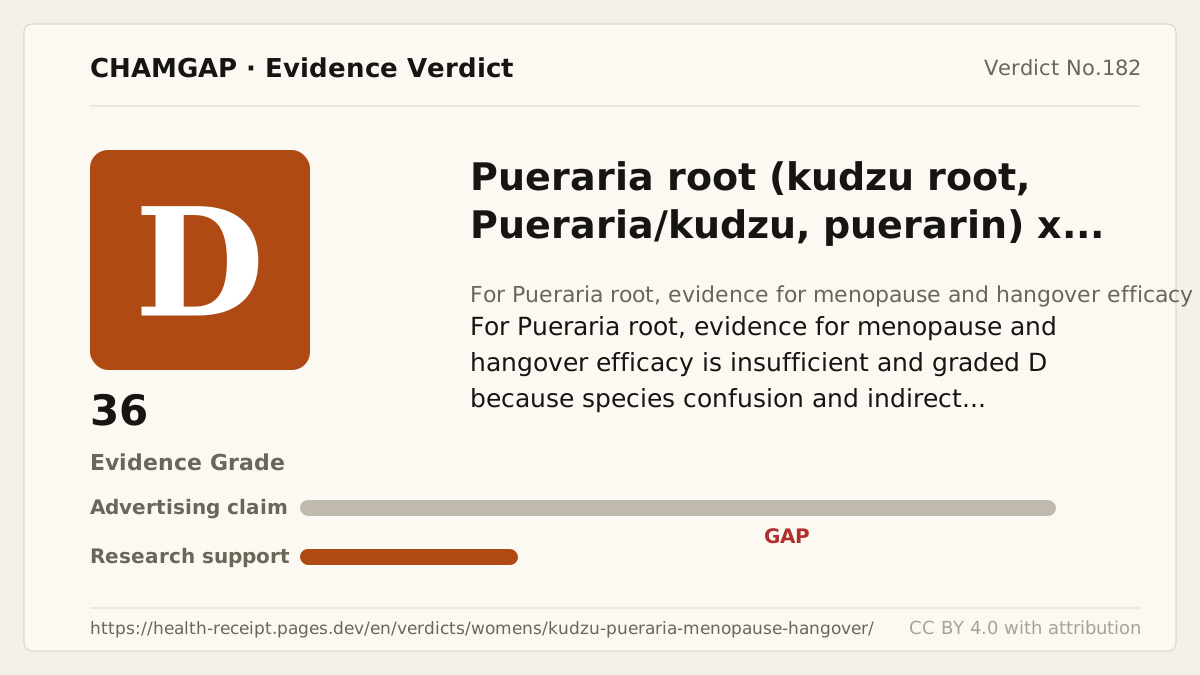
[Chamgap] Pueraria Root (Kudzu Root, Pueraria/kudzu, Puerarin) × Menopause and Hangover — Evidence Grade D·36. 3 cited sources checked. Source: https://chamgap.com/en/verdicts/womens/kudzu-pueraria-menopause-hangover/ · CC BY 4.0CC BY 4.0 — free to use with attribution; do not distort grades, numbers, or verdict meaning.
What this document does and does not do
Chamgap is an information source. It reports what research has and has not confirmed; it does not tell readers what to take or buy. That decision belongs to readers and, when needed, medical or legal professionals. This verdict reflects literature available up to the search date and may change as new research appears. Nothing here is medical advice.