
Pygeum,
does it really help with Improvement of urinary symptoms from benign prostatic hyperplasia?
research showsA Cochrane review of 18 RCTs and 1,562 participants found a positive signal for overall urinary-symptom improvement, with an RR of 2.1. However, trials averaged 64 days and were mostly small, low-quality studies conducted before 2000, with no modern large independent RCT. Unlike saw palmetto, the signal has not disappeared completely, so the grade is C rather than F.
ads claimAdvertisements use claims such as 'shrinks the prostate,' 'solves nocturia,' 'restores urine stream,' and 'replaces prostate medication.' The directly supported range is short-term symptoms and flow; prostate shrinkage and prevention of progression or surgery were not established.
Useful facts when choosing a product
- Common standardized-extract doses in trials were 50 mg twice daily or 100 mg once daily.
- Main endpoints were symptom scores, nocturia, peak urinary flow, and residual urine volume.
- Commercial products may differ from trial products in botanical source, extraction solvent, and standardized constituents.
- Adverse events in short trials were generally mild gastrointestinal symptoms and did not differ substantially from placebo.
What the research actually shows
The Barlet 1990 multicenter double-blind trial assigned 263 men to pygeum 100 mg/day or placebo for 60 days and reported improvements in urinary frequency, residual urine, and flow. The Wilt 2002 Cochrane review synthesized 18 RCTs and 1,562 participants and reported RR 2.1 for overall symptom improvement, about 0.9 fewer nocturnal voids, and about 2.5 mL/s greater peak flow. The trials were nevertheless old and short, averaging 64 days, with inadequate reporting of allocation concealment and outcomes.
Why this is classified as C (48)
A positive signal for overall symptom improvement exists, but the evidence remains limited to small, low-quality, pre-2000 trials averaging 64 days, with no modern large independent RCT. Because repeated high-quality null results have not erased the signal, the grade is C rather than F, with 48 points.
Counterpoint. The signal for short-term symptom relief in men with mild-to-moderate symptoms is fairly consistent. This judgment is limited to the specific standardized extracts used in older trials.
Rejudgment record. Reassessment (cross-check reflected) — The positive RR 2.1 signal across 18 RCTs and 1,562 participants remains, but trials averaged 64 days, were small and low quality, mostly pre-2000, and lack a modern large independent RCT, supporting C
Cross-check — Codex and Claude
Evidence Table
| Study | Design | Sample | Funding | Endpoint | Result | Weight |
|---|---|---|---|---|---|---|
| Barlet A et al. 1990 | Multicenter double-blind placebo-controlled trial | 263 | Included an investigator affiliated with Laboratoires Debat | Urinary frequency, residual urine, urinary flow, and treatment response | Pygeum 100 mg/day for 60 days improved quantitative urinary measures and treatment response versus placebo. | Key |
| Wilt T et al. 2002 | Cochrane systematic review and meta-analysis | 1,562 | Independent academic review; manufacturers were contacted for some source trials | Urologic symptoms, nocturia, urinary flow, and adverse events | Overall symptom improvement was RR 2.1 (95% CI 1.4-3.1), but trials were short and reporting quality was low. | Decisive |
Receipt — 2 References
All 2 cited sources were verified for existence at the original page (as of 2026-07-11).
Reviewed and approved: Chamgap Editorial Team · Approval date: 2026-07-11 · Corrections: none
Cite this verdict
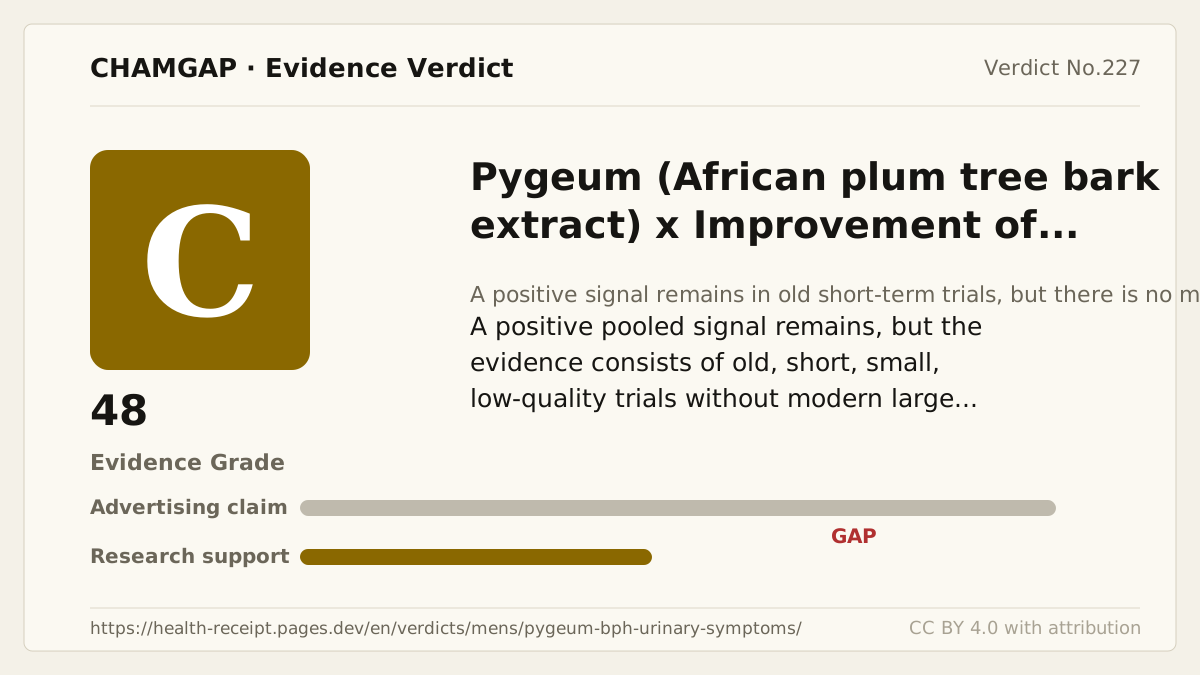
[Chamgap] Pygeum (African plum tree bark extract) x improvement of urinary symptoms from benign prostatic hyperplasia — Evidence Grade C·48. 2 cited sources checked. Source: https://chamgap.com/en/verdicts/mens/pygeum-bph-urinary-symptoms/ · CC BY 4.0CC BY 4.0 — free to use with attribution; do not distort grades, numbers, or verdict meaning.
What this document does and does not do
Chamgap is an information source. It reports what research has and has not confirmed; it does not tell readers what to take or buy. That decision belongs to readers and, when needed, medical or legal professionals. This verdict reflects literature available up to the search date and may change as new research appears. Nothing here is medical advice.