
Fenugreek,
does it really help with Testosterone, strength, blood glucose, and lactation?
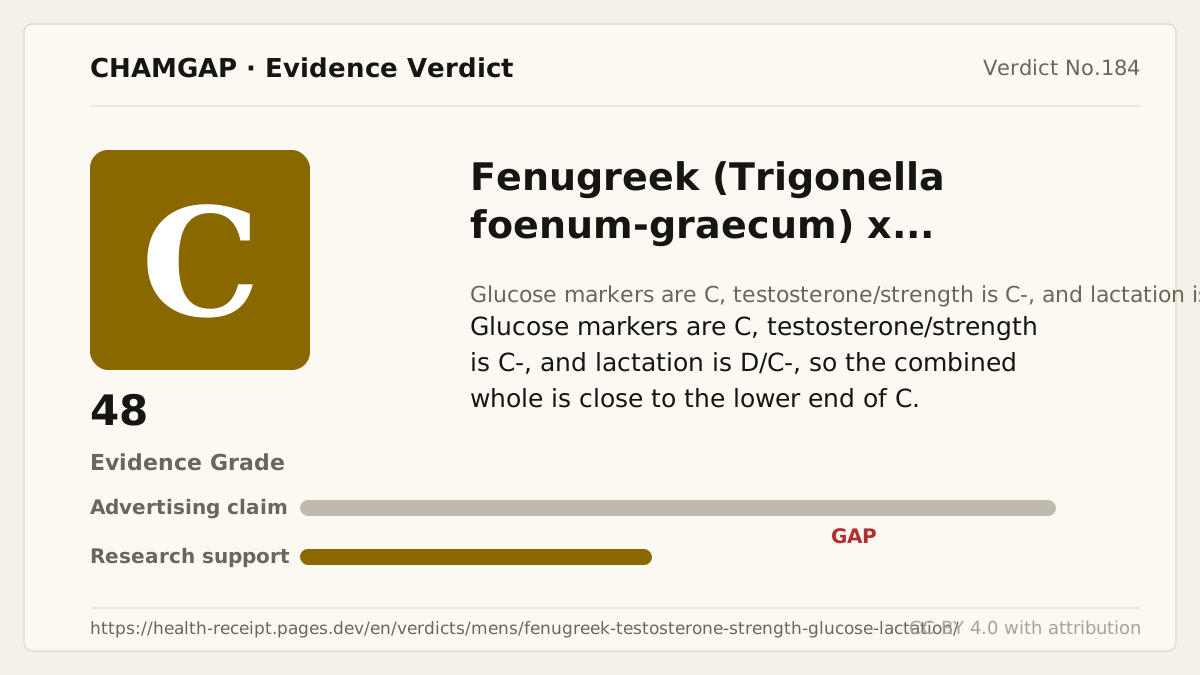
research showsThe fenugreek evidence splits by claim. For blood glucose, there are signals of improvement in surrogate markers such as HbA1c and fasting glucose, but many studies are small and low quality, so this is C-level. Testosterone and strength are strongly dependent on manufacturers, such as Testofen, and are close to C-, while increased lactation is uncertain in Cochrane and is viewed as D/C-.
ads claimAdvertisements combine 'male vitality,' 'testosterone,' 'strength,' 'blood glucose,' and 'milk volume' in one product. Evidence levels differ greatly by claim.
Useful facts when choosing a product
- Caution is needed for hypoglycemia when used with glucose-lowering drugs.
- High doses should be avoided during pregnancy, and use during lactation also requires consultation with clinicians.
- Cross-reaction is possible with allergies to soy, peanut, and chickpea.
- Body odor or urine with a maple-syrup smell, gastrointestinal symptoms, and caution with anticoagulants are known.
What the research actually shows
The Gong 2016 meta-analysis reported that fenugreek lowered fasting glucose, HbA1c, and lipids in diabetes and prediabetes, but study quality was limited. Glucose evidence is mainly surrogate markers such as HbA1c and fasting glucose and should be distinguished from evidence for reduced clinical events. Male studies of Testofen and similar products reported signals in sexual function, free testosterone, and strength, but manufacturer funding and product specificity are substantial. The Foong 2020 Cochrane review concluded that certainty of evidence for natural galactagogues is low, making breastfeeding-rate effects difficult to confirm.
Why this is classified as C (48)
When separated, glucose markers are C, testosterone/strength is C-, and lactation is D/C-, so the combined whole is C, 48 points.
Counterpoint. Even if only the blood-glucose claim is separated, it remains in the C range because of HbA1c/fasting-glucose surrogate endpoints and low-quality-study issues.
Rejudgment record. Draft — When separated, glucose markers are C, testosterone/strength is C-, and lactation is D/C-, so the combined whole is C, 48 points.
Cross-check — Codex and Claude
Evidence Table
| Study | Design | Sample | Funding | Endpoint | Result | Weight |
|---|---|---|---|---|---|---|
| Gong J et al. 2016 | Systematic review and meta-analysis | Academic | Blood glucose and lipids | It reported improvements in fasting glucose, HbA1c, and lipids. | Core | |
| Rao A et al. 2016 | Randomized placebo-controlled trial | 120 | Gencor/Testofen involvement | Sexual function and testosterone | Signals in male sexual function and free testosterone were reported. | Supporting |
| Foong SC et al. 2020 | Cochrane review | Independent | Milk production and breastfeeding rate | It judged certainty for effects of natural galactagogues as low. | Core |
Receipt — 4 References
All 4 cited sources were verified for existence at the original page (as of 2026-07-10).
Reviewed and approved: Chamgap Editorial Team · Approval date: 2026-07-10 · Corrections: none
Cite this verdict
[Chamgap] Fenugreek (Trigonella foenum-graecum) × Testosterone, Strength, Blood Glucose, and Lactation — Evidence Grade C·48. 4 cited sources checked. Source: https://chamgap.com/en/verdicts/mens/fenugreek-testosterone-strength-glucose-lactation/ · CC BY 4.0CC BY 4.0 — free to use with attribution; do not distort grades, numbers, or verdict meaning.
What this document does and does not do
Chamgap is an information source. It reports what research has and has not confirmed; it does not tell readers what to take or buy. That decision belongs to readers and, when needed, medical or legal professionals. This verdict reflects literature available up to the search date and may change as new research appears. Nothing here is medical advice.